Skip to content

Archive for

Now That I Think About It: Teaching Your Students to be Reflective and Effective Learners by Lynne Dorfman, Catherine Gehman, Persida Himmele, and Aileen Hower                                     Book Review by Janice Ewing

There are many professional books that are recommended for a particular subset of teachers, according to grade level, subject, or a particular area of interest. Now That I Think About It: Teaching Your Students to be Reflective and Effective Learners by Lynne Dorfman, Catherine Gehman, Persida Himmele, and Aileen Hower (to be published in June by ASCD), on the other hand, is one that will be of value to all educators. All teachers who strive to deepen their reflection about their own practice and develop their students’ practice of reflection will find value in these pages. A true work of collaboration, the four teacher/authors have mined the depths of their varied and extensive classroom experience with learners of all ages to create this exceptional resource that speaks to what it means to be a truly reflective and effective educator.

The authors ground the reader by describing and amply illustrating three levels of reflection –  looking at, looking in, and looking out — each of which help the learner to truly construct and retain knowledge and understanding. The authors provide examples, right from the classroom, at a variety of levels and from different subject areas. For example, the first level, looking at, refers to the process of making meaning. The authors use the symbol of a magnifying glass to illustrate the importance of deeply exploring a subject or concept, rather than taking a superficial look and moving on. As teachers, we may have had the experience of “covering” a topic, only to find out later that the information could not be retained or acted upon because it was never absorbed to begin with. In other words, they students did not truly make meaning.

At the next level, looking in, the authors explore metacognitive thinking, or thinking about our own thinking. They use the metaphor of a mirror in which students reflect upon themselves as learners in order to become active participants in their use of strategies to assess their own engagement and understanding as their knowledge deepens and/or to self correct if needed. Again, numerous examples are given for how to bring this practice to life in a wide variety of settings.

At the third level, looking out, the authors introduce us to the concept of metastrategic reflection. Using the symbol of a map, they provide us with tools to equip ourselves and our students with the tools to guide us through the learning process, from analysis of how we have learned in the past, to authentic goal-setting, to creating and personalized and actionable plan for growth.

At each level, the authors are bringing to light the kind of behind-the-scenes thinking that we want our students to engage in, and providing us with a vast array of practical strategies to accomplish this. Each chapter ends with thoughtful questions for both individual and group reflection, so we are not just reading, but fully participating in our learning as we go along. In addition, the appendices are a treasure trove of templates and ideas that can be used just as they are presented, or adapted to fit any teacher’s specific needs.

The wealth of information and insight in this book is presented in a conversational, down-to-earth style. The authors are truly teachers talking to other teachers, sharing their ideas, experience, and research, and inviting others to join them in this most rewarding, versatile, and crucial aspect of teaching and learning.

Because of the applicability of this book to such a wide range of educators, it would lend itself well to a whole-school or district-wide book study. Sharing and honing the ideas and suggestions would be of great value to the reflective process for teachers, which can only benefit students. For any teachers who might be feeling as though they cannot do “one more thing” the book is a breath of fresh air, in that reflection is not presented as an add-on, or something to be checked off, but as an integral and essential part of what it means to teach and learn. This is a book to look forward to, to savor, and to share.

Janice Ewing is a 2004 fellow of the West Chester Writing Project (the Pennsylvania Writing and Literature Project at that time) and a current member of the advisory board. Her interests include teacher inquiry, collaboration, and mentoring. She and Dr. Mary Buckelew, are the coauthors of Action Research for English Language Arts Teachers: Invitation to Inquiry (Routledge, 2019).
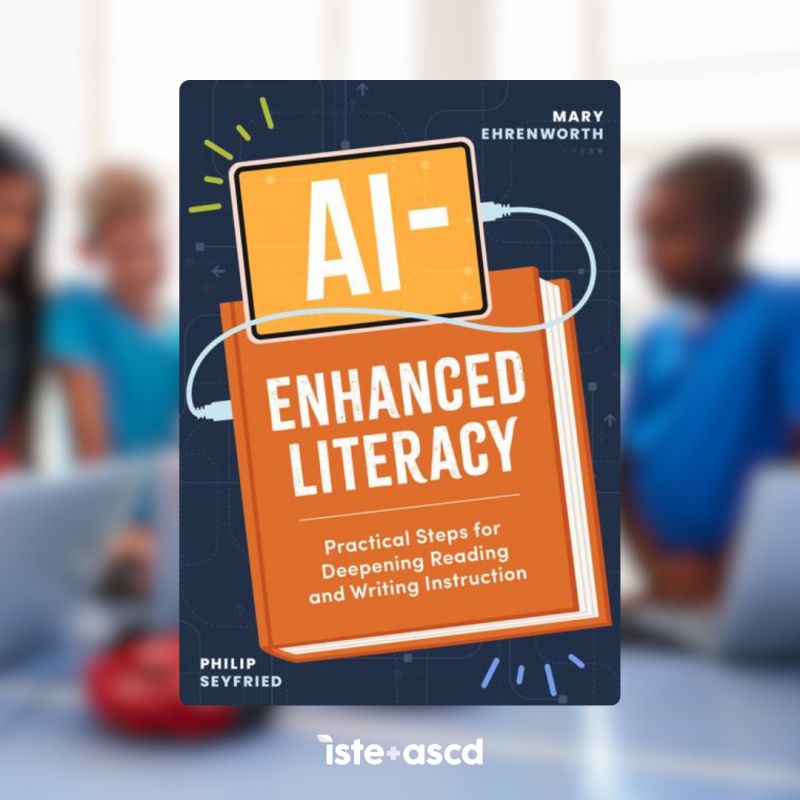
Book Review: AI – Enhanced Literacy: Practical Steps for Deepening Reading and Writing Instruction By Lynne R. Dorfman

In AI – Enhanced Literacy: Practical Steps for Deepening Reading and Writing Instruction by Mary Ehrenworth and Philip Seyfried (published on Oct. 6, 2025), teachers will discover how each chapter examines AI’s possibilities to expand literacy instruction and develop our students’ comprehension with digital texts and tools.

Regardless of how you may feel about using AI tools to improve reading and writing instruction, it is a critical skill for today’s literacy teachers. Through both theoretical approaches and practical examples to help you, K-12 teachers will learn more about the powerful capabilities of artificial intelligence to teach students to think critically and engage in reflective practices.

Each chapter examines the limitless potential AI has to expand literacy instruction and make the teacher’s role more interesting and satisfying while also saving valuable time. I know that most veteran teachers need to feel more at ease with current AI tools. Mary and Philip’s book will help you create AI-enhanced spaces in your classroom, use the power and efficiency of AI as a writing coach, and teach students to use AI tools in a thoughtful, critical, and ethical way during your reading and writing instruction block.

The authors of this book are well-suited for the task. Mary Ehrenworth, EdD, co-led a think tank on global literacy at Teachers College, Columbia University, for 20 years. Presently, Mary works nationally and globally to empower teachers and students through critical literacies and collaborative inquiry. Her most recent research fields are AI and literacy and vocabulary acquisition. Her co-author, Philip Seyfried, spent over a decade in the classroom as an English Language Arts teacher. He is presently a doctoral student in curriculum and teaching at Teachers College, Columbia University. His research focuses on digital literacy and artificial intelligence in education.

Well-defined headings in each chapter and the myriad figures in this book make it easy to navigate. Key information can be found in figures like Figure 1.5 (Effective Prompt Strategies for Educational AI), Figure 3.1 (AI Collaboration in the Writing Process), Figure 4.2 (Digital Comprehension Strategies), and Figure 4.3 (AI Tools for Readers). While it’s best to read the book slowly and carefully, it provides an absorbing introduction to the topic that is accessible and not intimidating. It is a satisfying read that will help you say, “Okay. I can do this. I am ready for more!”

I loved their practical advice such as “Rereading is a superpower” (p. 93) and digital reading is challenging but look at your curriculum for places “…you might insert some attention to digital reading practices” (p. 110). In addition, this book takes a good look at five different ways that classroom teachers can add AI-powered translation tools to the tool set they already use to help deepen the learning of their multilingual students.

Chapter 6 addresses the building and use of text sets to increase reader engagement and help them make meaningful connections while improving accessibility in our curriculum. Included is a figure that displays an AI-generated diverse text set for teaching The Giver by Lois Lowry and a figure that gives practical strategies for incorporating AI-suggested texts such as linking the literature with other subjects or pairing texts with related podcasts and other multimodal forms of expression and related STEM resources when applicable. The authors explore the use as auditory support as a powerful way to orient your students to new topics and texts. This strategy is useful K-12 and beyond! Figure 6.5 provides a useful guide for co-curating text sets with AI.

Using AI tools to improve reading and writing instruction can feel overwhelming, but it is a critical skill for today’s literacy teachers. This powerful book invites educators to engage in inquiries around AI in the classroom: to explore, think, and grapple together about new digital visions for literacy learning. I was hesitant to think about AI use for myself and in the classroom, but I have slowly changed my mind as I have read, experimented, and attended helpful presentations at conferences. Ehrenworth and Seyfried have helped me think more about digital versions for literacy learning and imagine the possibilities! I recommend it as a good place to start — a must-read!

Moving Beyond the Worksheet: A Writing Workshop Approach to Grammar Instruction

In our writing workshop class, grammar doesn’t live on worksheets—it lives inside stories, poems, conversations, and the students themselves. When we review parts of speech, for example, the goal isn’t just for students to identify them, but to use them intentionally in their own writing. For my English language learners especially, that connection between language rules and meaningful writing is essential.

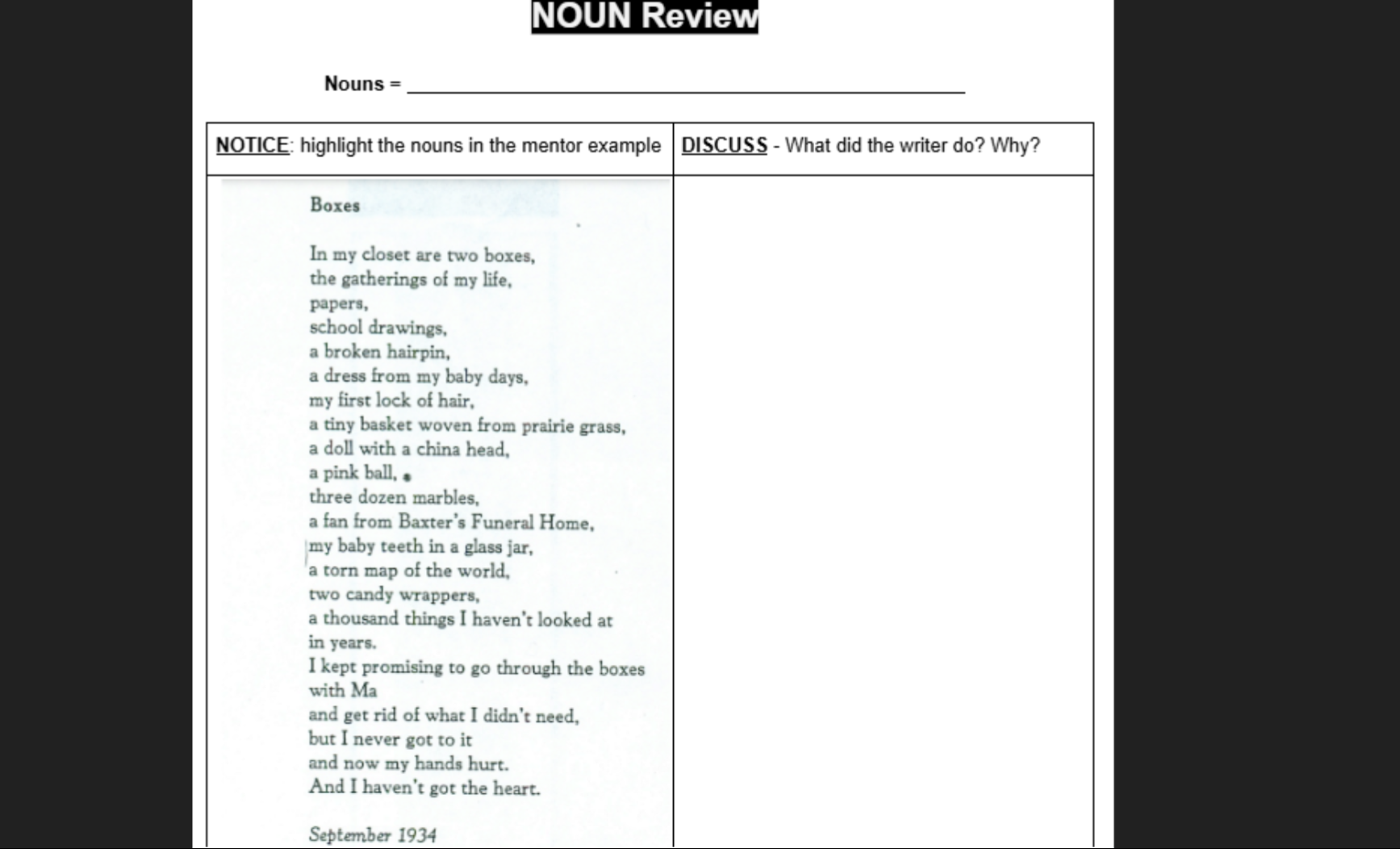
We start our parts of speech review with nouns. Instead of defining them right away, students first notice nouns in a poetic excerpt from Out of the Dust by Karen Hesse. Together, we look closely at the objects Hesse includes and talk about what those items reveal about the speaker. What matters to her? What kind of life does she live? Students quickly see that nouns do more than name things—they reveal character.

Using those observations, students craft their own personal list poems. They choose specific items from their own lives and begin to see how selecting certain nouns can tell a reader who they are and what’s important to them. This is where the grammar and the writing start to click.

Once we have that foundation, we expand our understanding of nouns by sorting them into types: proper and common, concrete and abstract, singular and plural. Because my students are English language learners, we also pause to notice the language rules that come along with these nouns—capitalizing proper nouns, adding -s to make plurals, and naming the exceptions as we discover them.

To get students moving (and collaborating), we take our learning on the road with a nouns scavenger hunt around the school building. Students work in pairs to complete tasks like introducing themselves to an adult and writing a sentence about who they met, finding the name of our high school and explaining where they are, sitting on something concrete and naming it, or making a facial expression and identifying the emotion they’re showing. It’s active, social, and full of real-world language practice—and it’s always a favorite.

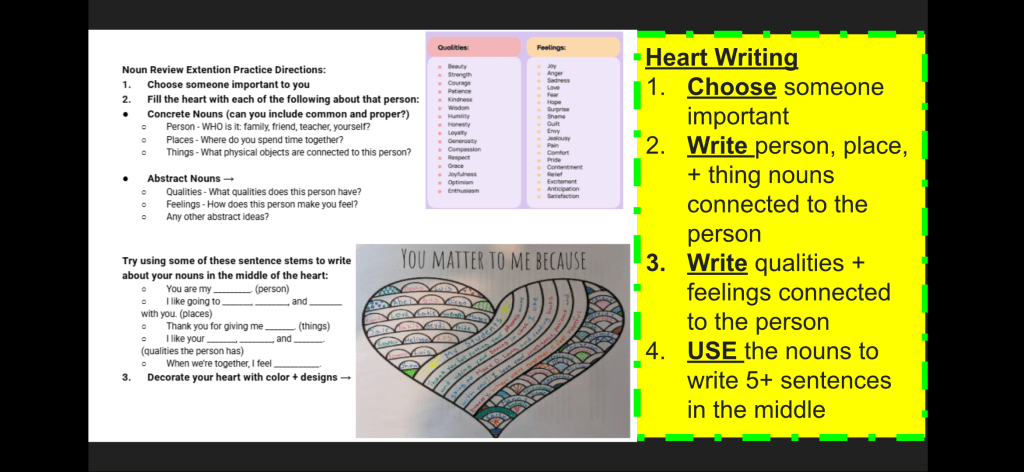
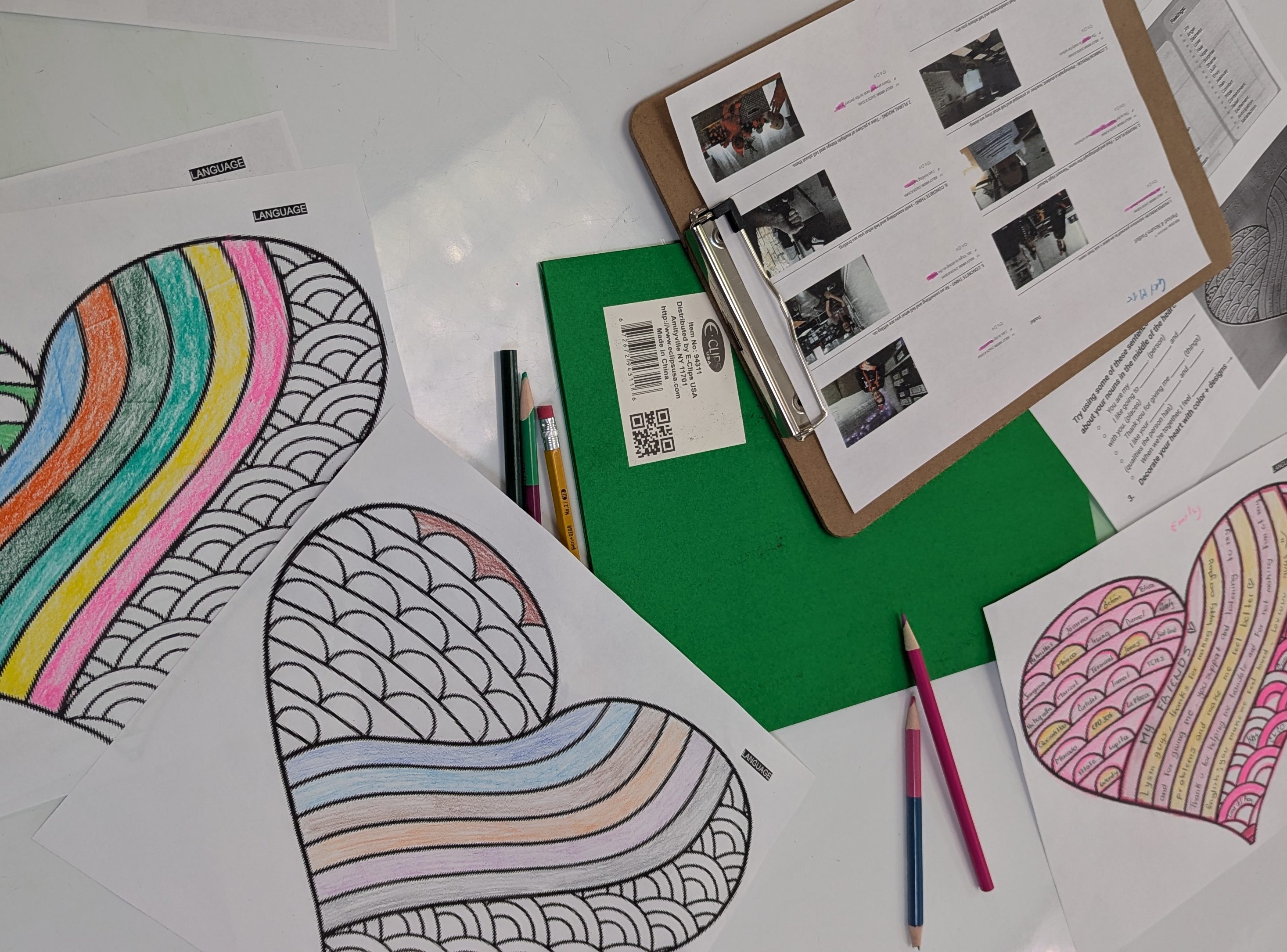
As a culminating project, students create a “noun heart” for someone important to them—a family member, friend, teacher, or mentor. Around the outside of the heart, they brainstorm meaningful nouns connected to that person, thinking again about the different types: people and places, concrete objects, abstract ideas. On the inside, they use that brainstorm to write five or more sentences directly to that person. Sentence frames like You are my ____. I enjoy going to ___ and ___ with you. Thank you for giving me ____. You make me feel ____. support students while still allowing for authentic voice.

Because this project happens the week before Valentine’s Day, I encourage students to color their hearts and give them to their people as a valentine. It’s a simple addition that adds motivation and joy—providing an authentic audience always enhances any writing task.

In the end, this work solidifies the fact that grammar is not a set of rules to memorize, but a living part of language. When students use grammar to express their identity, relationships, and gratitude, it becomes meaningful and human. Students aren’t practicing grammar in isolation – they’re using it to communicate ideas that matter to them. In this way, it lives in their reading, their writing, and their lives beyond the classroom.


Kelly Virgin is a WCWP teacher leader who teaches high school English for the Kennett Consolidated School District.