Book Review: AI – Enhanced Literacy: Practical Steps for Deepening Reading and Writing Instruction By Lynne R. Dorfman
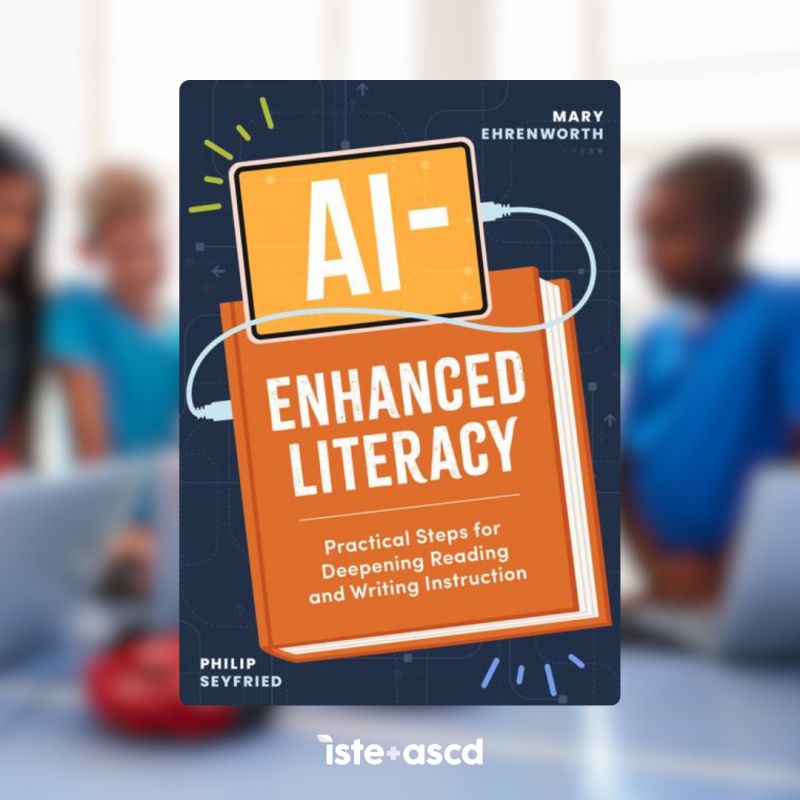
In AI – Enhanced Literacy: Practical Steps for Deepening Reading and Writing Instruction by Mary Ehrenworth and Philip Seyfried (published on Oct. 6, 2025), teachers will discover how each chapter examines AI’s possibilities to expand literacy instruction and develop our students’ comprehension with digital texts and tools.
Regardless of how you may feel about using AI tools to improve reading and writing instruction, it is a critical skill for today’s literacy teachers. Through both theoretical approaches and practical examples to help you, K-12 teachers will learn more about the powerful capabilities of artificial intelligence to teach students to think critically and engage in reflective practices.
Each chapter examines the limitless potential AI has to expand literacy instruction and make the teacher’s role more interesting and satisfying while also saving valuable time. I know that most veteran teachers need to feel more at ease with current AI tools. Mary and Philip’s book will help you create AI-enhanced spaces in your classroom, use the power and efficiency of AI as a writing coach, and teach students to use AI tools in a thoughtful, critical, and ethical way during your reading and writing instruction block.
The authors of this book are well-suited for the task. Mary Ehrenworth, EdD, co-led a think tank on global literacy at Teachers College, Columbia University, for 20 years. Presently, Mary works nationally and globally to empower teachers and students through critical literacies and collaborative inquiry. Her most recent research fields are AI and literacy and vocabulary acquisition. Her co-author, Philip Seyfried, spent over a decade in the classroom as an English Language Arts teacher. He is presently a doctoral student in curriculum and teaching at Teachers College, Columbia University. His research focuses on digital literacy and artificial intelligence in education.
Well-defined headings in each chapter and the myriad figures in this book make it easy to navigate. Key information can be found in figures like Figure 1.5 (Effective Prompt Strategies for Educational AI), Figure 3.1 (AI Collaboration in the Writing Process), Figure 4.2 (Digital Comprehension Strategies), and Figure 4.3 (AI Tools for Readers). While it’s best to read the book slowly and carefully, it provides an absorbing introduction to the topic that is accessible and not intimidating. It is a satisfying read that will help you say, “Okay. I can do this. I am ready for more!”
I loved their practical advice such as “Rereading is a superpower” (p. 93) and digital reading is challenging but look at your curriculum for places “…you might insert some attention to digital reading practices” (p. 110). In addition, this book takes a good look at five different ways that classroom teachers can add AI-powered translation tools to the tool set they already use to help deepen the learning of their multilingual students.
Chapter 6 addresses the building and use of text sets to increase reader engagement and help them make meaningful connections while improving accessibility in our curriculum. Included is a figure that displays an AI-generated diverse text set for teaching The Giver by Lois Lowry and a figure that gives practical strategies for incorporating AI-suggested texts such as linking the literature with other subjects or pairing texts with related podcasts and other multimodal forms of expression and related STEM resources when applicable. The authors explore the use as auditory support as a powerful way to orient your students to new topics and texts. This strategy is useful K-12 and beyond! Figure 6.5 provides a useful guide for co-curating text sets with AI.
Using AI tools to improve reading and writing instruction can feel overwhelming, but it is a critical skill for today’s literacy teachers. This powerful book invites educators to engage in inquiries around AI in the classroom: to explore, think, and grapple together about new digital visions for literacy learning. I was hesitant to think about AI use for myself and in the classroom, but I have slowly changed my mind as I have read, experimented, and attended helpful presentations at conferences. Ehrenworth and Seyfried have helped me think more about digital versions for literacy learning and imagine the possibilities! I recommend it as a good place to start — a must-read!




 write.share.connect