Building Better Writing Through Culture, Conversation, and Connection
One of the biggest challenges I face with my English language learners is getting them to move beyond simple responses in their writing. So, for the past few years I have been experimenting with an assignment that not only supports their writing development, but also honors who they are and where they come from.
Background
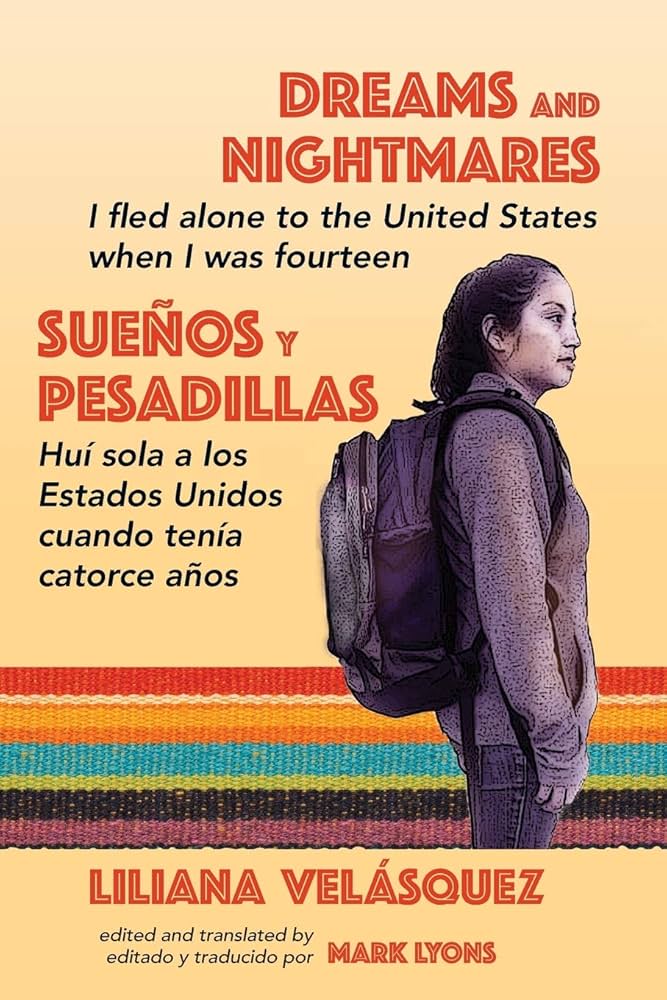
Students spend the first part of the school year reading a powerful memoir called Dreams and Nightmares: I Fled Alone to the United States When I Was 14 by Liliana Velazquez. In this book, Liliana writes about her experience leaving her home in Guatemala to find a new home and the promise of a new life in the United States. In our writing, we focus on a powerful moment where Liliana describes sewing a quilt to preserve her culture and memories of her grandmother: “I don’t want to lose my culture, and it can be a remembrance of my grandmother. I’m going to sew a quilt… I want to give my mother this quilt as a present that I have made with my own hands. I want to give her a memory of Guatemala, of my tradition.” That idea became the inspiration for the writing assignment – students are tasked with creating and writing about their own culture quilt square.
Brainstorming
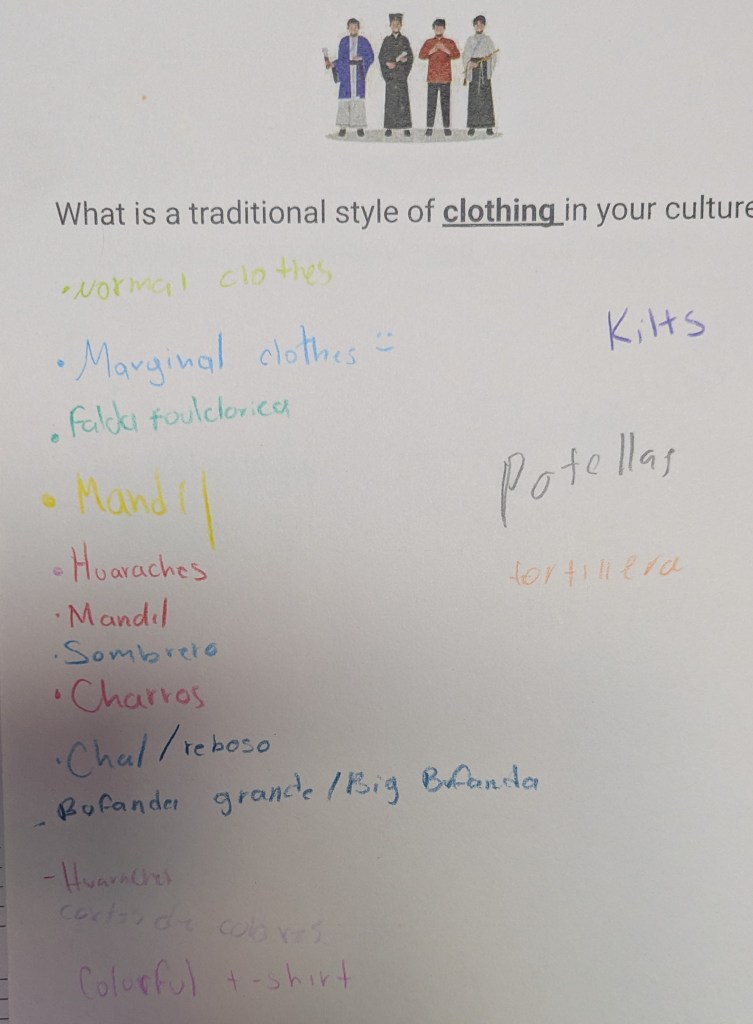
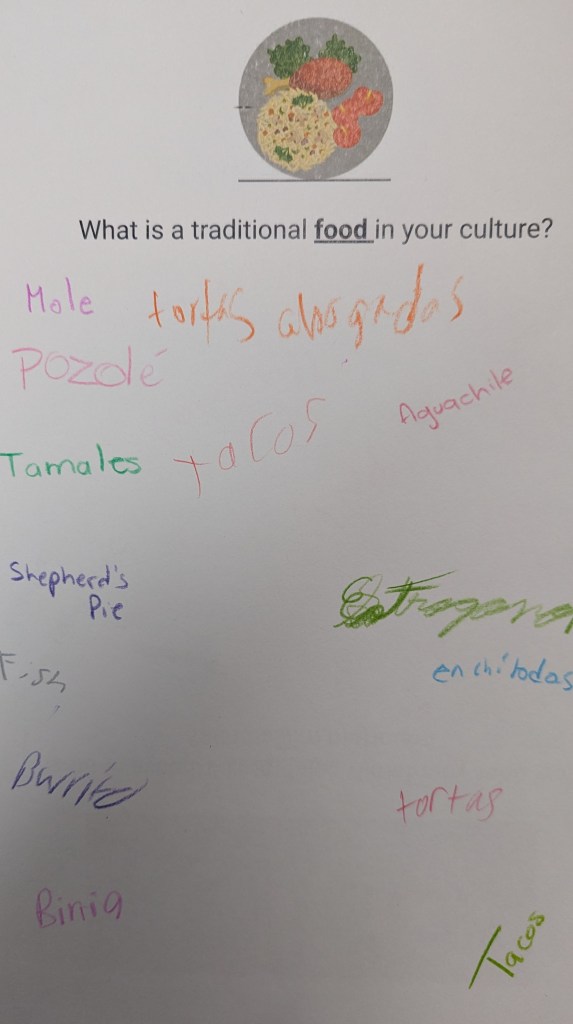
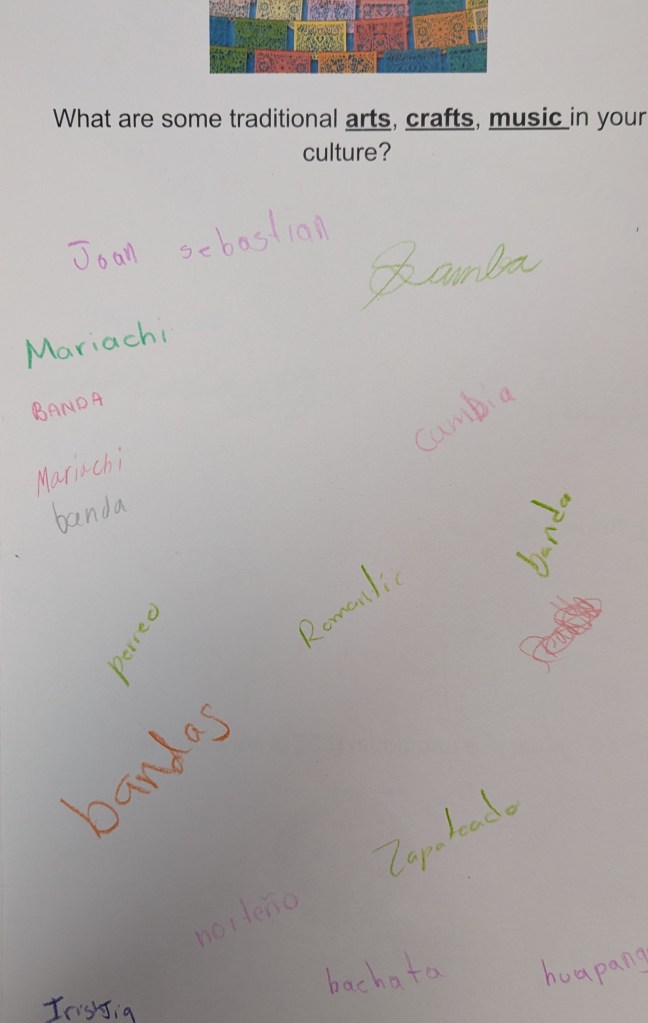
The process starts with an active and collaborative brainstorm through a gallery walk and talk. Around the room, I post topics like music, celebrations, food, and holidays. Students rotate, discussing and adding what they already know about their own cultures. Then they walk around a second time to create a personal brainstorm list – combining their knowledge with the collective knowledge of their classmates. This low-pressure brainstorming helps them realize they already have a lot to say as well as provides them with additional ideas.
Research
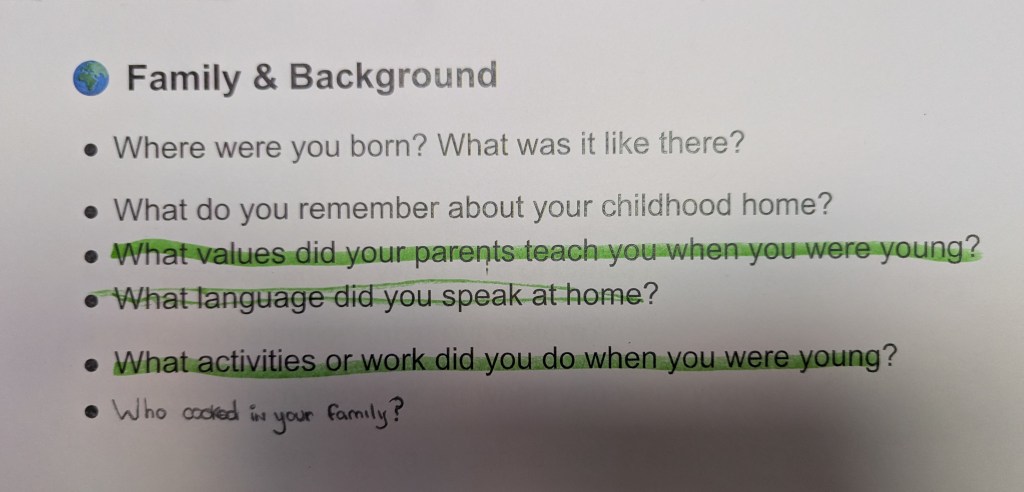
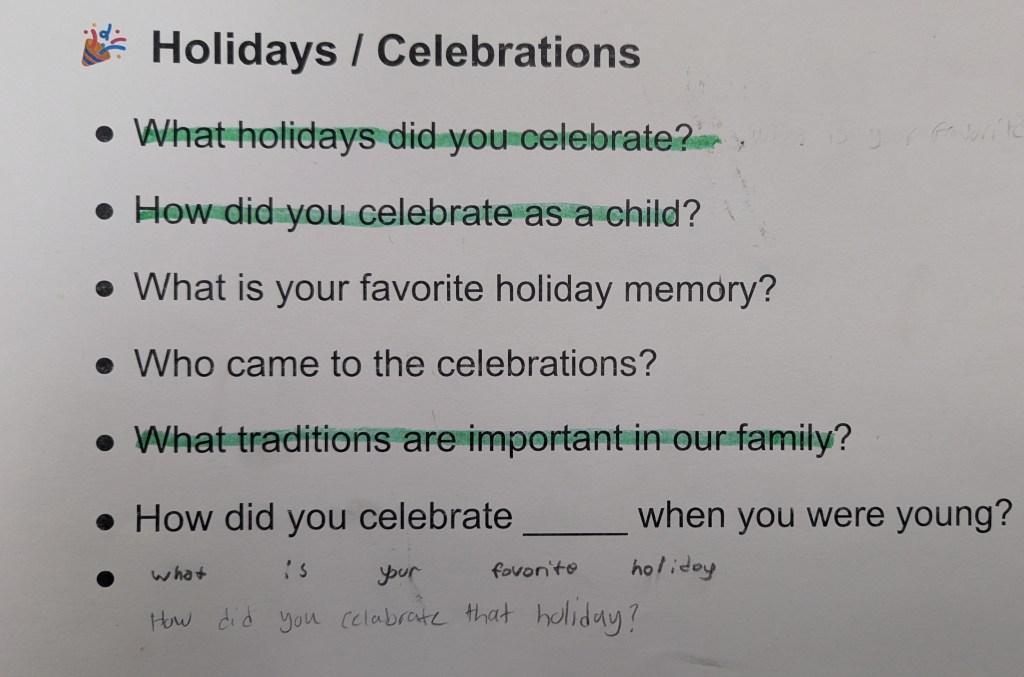
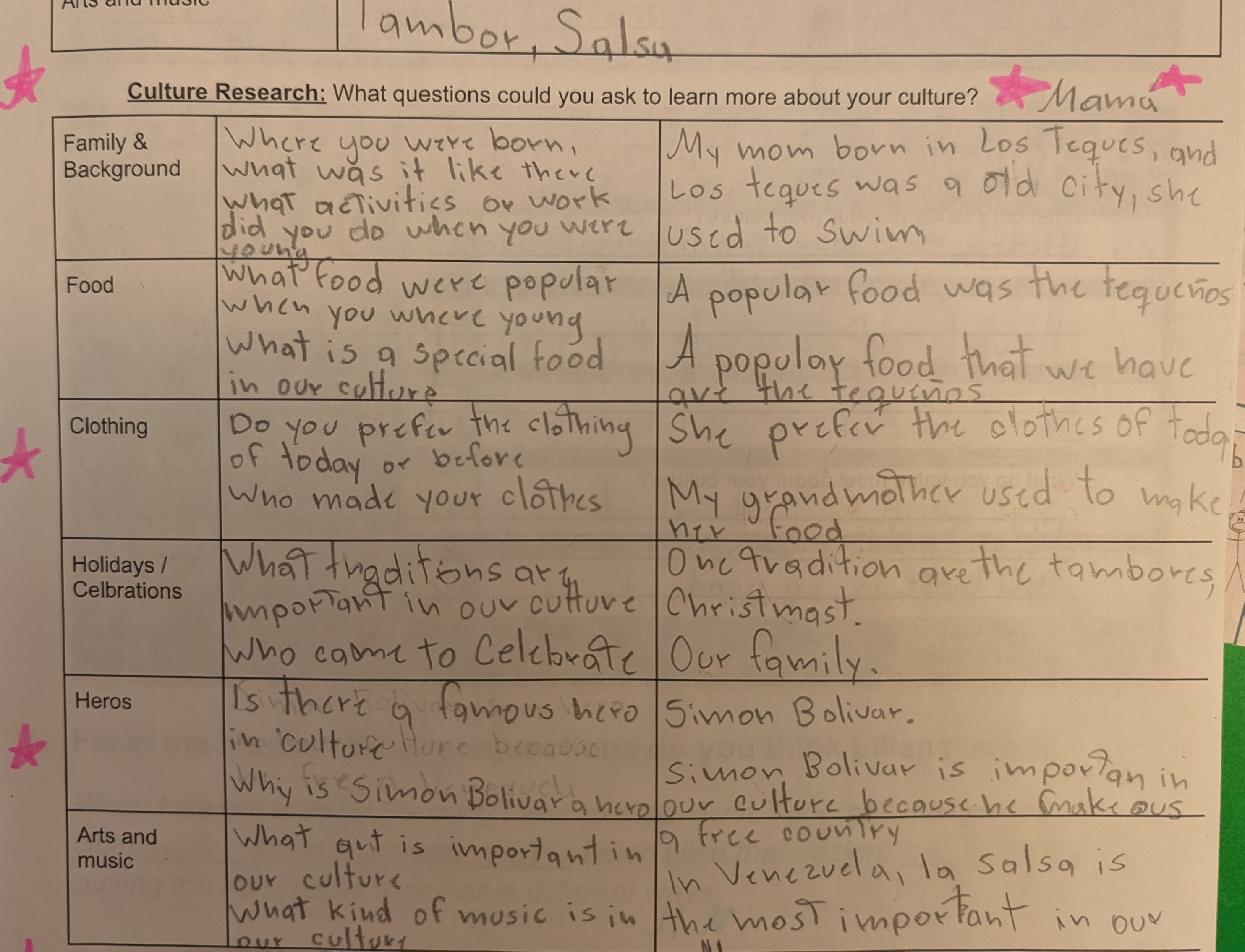
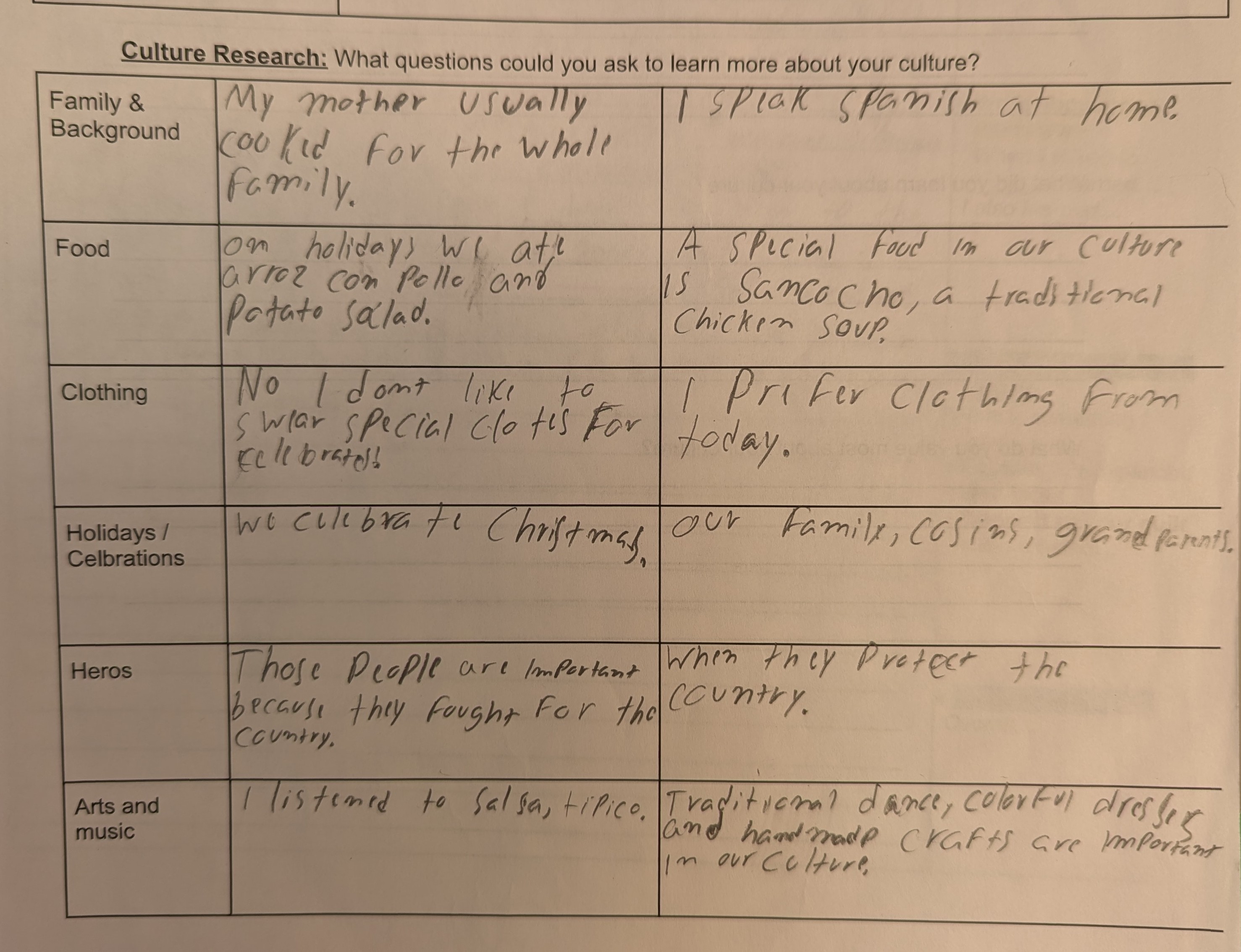
Next, we move into inquiry. Students review sample interview questions and then create and share their own. Their goal: learn more about a cultural topic that matters to them. Over the weekend, they are tasked with interviewing an elder—a parent, grandparent, aunt, or uncle.When they came back from this assignment, the room was full of stories. One student talked about discovering his uncle’s favorite song, “100 años pienso en ti” by Pedro Infante, and how that music connects to his own tastes. Another learned that her mother and grandmother made their own clothing growing up. A third noted the traditions her mom shared about her hometown in Mexico: “When I talked with my mom, I learned the traditions of ‘La Barranca Moroleon GTO’. I learned the activities that the people did, how they danced the cumbia, walked with the ‘santito’, went to eat in the houses of different people, and also the clothing that they used to wear—huipil—to special occasions like the party of July 25, ‘the misa’ when many people are together listening the ‘padrecito’.”
Putting it all together
Before jumping into a written essay, students consolidate their brainstorming and research by creating a visual “quilt square” representing what they value most about their cultures. For this part of the assignment, students return to their brainstorming and research to mark the parts of their culture they think are most important in their lives and their families. Then they spend time creating a visual to show those key elements. The only requirement for this part of the process is that they represent their cultural background in some way – all the other elements are self-selected. This step is key. It gives them space to synthesize their ideas and organize their thinking in a different way. It also affords them choice in what they ultimately decide to share about their cultures.
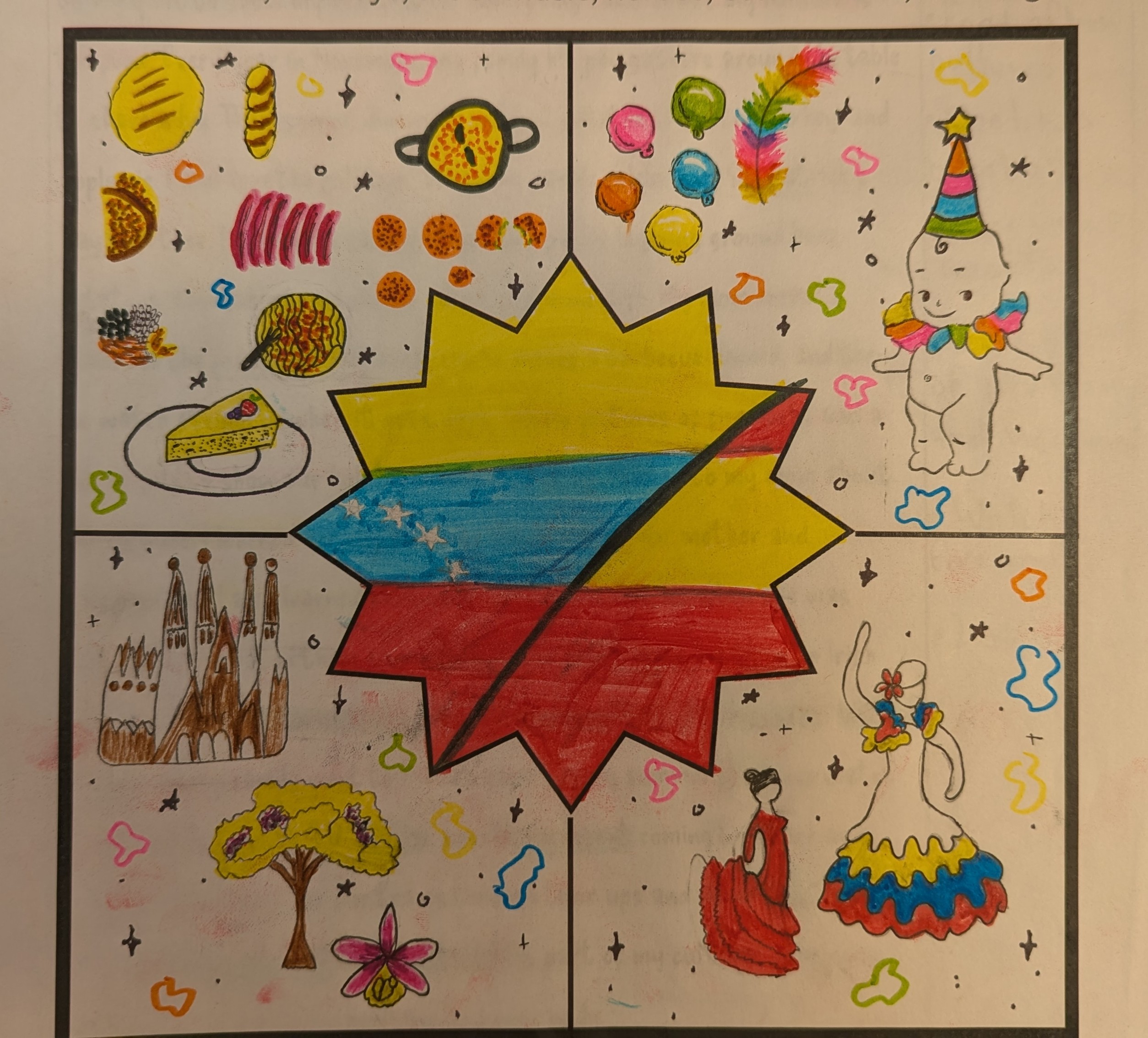
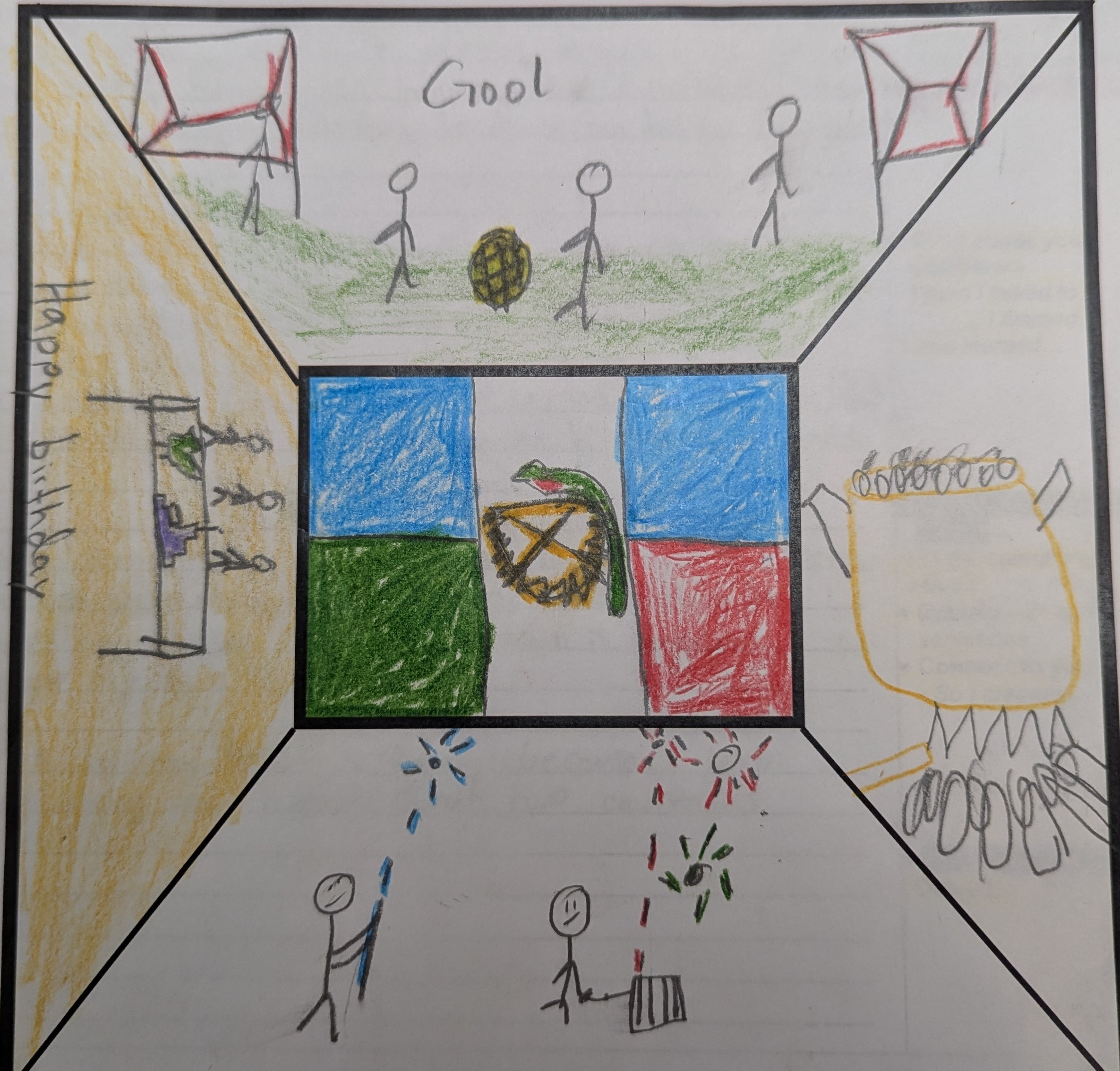
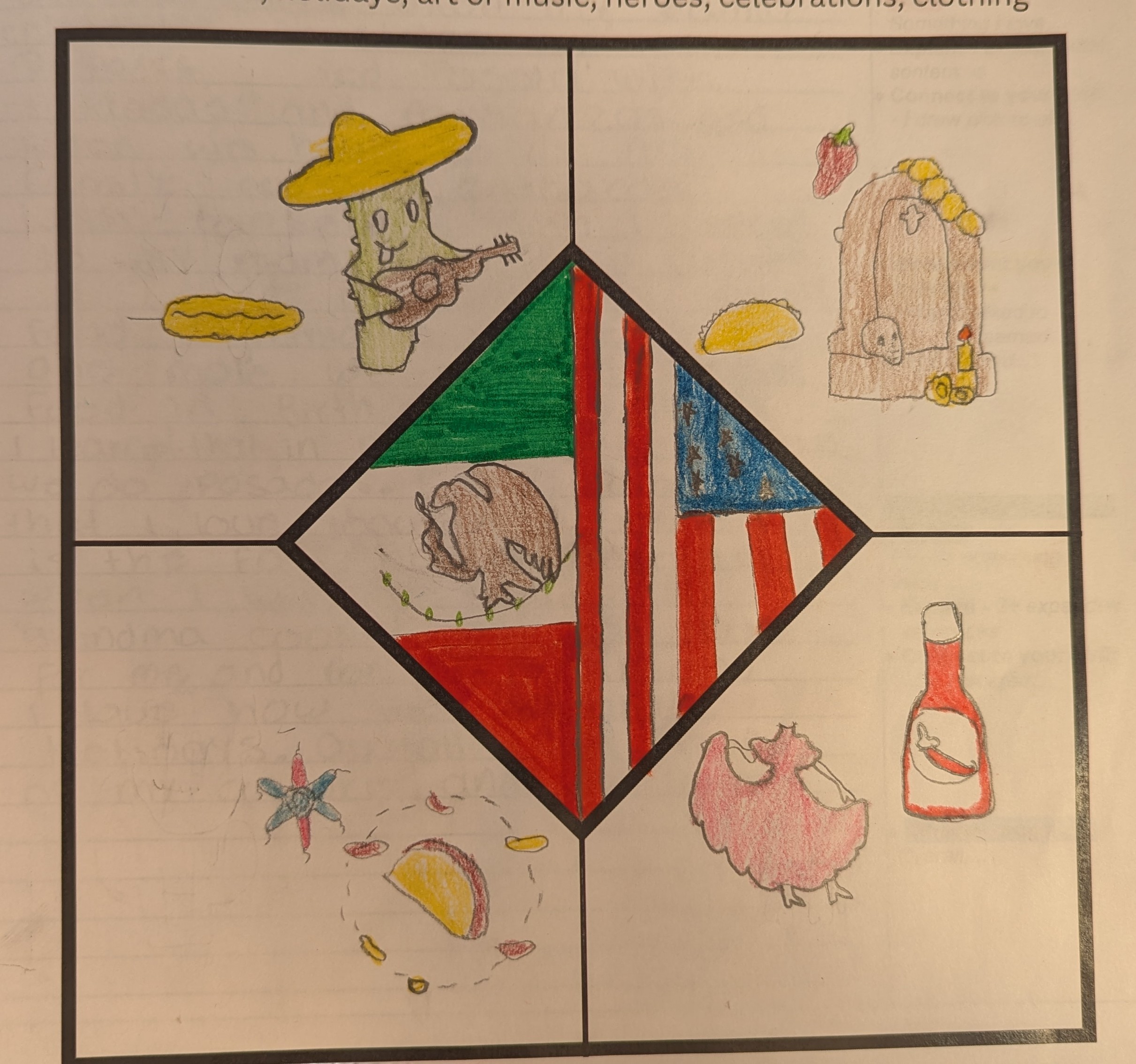
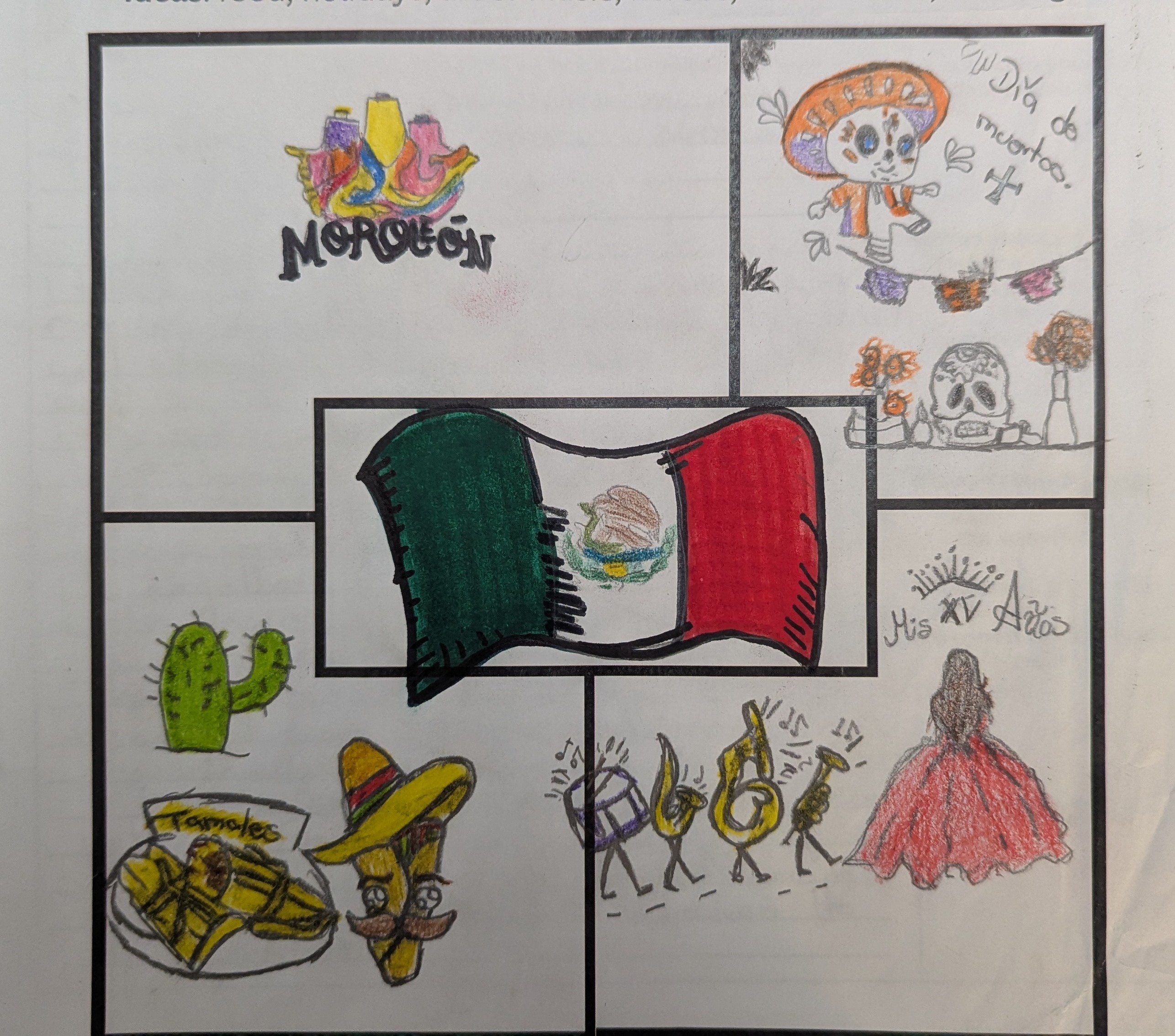
Then came the writing.
Because students had already brainstormed, researched, and discussed their ideas, they had a wealth of language to work with. Instead of struggling to get started, we could focus on developing their ideas, organizing their paragraphs, and expanding their writing. The project ended with a celebration. Students shared their quilts and essays, learning about each other’s cultures and experiences. I also printed their work post on our publication walls and to share with families during spring conferences—an added layer of pride and connection.
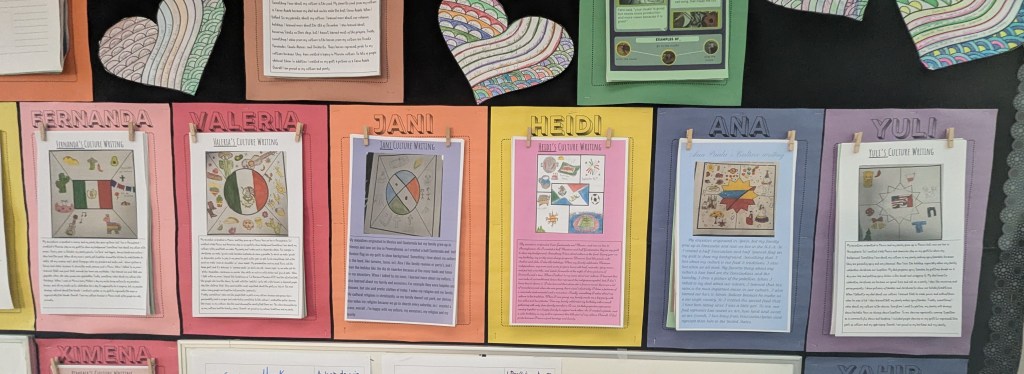
More than anything, this project reminded me of the power of conversation. Students learned they have a lot to say by getting the opportunity to speak. The gallery walk and talk brainstorm invited students to build on collaborative knowledge. The interviews students conducted with family members didn’t just give them content to write about—they created space for connection, storytelling, and the passing down of culture. The celebratory sharing invited students to show off their hard work while also learning more about each other. These conversations became the heart of the writing, making it more meaningful, more personal, and far more than just an assignment.
Kelly Virgin is a WCWP teacher leader who teaches high school English for the Kennett Consolidated School District.




 write.share.connect