Skip to content

Posts from the ‘PAWLP’ Category

Book Review: We Got This: Equity Access, and the Quest to Be Who Our Students Need Us to Be by Cornelius Minor

Written by Gwen Dandrea, Kristen Mascitelli, and Morgan Schwalbe

Introduction

Cornelius Minor’s, We Got This: Equity Access, and the Quest to Be Who Our Students Need Us to Be, is an empowering resource that emphasizes the importance of effectively listening to your students, changing the way you teach to best support learning, and working towards more inclusive practices. Minor identifies tools, traits, and strategies that help teachers craft effective and meaningful instruction to reach the diverse learning styles in our classrooms today. One of his most valuable messages is the importance of listening to your students. Much of his book is devoted to learning how to truly listen in order to meet the needs of all your students. Minor (2019) begins with this powerful quote that summarizes his beliefs, “Our journey starts with an understanding that no great good can be done for a people if we do not listen to them first. Powerful teaching is rooted in powerful listening” (p. xi). 

The book is broken into 2 parts: Part 1 – This Ain’t Everybody’s Hero Story – It’s Yours and Part 2 – Taking Your Dreams off Deferment. The first part focuses primarily on the idea that teachers have important powers and responsibilities. Teachers must not only understand our students, but also act on that understanding. It is also our responsibility to recognize the need for change and effectively find ways to better serve our students. The second part focuses on the circumstances that teachers are presented with every day and how to create a space where kids feel safe. Lastly, Minor urges educators to truly reflect on curriculum and the way we teach in order to be the best employee/teacher we can be. “Any curriculum or program that we buy, adopt, or create is incomplete until it includes our students and until it includes us” (p. 104). The power is ours to have and it is imperative that we act upon it. “We got this!” 

Chapter 1 – Begin by Listening 

“We lose lots of human capital each year because people bearing essential insights and experiences are wearing labels that we’ve been conditioned to ignore” (p. 11). In chapter one, Cornelius Minor explains that testing and mandates are problems, but they are underbosses to the real enemy; business as usual attitudes, binary thinking, and inflexibility. He tells us that each time we accept a label for ourselves; we are not covering our whole humanity. If we continue to do things as they have always been done our students become data points. 

Minor does an excellent job of hooking teachers in with relatable examples. For instance, some teacher labels are new teacher, veteran, admin, rural, suburban, and urban. Wherever you are in your teaching career, you are one or more of those labels. By making the reader think of herself as a label, Minor triggers feelings of empathy for students.

“The antidote to all of this – our teacher superpower – is not some mythical teacher goodness or hyperbolic self-sacrifice” (p. 11). Our superpower is listening. There are three components: the act of listening, naming what we think we heard and planning a response, and making active and long-term adjustments. One of the things he encourages us to do is to build a bridge between what we do in class and our students’ lives right now. Teaching is dialogue and it is important to be clear about why an experience is happening in our classroom. Although listening will not make teaching easier, it will give us our children back.

In summary, we need to listen to what students are really communicating and teach them how to use their voices. We must allow children to have choices so they will not feel the need to fight the teacher as an authority figure. When this happens, you become a better teacher. It is not always easy to stand up for children, but by listening, that is exactly what the teacher can do. 

Chapter 2 – You Can Disrupt the Status Quo in Your Class

“When our vision for kids and for classrooms is guided by a community’s vision for their own children, our work becomes real to children and to parents” (p. 28). In chapter two, Minor discusses the need to disrupt the status quo in the classroom. He shares a story about a student named Jeff. In this story, Minor does not stop to think about Jeff’s need for routine. Rather he thinks of his own need to have his students finish a project. At the end, he realizes that he understands Jeff, but that he did not act on that understanding. He goes on to tell us that racism, sexism, ableism, and classism are systems. 

“The hard part of knowing that oppression lives in systems too is understanding that systems don’t change just because we identify them; they change because we disrupt them” (p. 31). Minor explains the importance of understanding that identifying these systems will not change them. He offers some actions that can influence how to identify what can be changed “right now” in order disrupt the status quo. By changing the status quo, students are able to be included. Being included does not mean that you are simply present. It means that you are in a place where you are able to thrive. Education has ensured that power has not shifted due to our established systems. Minor argues that we need to make a shift in that power. “When considering if I am doing the right thing, I’ve got to define what the right thing is. To me, the right thing is any practice that gives children greater access to literacy, to math, to the arts, to science. To power.” (p. 44).

In conclusion, it is okay to make mistakes. As long as you are thinking about and striving for the maximum number of students to have productive access to classwork, you will be attempting to disrupt the status quo. The ultimate goal is to work toward more inclusive practices for the whole community. 

Chapter 3 – Do You Homework and Then Go for It 

“Sometimes the things that we have to do become tradition, and as tradition ages sometimes those practices do not serve all children. Sometimes we have to change an established way of doing things in order to better serve our kids. Most times, changes that enrich the student experience are sought and welcomed, but sometimes the need for change surprises or eludes us altogether” (p. 49). As educators, we often become so accustomed to our teaching practices that we fail to recognize the need for change. Other times we conform or comply in silence in order to not rock the boat or upset the establishment. 

In chapter three, Minor calls for the urgency in teachers to recognize a need for change to ensure that we are reaching all students. He first emphasizes that this will take time and involves true self-reflection. “After all, it takes time to be a hero” (p. 49). A blank template is provided with questions that help recognize the need for change. These questions focus on what is not working for our students and other teachers, ways to be more effective, and why the need for change. 

Once you have decided the change that needs to be made, it is vital to focus on how that change would most benefit your students. This requires research and time spent following “your hunch” to find the best answer or approach to implement your vision. An informal research template is shared to aid in this inquiry. 

Next, Minor urges you to decide what to do and make a plan for the change. He encourages you to reach out to colleagues, coaches or mentors to assist in this process so that others can support your vision and prepare you for the journey ahead. In order to attempt change in this way, it is also important to be prepared to “make it happen”. Be sure to realize that this change should be small in scale and not yet ready to take on the entire system. The following suggestions are offered when making your plan

  • Imagine how this change might happen.
  • Select a small population of students to study.
  • Make a five-day plan for how you will implement the changes you have chosen.
  • Choose how you will measure the impact that your work is having on students.
  • Decide how you will share your findings. 

Now, it is time to set that plan in action. Minor reminds the reader to be prepared that it may not go as planned. It is important to continually revise your plan as you begin to implement the change. People will support you if your plan is well researched, thought out, and based on data produced from your classroom. Keep in mind your reason for change and ultimately have your students’ best interests at heart. 

Finally, and maybe most importantly “find a productive way to say no”. It is vital to recognize that not all change is good, the need for change may vary, and that things may not go well from the beginning. There are many variables that affect what we value in our classrooms. Minor emphasizes how our values and the students we teach impact our decisions to make a change. 

In conclusion, chapter three provides a structure for identifying and changing things that are not effective in the classroom. Minor’ rules of conduct for change advises that you do some reflection, conduct research, make a plan for implementation, determine the impact of the change, and finally communicate your findings with administration. “This work is not about saying no just because we do not like a thing. This is about carefully considering the needs of our students and using our no power to ensure they get what they need” (p. 70). 

Chapter 4 – Show Kids That You Hear Them

As educators, how quickly do we take our students and turn them into enemies (p. 80)? This powerful chapter urges teachers to ask ourselves this profound question and truly reflect on how we view our children. Are we quick to judge students with disabilities? Do we characterize them based on their behavior? For whatever reasons, our unspoken actions and reactions often do not allow us to look deeper into our students’ beliefs and perceptions. “The kids are not the enemy. They are simply responding to the things in their world in the best ways they know how” (p. 80). It is up to us as educators to simply listen to them. 

The idea in this chapter is to show kids that you hear them. As a classroom teacher, we have the power to create a space where “kids feel safe” and will in turn become active listeners holding the same power as you. One suggestion is to plan for and hold regular classroom meetings. Minor believes that these simple meetings will build rapport with your students and work towards maintaining a successful classroom community. Meetings can address many topics and can take place in many unlikely places throughout the day. “These meetings do more than feed you information. They give your students the experience of being heard” (p. 83). The relationship building that occurs during this time is so valuable in allowing your children’s voices to be heard. Providing the time and structure of a classroom meeting will greatly impact your classroom practices. 

It is also important to hear your students through designated feedback. Giving students the opportunity to be heard shows that you value them and their opinion. It also allows students to work on self-improvement and positive communication. Minor asks for feedback in these three areas: use of time, the clarity of his demonstrations, and how well assignments and assessments are constructed. These areas help to build trust, student engagement, and a positive classroom community. He believes that after time with these types of feedback will in turn “condition” them to begin to discuss your teaching practices and how to better suit their individual needs. 

Finally, Minor calls for a shift from a punitive to an instructive mind-set. “We often assume that kids know and have what it takes to succeed in our classroom. This is a dangerous assumption to make, because it leaves so many children without a way to access success” (p. 92). This profound statement challenges educators to again show kids you hear them by providing them the skills and resources to be successful. Being prepared for the challenges that lie ahead allows you to begin that shift in mindset. A blueprint for shifting your mindset is provided to facilitate success each week and finding ways to help each other in the classroom. These approaches will help foster a sense of community, as well as a shift towards student independence. 

“My job as a teacher is not to teach the curriculum or even to just teach the students; it is to seek to understand my kids as completely as possible so that I can purposefully bend curriculum to meet them” (p. 101).

Chapter 5 – Make Curriculum Work for Your Kids

“Crafting and sustaining an inclusive approach and pairing that with academic content takes insight and time and research and resources that I don’t always have” (p. 105). Chapter five focuses on learning experiences that are accessible and meaningful to students. In order to create curriculum and lessons that students can access, we need to know our students. By understanding students’ background knowledge and learning styles, we can help students create connections between curriculum and their own experiences. 

Minor shared several ideas for teachers to think about when planning from a curriculum that we have been given. He said when we are working with a Universal Design Framework (p. 109), we should think about how individual children seem to respond when we… 

  • … consider different ways that the information that I present can be represented? 
  • … create different opportunities for action and expression in the classroom? 
  • … foster multiple ways to sustain engagement? 

By readjusting our instruction to meet the needs of the students in our classroom, we create more opportunities for them to experience success. 

Additionally, Minor talked about the importance of teacher collaboration. Whether it is planning or just conversing with a colleague, these conversations about curriculum allow us to determine how to best deliver our instruction and make it accessible for all students. Minor’s chart about dissecting a lesson (p. 116) encourages teachers to look at curriculum through a different lens to focus on purpose, importance, delivery, assessment and reflection. 

Finally, Minor addresses a topic that many teachers can relate to test prep. “It has been well documented that standardization, assessment and measurement are not bad things at all. But an unhealthy emphasis on any of these things can be detrimental to a learning community and harmful to children” (p. 119). While test prep is a reality in many schools, he reminds us that test prep is not teaching. It is more of helping students apply what they already know in different situations. Minor’s final reminder is that it is most important to be mindful of how we are presenting information that is effective and meaningful for all of our students. 

Chapter 6 – Being a Good Teacher Versus Being a Good Employee

“When we want to be self-determining in terms of our professional growth, the first thing that we can do is believe that things can be different” (p. 129). Minor focused on the importance of teacher mindset. Our attitudes towards any aspects of our career drive our decisions and expectations. It is time for a shift in our thinking when we begin to complain and gossip about things happening in school. 

Minor provides a number of tools to engage in mindset work. It is important for us to be open to advice from others. Searching for creative ideas to incorporate into the classroom betters our instructional practice. Setting goals and communicating them with students, colleagues and administration helps to hold us accountable for following through with mindset work. 

Keeping a universal design framework in mind, feedback is a key component in this process. “There are three kinds of feedback that I consistently seek in school – mine, kids’, and colleagues’. Most times I seek them in that order” (p. 137). Being reflective as a teacher enables us to determine strengths and areas of growth. Student feedback is important because they are the ones being directly impacted by our instructional decisions. Feedback can be evident in a number of ways, especially in students. We need to focus on the verbal and nonverbal feedback because this can be powerful. Being receptive to feedback from colleagues allows us to grow professionally, too. 

As teachers, our ultimate goal is to help students be successful in and out of the classroom. Having a reflective approach towards our teaching allows us to be a great teacher instead of just a good employee. We can inspire positive change within the school system and empower our students to be responsible for their own learning. 

Conclusion

We would recommend this book to any educator who is looking for a way to change or improve their classroom practices. It is a quick and easy read to help navigate change, make curriculum relevant, and provide equal opportunities to all students by simply listening to what they have to say. Additionally, a user-friendly book provides a number of graphic organizers to help teachers be more reflective in their own teaching. Minor’s ideas and theories are applicable across grade levels, fields of study and diverse socioeconomic school settings. 

In conclusion, this text is a powerful resource for teachers who are seeking individual growth as an educator. By focusing on equity, collaboration and engagement, Minor provides countless opportunities for teachers to reflect on their own instructional practices and make small adjustments that can have a long lasting impact on student achievement. Minor’s ultimate goal is to inspire teachers of all levels to promote change and to be heroes in their own classrooms. 

Distance Learning: Reflecting on Pandemic Priorities

By Courtney Knowlton

Back in mid-March my principal sent an email  entitled, “Emergency Staff Meeting at 3:15 pm.” It was a jarring phrase to read in the middle of an otherwise ordinary day. The purpose was to let us know that students would be off the following Friday and Monday, so we could prepare ten days worth of plans for distance learning. Little did we know that Thursday would be the last time this school year that the students gathered at the front doors of our school and we would need distance learning plans for much, much longer than ten days.

That Friday I sat in a classroom with my colleagues to develop a preliminary plan, and for the last four weeks we have taught our students from a screen. One of the most challenging parts of designing this online learning experience was sifting through the bombardment of resources. I received over 40 emails touting “virtual offerings” and “free access due to school closures.” The distance learning paradox is that I seem to have an unlimited supply of free resources, but I have a much more limited amount of time to interact with my students on a weekly basis. It felt overwhelming at first, but I discovered a process that helped to make the best of these challenging times.

When visualizing how to reach students virtually, it helped me to brainstorm a list of priorities. Here is my list so far:

  1. I want to show students that I care using whatever means necessary, whether we connect by video chat, phone, or mail.
  2. I want to develop something that my students can depend on, since they are dealing with so much change.
  3. I want to incorporate elements that my students are familiar with to give them a sense of comfort.
  4. I want to give students choice during a time that they may feel that so much is out of their control.
  5. I want to use technology to my benefit to give students more one-on-one time and specific feedback.
  6. I want to find ways for students to interact with each other. 
  7. I want to assess students with high expectations, but also with flexibility and understanding knowing they have different levels of accessibility and different home situations.
  8. I want to remember to think about my own health and wellness and try to maintain a work life balance.

Throughout March and the beginning of April I have tried to keep these priorities in mind when creating my Google Classroom. So far, I would say I have been most successful with 1, 2, and 5, and honestly 4, 6, and 8 have been quite a struggle. For me, it was an act of inquiry. I would try something, see how my students responded, and adapt accordingly.

Regarding connecting to students, I learned most of them could be reached using the announcement page on my Google Classroom or via messaging their parents on Class Dojo.  Thankfully my school was able to give out Chromebooks and once all the students had access to the technology, the best way to explain how to use it was by inviting them to a video chat and sharing my screen with them. Then, I could model how to navigate the site. I learned to be patient. At first hardly any students attended the chat, but over the weeks more and more logged in. Video chats were also a great way to bring a little fun into our situation. For example, we did one to sing happy birthday to a student, and I found an old party hat and bright pink noise maker in my basement that made the students laugh. 

To create something the students could depend on, I consistently provided information for them and their parents on our Google Classroom. At the beginning of the week I posted a grid organized by day number with a numbered list of work. Then, within the assignments tab, I titled each assignment using the format: Week #, Day #, Description. When the students clicked on the assignment they found two resources. The first was a video that I made using Screencastify. Each video showed my computer screen, while I explained the directions for the assignment. The other resource was their own copy of a Google Doc that I created for them to submit their thinking. Sometimes after checking the students’ work, I realized my weekly plan needed to be tweaked.  If this happened, I would add CHANGE IN PLANS to the assignment title. Even though the work was different week to week, I found that keeping these elements consistent helped to minimize the amount of questions I was receiving for how to complete it.

Over the next few weeks, I will continue to look for guidance with my priorities. Attending Zoom meetings with my professional communities has made me feel more grounded and better equipped to handle teaching from home. In some ways this shift to distance learning has made me feel more alone, but in other ways it has given me new ways to connect with others on a global level.

Call for Distance Learning Blog Posts

The PAWLP Blog would like to hear from you! What does distance learning look like for you, your students, and your school district? What digital programs are you using? What lessons have you tried out? What routines and expectations are you establishing? How are you finding a balance?

Blog posts will be featured in our Distance Learning column each Monday. Please email the PAWLP blog if you are interested or would like to find out more information.

Distance Learning: Establishing a Work Completion and Grading Policy

By Lauren Heimlich Foley

The last few weeks have felt like a whirlwind blend of late August preparation and early September go time. The amount of new information, last minute changes, and not knowing what tomorrow will bring makes me thankful that I usually only experience the strain of back to school once a year.       

Now in the throes of distance learning—with a scheduled meeting time for each class, priority standards in place, expectations for online behavior, and a revised year-long reading and writing map—one more item came up in my eighth-grade team’s text message thread: a work completion and grading policy.

At the middle grades level, students have a two-and-a-half-hour block of time each week for each class. (First and second period meet on Monday, third and fourth period meet on Tuesday, fifth and sixth period meet on Wednesday, seventh period meets on Thursday. Thursday and Friday offer additional office hour time and independent work time.) During that class period time, teachers are available for real-time virtual office hours, whole-group meetings, small-group meetings, and one-on-one conferences. There is a thirty-minute lesson with up to an additional sixty-minute long-term assignment. Although students are encouraged to complete the work during their period’s time slot, home and personal obligations may make this impossible for students to do. While all students have access to a laptop through our district’s 1:1 initiative, our students have varying levels of responsibilities at home. To help students be as successful as they can be and stay on top of their work, we are asking students to complete each week’s assignments before our next scheduled class time. With our district moving to a Pass/Fail option for the fourth marking period, we want to ensure that our students have the time, guidance, and help to be successful.

Like the start of any new school year, I needed to establish routines and expectations. I have started to do this with Canvas, our learning management system, by maintaining certain key components of our class and creating new routines like our Office Hours One-on-One Discussion Board. Our district asked teachers to develop class guidelines by explaining how distance learning would work within their own classroom. And, while we have a district-wide Pass/Fail grading system in place, my students and their parents needed more information on how this translated to our English classroom.

The science teacher on our eighth-grade team made a grading letter, outlining the expectations and guidelines for distance learning. With a few content-specific tweaks, I adapted it for my English classroom. First, we sent an email blast to all students. Next, we sent an email blast to all parents and guardians. See the emails below. By sending out an email that genuinely hoped students and families were doing well while simultaneously offering insight into how the rest of the school year would work in terms of work completion and grading forged a we-are-working-together-and-we-will-get-through-this bond. Being transparent and upfront with parents and guardians and showing I care for the well-being and success of their students has helped me maintain positive parent-guardian relationships. I sent out the email on Thursday, and I have already received two positive emails in reply.

Although I would like to think the letter will ensure all students turn in their work on time the first week, I know I will have missing work. Being flexible will also be an important part of making this grading policy work. Monday, April 24th will mark a complete, one-week cycle for all classes under our district’s Phase II of Distance Learning and of our new grading policy. For students, who have not turned in work that first week, I will reach out to students and their parent and guardians. Although my grading policy says work turned in late will be marked as failing, I will be flexible this first week, allowing a grace period to ensure everyone is on the same page and understands the expectations.

With the announcement that schools will not be returning to our physical classrooms this 2019-2020 school year, specific guidelines and a little extra TLC—for me, for my students, and my parents and guardians—will help us make it through.

Call for Distance Learning Blog Posts

The PAWLP Blog would like to hear from you! What does distance learning look like for you, your students, and your school district? What digital programs are you using? What lessons have you tried out? What routines and expectations are you establishing?

Blog posts will be featured in our Distance Learning column each Monday. Please email the PAWLP blog if you are interested or would like to find out more information.

Punctuation Through Poetry

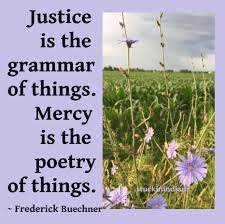
Justice quote

While I am quite certain my 7th graders have been introduced to and worked with punctuation marks of all kinds, they don’t seem to have mastered them. This fact started me on a quest for grammar activities which would help my students take ownership of their punctuation choices, while stoking the fires of interest and creativity. What better way than through poetry?

Justice – “based on or behaving according to what is morally right and fair.” I definitely want my students to use punctuation for the the purpose it was meant for, and I found a fabulous book of poems that creatively introduces readers to punctuation marks and how they can bring words to life. This is one of my favorites.

Semicolon
Betty Franco

We’re called semicolons.
Our job is to link.
On the pages we’re quite friendly;
We look like a wink.

We help different clauses
that need to unite
by linking them up
to deliver more bite.

We’re like couplers for train cars
lined up on a track;
we keep sentences chugging,
cutting all the slack.

First, we read the poem and notice the punctuation marks and what their purpose is in the writing. After linking this discussion to the work we have already done around the topic, students write their own poems using this as a mentor text. They enjoy writing the poems, and they get practice with the semicolon without feeling like they are being forced…a win – win.

Mercy – “compassion or forgiveness.” Although punctuation is very important to a writer and is essential to conveying a writer’s purpose and meaning, it isn’t set in stone when it comes to poetry.

I love to have my students write poetry so that they have an opportunity to use punctuation in non-conventional ways to express meaning. That is where the mercy comes in. Students have a difficult time “playing” with punctuation and trying things besides the “safe” option when writing poems. They often question their use or non-use of punctuation in poems and want my “blessing” that they are doing it “right.”

It is my hope that my students leave me as writers who know how to follow the “rules” as well as when it is appropriate to break them. Do you have some favorite ways you use poetry in your classroom? Please share in the comments below.

Rita DiCarne teaches 7th grade ELA at Our Lady of Mercy Regional Catholic School in Montgomery County and is a PAWLP Writing Fellow. You can read her personal blog at ritadicarne.com.

Distance Learning is the new Bike Riding

By Lauren Heimlich Foley

I remember, a spring day much like today, I learned to ride my bike. Taking off the training wheels, left me feeling unsteady. Somehow, the uneasiness pushed me forward, and eventually all of the teetering and balancing paid off. With lots of practice and my dad’s help—and patience—I found the freedom of the open road.

The last three weeks of teaching remind me of when my training wheels came off. I have been trying to find a balance between home life and work life while learning best practices of distance learning through virtual meetings.

With this new teaching format, I wanted to get my students feedback and see how things were going on their side of the computer screen. After one week, I asked them the following questions:

  1. What assignment, activity, or aspect of English distance learning have you enjoyed the most? Why?
  2. What assignment, activity, or aspect of English distance learning can I improve? How?
  3. What is your preferred method of communication with me: Canvas assignment comments, Canvas discussion boards, email, Teams messenger, Teams phone call? Why?
  4. What about distance learning has been the biggest hurdle?
  5. What about English distance learning has been easy and/or have you enjoyed?
  6. What about distance learning surprised you?
  7. Is there anything else I should know?

I choose one specific area of feedback to focus on—preferred method of communication—because so much of our class depends on one-on-one and small-group conferencing.

Although I tried giving feedback on assignments in our learning management system (LMS), my students shared that it was difficult for them to find the feedback and respond to me. The first week ‘conferences’ ended up being mainly one-sided. Although email was a viable option, my students and I receive so many emails throughout the day that it would be difficult to keep track of so much mail. However, they liked how email made it easier to have a ‘conversation.’

I was not sure what to do with their feedback. I knew Microsoft Teams was an option for virtual meetings, but the chat feature would not provide the one-on-one interaction my students and I needed. While walking one beautiful day, I came up with the following idea: create one-on-one discussion boards.

In school, I use discussion boards for whole-class sharing and small-group publication, but I never used them for one-on-one conferencing. If you have a discussion board feature in your LMS, check to see if you can create something similar. Instead of creating groups with multiple students, I created a discussion board with only one student in it. The discussion board essentially works like text messages, offering a place for students to chat with me during our class period and throughout the week. There is a reply button that we both use to keep the conversation going. We meet virtually on the discussion board, and I can provide differentiated instruction. I have answered questions, clarified directions, offered feedback, and suggested books. The discussion board is the closest thing to re-creating our one-on-one conferences. And, they are working! During a second round of feedback, students shared that they like being able to talk to me without the entire class seeing what they said. Their answers also confirmed that they like the discussion boards because they offer live feedback from me and are easy to find and reply to. All in all, these discussion boards have become a reliable, ongoing source of communication.

For next week, I am working on re-creating students’ small-group and table-group conversations through Microsoft Teams. Students are filling out surveys that ask them whether they would like to have a small-group chat about their writing piece or book or have time to share with their table group. I hope this new tool helps students collaborate and receive additional feedback.

Many days I feel like a first year teacher again. So many aspects of distance learning are brand new. In theory they work, but I have to figure out what works best for my students and for me. Getting their feedback on conferencing and discussion boards helped me to find a sense of certainty amid the unknown.

I am trying to embrace the unsteadiness of distance learning like the first time I rode my bike without training wheels. Through it all, I keep reminding myself to experiment and breathe. Chatting with my students, reading their writing pieces, and talking about books has brought me joy during a crazy time. I owe this happiness to my students’ honesty and the one-on-one discussion boards. I hope you are finding the right technological tools for you and your students.

Call for Distance Learning Blog Posts

PAWLP would like to hear from you! What digital programs are you using? What does distance learning look like for you, your students, and your school district? What is bringing you joy? What technological tools are you using?

Please email the PAWLP blog if you are interested or would like more information.

A Love Poem to Poems

Poetry is my favorite kind of writing and let me tell you why

In my opinion it is the easiest type of writing you can try.

Poems can be about whatever you may wish

The ocean, your baby brother, your favorite homemade dish

A poem can rhyme, but it surely doesn’t have to

You can make poems into shapes or write a nature haiku

A free verse poem doesn’t have any rules

Pantoums and acrostic poems are often taught in schools

Poems can be short or poems can be long

In poems punctuation and grammar are allowed to be wrong

Poems have lines, stanzas, and breaks.

When writing a poem, though, there are no mistakes

I love poems the most they brighten my day

Sometimes my poems have a lot to say

Because poems can crack your mind open wide

And let out a voice you didn’t know was inside!

Jen Greene ©2020