Skip to content

Posts from the ‘PAWLP’ Category

Culturally Responsive Writing Instruction: A Summer Writing Opportunity By Dr. Aileen Hower

One of the most rewarding experiences as a teacher educator and professional development coordinator has been coordinating and facilitating Summer Writing Institutes for Millersville University of Pennsylvania, one of the ten PASSHE Universities, alongside West Chester University of Pennsylvania. Since the summer of 2018, I have been planning these one-week intensive Writing Institutes, partially due to feeling so passionate about supporting teachers in their teaching of writing to their students, but also due to the strong feedback from graduate students about their interest in learning more about how to teach writing more effectively.

Previously, weโ€™ve crafted Summer Writing Institutes around poetry, best practices in writing instruction, how to inspire reluctant writers, and even grammar (yes, grammar instruction). This past summer (2025), I felt called to combine the topics of Culturally Responsive Writing Instruction in light of all that is going on across the state of Pennsylvania. Millersville University, like West Chester, is located close to one of the 12 urban school districts, with most teachers across the middle of south-central Pennsylvania instructing students from a wide array of backgrounds, both culturally and socio-economically. Many teachers throughout the courses that I teach express wanting to know more about how to teach with cultural responsiveness in mind. Therefore, I felt that merging the two concepts: culturally responsive teaching and writing instruction would appeal to teachers. The response was positive!

Before we met for the one-week intensive, students in the course read Tricia Ebarviaโ€™s Get Free: Antibias Literacy Instruction for Stronger Readers, Writers, and Thinkers (2023)text as well as Matthew Kay and Jennifer Orrโ€™s We’re Gonna Keep On Talking: How to Lead Meaningful Race Conversations in the Elementary Classroom (2023). Due to having 3 high school teachers enrolled in the course, I gave them the option to read Kayโ€™s Not Light, but Fire: How to Lead Meaningful Race Conversations in the Classroom (2020) instead. I find that the more opportunity for teachers to personalize the learning the more responsive they are to adopting some of the concepts they learn throughout the week into their teaching practices.

Being able to then hear from the speakers of the course texts was a huge benefit to the attendees. While not always possible, it is a great way to allow teachers (and presenters) to dig deeper into the concepts, as they have already prepared for the learning with the authorsโ€™ texts. Teachers also had the opportunity through the pre-Institutes writing assignments on the texts to think about how the information in the texts applied specifically to their teaching and students. They came prepared to ask in-depth questions and dig deeper than just a summary of the learning. Of course, we only had 2 hours with each speaker, but it was helpful to have the books already read before starting the conversation.

The format of the week includes time to collaborate in the room (and online in breakout rooms – the course is held multi-modally, meaning there are in-person and online students who attend. This has supported teachersโ€™ attending in the summer and from further away. While I would still say that attending in person is the best (there are giveaways and food, as well as robust discussions and collaboration), feedback from online students has been positive as well, as sometimes the speakers are also online (helps in hearing from presenters regardless of their location (as well as budget)), which offers a more dynamic experience for the online attendees. Millersville University utilizes LiveStream technology, so when a speaker is present, we share the screen with online attendees and also have a camera on the speaker throughout their presentation. Online presenters (as well as attendees) can see and hear whatโ€™s going on in-person through the same technology.

We meet for more personalized learning each morning, learn from a keynote speaker for 2-hours in the morning, break for lunch and conversations, learn with a breakout speaker in the afternoon, and then have collaboration and work time afterwards until the end of the day. There is daily reflection built into the week, as well as the opportunity to work on an individualized final project while having access to colleagues (often from similar grade levels or districts) and the course instructor to guide this work.

One thing I greatly appreciate about all of the speakers who present during the week is how hands-on they plan their learning. For example, during Trisha Ebarviaโ€™s presentation, teachers created a personal timeline to create a lens through which to view the information from the text and presentation. Ebarvia facilitated teachersโ€™ reflection and also their critical view of what was present/absent in their timeline in tandem to the dominant and โ€œmore completeโ€ narrative that texts read in school often communicate. Evarvia was also able to conduct hands-on simulations and share specific practices from the classroom, which was highly valued by the teachers who attended the Institute.

Likewise, Matthew Kay and Jennifer Orr were able to be Keynote speakers later in the week. Teachers, again, greatly appreciated simulations, in person discussions with the authors/presenters/teachers who have had first-hand experience with this work in their classrooms, as well as Jenniferโ€™s extensive list of culturally responsive texts to use in classrooms. This especially resonated with teachers and their final project was to update a series or lessons, a unit, an instructional time of the day (such as morning meeting), to include more texts that discuss topics and characters that better align with the students in their classrooms.

The whole week is populated with Keynote authors/presenters and then breakout presentations delivered by local teacher leaders. While it is always a draw to have national/internationally acclaimed speakers/presenters, it is such a powerful opportunity, especially for networking, for local teachers, especially those who are looking to have presentation experience, or to share their personal research/work with others. This past summer, two of our most powerful presentations were delivered by a local spoken word poet/author and by a local school district administrator.

I met Julian โ€œJuelzโ€ Davenport through my work with โ€œnErD Camp PAโ€ a few years ago. He visits school classrooms, mostly in the Harrisburg area to discuss writing and the importance of oneโ€™s story with students. I thought it would be a powerful experience for teachers to meet Juelz to hear how he has been inspiring students in central Pennsylvania to write. Juelz shared his story with teachers and got them to write about theirs. Then he transitioned to sharing ideas for how to inspire students to write. It was an inspiring and extremely authentic time of learning and vulnerability that really resonated with teachers as all of them had taught a Juelz; all of them want to inspire their students to write the way that Juelz has been able to inspire students in local schools.

Our other huge local success was inviting Dr. Danielle Miles, an Administrator in the School District of the City of York. Dr. Miles has presented previously, numerous times, at Millersville University, on CR-SE topics. On the last day of the week, I like to invite a speaker that might seem slightly off-topic (writing), that works to be inspiring to the teachers. Typically, the attendees are an incredibly inspiring group of educators to work with. They are either in a graduate program or taking a graduate course in the summer to learn in a specific area. As a teacher educator, I want to make sure that teachers know that this is admirable. I work to leave them with something that communicates my admiration for the work that they do (during the year as well as all of the other times). Dr. Miles was the key to closing out the week well. She presented on: Rest, Responsibility, and Revolution. She started by validating teachersโ€™ experiences, took them through some powerful thought exercises, and encouraged them in the knowledge that the work they do and every time they encouraged students to tell their stories, they were doing critical work for the future. Iโ€™ve been planning this summerโ€™s Writing Institute since last November. I learned that Mark Overmeyer published a new book on writing. I am working to build the week around the theme: When Writing Workshop Isnโ€™t Working. It will be a wonderful Institute and teachers will grow in their confidence in teaching writing and possibly learn to enjoy teaching writing even more. But there was nothing more inspiring than learning about and with a group of educators who wanted to learn how to best engage and instruct their students.
Learning Through Exploration

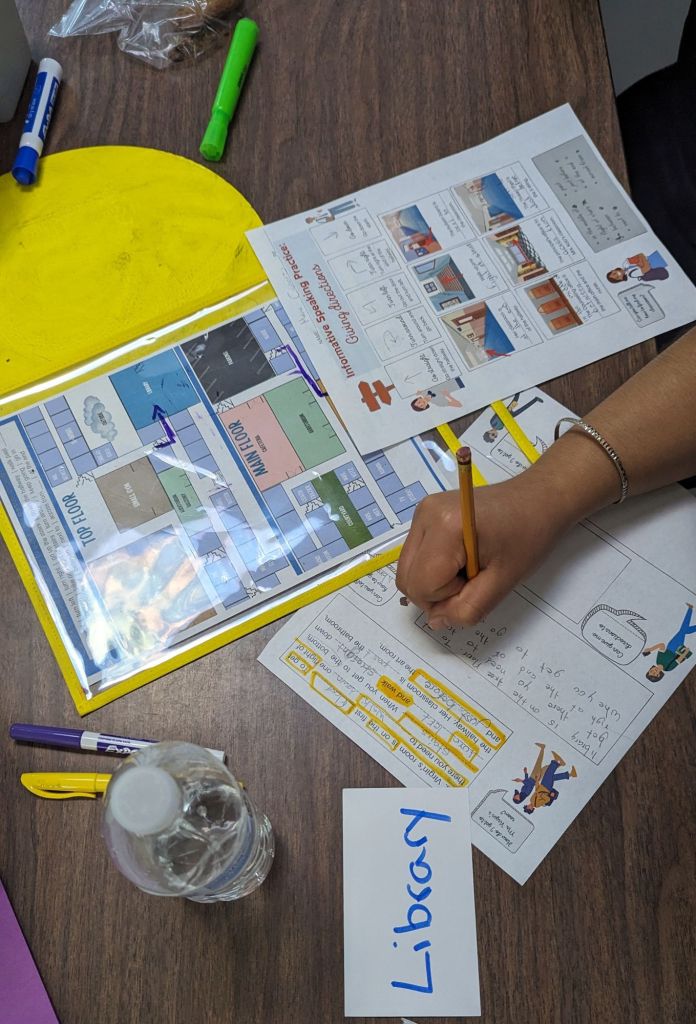
Throughout in the school year, I like to give students chances to learn beyond the four walls of the classroom. Early on, one of my favorite ways to do this is by turning them into โ€œexpertsโ€ on their own school building.

This week, for example, students started class by studying building maps. They drew routes to different resources around the school, then teamed up to practice their English by writing out step-by-step directions to those spots. After that, they got to put their directions to the testโ€”walking the routes, talking through them, and even creating a second set of directions to a new location.

Itโ€™s a simple activity, but one thatโ€™s engaging and collaborative. The maps, conversation, and exploration help students build both confidence with language and comfort in their surroundings.

Later on, this activity will grow into a larger project. Students will each choose one school resource to research in greater depth in order to create a student-friendly guidebook that explains what the location has to offer. Their written directions will be just one small part of the final productโ€”alongside a Q&A with the resource expert, plus the key facts and supporting details they uncover along the way.

This project not only strengthens their language skills, but also helps them see the school as a place full of people, spaces, and opportunities ready to support them.


Kelly Virgin is a WCWP teacher leader who teaches high school English for the Kennett Consolidated School District.

An easy strategy to kick start student collaboration

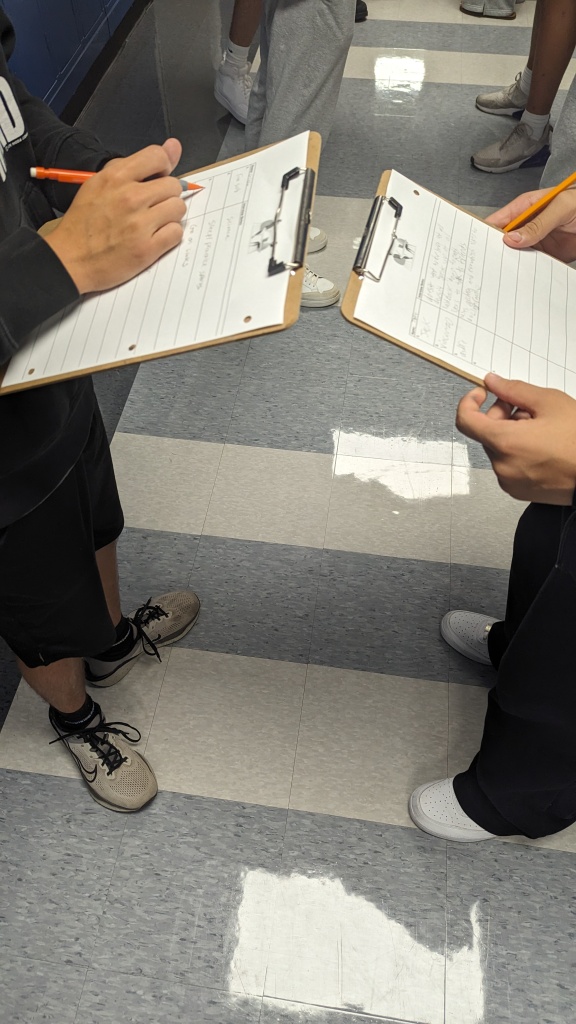
Want to get your students talking? Hand them a clipboard and get them on their feet. Early in the semester, I like to pose a simple question: What do you need to know about someone to know youโ€™ll work well together? After a few minutes of brainstorming, I give each student a clipboard with a blank chart, and we head to the hallway.

Students line up facing each other, and with a 90-second timer running, they talk. The clipboard gives them something to look at, and the questions give them something to focus on. While these elements make the conversations feel low-stakes, they often lead to high-reward connections.

Conversations donโ€™t always stick to the promptโ€”but honestly, those off-track moments are often the best ones. When the timer goes off, one row of students shifts down to new partners, and the process starts again. Before students leave for the day, I ask them to jot down the names of classmates they think they could work well with.

This quick activity gives me useful input for seating arrangements and helps students see that effective collaboration doesnโ€™t always depend on sitting next to a friend.


Kelly Virgin is a WCWP teacher leader who teaches high school English for the Kennett Consolidated School District.

A Review of With You or Without You by Eric Smith

By Janice Ewing

            If youโ€™re looking for a high interest, locally based young adult novel to share with your middle or high school students, Iโ€™d like to recommend Eric Smithโ€™s With You or Without You. Set in present day Philadelphia, this is the story of two teenagers, Jordan and Cindy, who work on rival food trucks with their families across a busy city street. Publicly, the teens are feuding as well. The twist, which is quickly shared with the reader, is that Jordan and Cindy are in fact boyfriend and girlfriend. They keep their relationship hidden from public view because the rivalry has taken on the life of its own and brings attention and business to both trucks.

            As if this wasnโ€™t complicated enough, the producers of a reality TV show get wind of their situation and offer them the opportunity to film a pilot based on their rivalry. Reality TV is a passion of Cindyโ€™s and she is thrilled at the opportunity. Jordan, not so much, but in spite of misgivings the two families agree to move forward with the project. At the same time, the pressure is building as both families prepare to compete in Truck Off, an end-of-summer food truck competition with large cash prizes that have the potential to impact the future of all involved.

            The stresses of this pivotal summer after high school graduation uncover old resentments and trauma within and between the families. Perhaps most importantly, Cindy and Jordan have to come to terms with the fact that they have different goals for themselves as individuals, in spite of their commitment to their relationship. Presenting the story in alternating first person points of view, Eric Smith sensitively and colorfully portrays the range of complicated emotions in navigating struggles around allegiance to others versus fulfilling oneโ€™s own dreams and facing the future with autonomy This is a highly engaging story with a wealth of themes to explore. Of note, the book has been selected as one of two titles for the Pennsylvania Center for the Bookโ€™s 2025 Great Reads from Great Places program.

Smith, Eric (2023). With You or Without You. inkyard Press.

Janice Ewing is a 2004 fellow of the West Chester Writing Project (the Pennsylvania Writing and Literature Project at that time) and a current member of the advisory board. Her interests include teacher inquiry, collaboration, and mentoring. She and Dr. Mary Buckelew, are the coauthors of Action Research for English Language Arts Teachers: Invitation to Inquiry (Routledge, 2019).

The End of the School Year Approaches By Janice Ewing

            The approaching end of the school year is often a time for reflection. For many teachers, this has been and continues to be a year filled with local, national, and world events that challenge our basic understanding of humanity and of our role as teachers. In this context, I believe that reflection is of more value than ever, as we pause to look back and ahead.  We might consider:

What worked well, what we would do differently?

 What new opportunities and challenges might the new school year bring?

 What elements of change are within our control?

 For goals that donโ€™t seem to be in our control, what are our options to attain them, or work around them?

ย If weโ€™re advocating for change, at any level, what form can that take?

 In that spirit, here are some areas of reflection that educators might want to explore, individually or within partnerships or groups:

Physical arrangement of classroom

How did the layout of my classroom work for my students and for me? If you made changes to the physical organization of your space during the  school year, what effects did they have? What do you want to keep the same for the next school year? What do you want to change, and what do you need to do to accomplish that?

Relationships with students

What were some positive aspects of your studentsโ€™ interactions with you and with each other? What did not go well? Did you make changes to increase the quality and quantity of interaction with and among students during the school year? What were the effects of those changes? What are your goals for next year in this area?

Relationships with faculty and staff

Did you have supportive, collegial or mentoring partnerships with other adults at your school? If so, how can you deepen those relationships? How might you begin to develop them if they were lacking, or look to a larger educational community for sustenance?

Relationships with parents and larger community

How did you connect with the adults in your studentsโ€™ lives? What have you learned about the community in which you teach? How might you learn more, or interact more authentically?

Curriculum and teaching strategies

What aspects of your content, strategies, and pacing were most and least effective this year? What would you like to do differently next year? What can you do to bring about those changes?

Reflection on practice

Were you able to reflect on your practice in a way that was helpful and sustainable? If so, how might you deepen that practice? If not, consider how reflection might be of value, and what might be a realistic way to integrate it into your day or week.

Overall sense of agency and integrity as a teacher

Whatever your specific challenges were, to what degree did you feel that you were the author of your teaching story? How closely were you able to align your teaching with your beliefs about education?

What patterns are emerging as you reflect on these questions? You might want to do some journaling or graphic representation about what you see. Then perhaps continue with goal-setting for next year. Who can serve as a mentor, coach, or supportive colleague? What resources might you want to explore over the summer? What actions do you need to take? What types of experiences do you want to have over the summer to replenish your spirit? Picture yourself on the first day of the new school year. Who do you want to be? How do you want to be? What do you need to do to move closer to that goal?

Janice Ewing is a 2004 Fellow of the Pennsylvania Writing and Literature Project, now the West Chester Writing Project, and a current member of the advisory board. Her interests include teacher inquiry, collaboration, and mentoring. She and her colleague Dr. Mary Buckelew, are the authors of Action Research for English Language Arts Teachers: Invitation to Inquiry (Routledge, 2019).

Teacher to Teacher: The Importance of Being a Mentor

by Lynne R. Dorfman

From Oxford Languages dictionary

menยทtor    /หˆmenหŒtรดr,หˆmenหŒtษ™r/

noun

noun: mentor; plural noun: mentors

  1. an experienced and trusted adviser.

“he was her friend and mentor until his death in 1915”

Similar: adviser, guide, confidant, counselor, consultant, guru

  • an experienced person in a company, college, or school who trains and counsels new employees or students.

“regular meetings between mentor and trainee help guide young engineers through their early years”

Similar: trainer, teacher, tutor, coach

  1. instructor

Years ago I read a book called A Hope in the Unseen: An American Odyssey from the Inner City to the Ivy League by Ron Suskind. I must admit, the title immediately drew me in. The author followed Cedric Jennings, an intelligent and determined honor student at a high school in one of Washington D.C.โ€™s most dangerous neighborhoods, where the dropout rate was well into double digits, to his years at Brown University. Cedric Jenningsโ€™s driving ambition was to attend a top college.

The idea that stood out to me was the way Cedric seemed to know when he needed another mentor in his life. His strong mother, his pastor Bishop Long, a high school teacher, and his sponsor, Dr. Donald Korb all served as mentors for him in his journey to achieve his goal. In September 1995, after years of struggles and dedication, he realized his dream when he began as a freshman at Brown University. When I finished reading the book, I could not help but think that todayโ€™s teachers might be able to turn the tide around and provide some hope to more of our children in what is unseen now.

Students need mentoring relationships to grow and flourish. I thought about Allyn and Morrellโ€™s Every Child a Super Reader: 7 Strengths to Open a World of Possible and how the authors address hope as a strength of a โ€œsuper reader.โ€  These books have been important to me and have nurtured the idea of mentorship being key to our success as students and as capable, productive citizens. 

It’s important to have mentors in our lives; essential, really. Some of our mentors stay with us for a long time and continue to help us grow, push forward, and evolve. My grandfather was an important mentor. I think he modeled for me what is meant by the Golden Rule. I still try to live my life by his example. He is always with me. Often, if we are lucky, our parents and grandparents stay with us as mentors for a very long time. Other mentors may be short-term such as a grade school, a secondary school teacher, or a university professor. Coaches such as a basketball or Little League coach, or a gymnastics or dance coach can provide years of mentorship.

New teachers are often assigned a mentor who is a support, a guide, and a counselor during a three-to-five-year induction program. Often, the bond created here goes well beyond the program. In my case, the last mentor relationship I was assigned to in my district blossomed into a lifelong friendship. I read at Karenโ€™s wedding and she was a bridesmaid at my wedding. We celebrate our birthdays and often, holidays. We email, talk and text; sort out problems, provide advice and support, laugh together, sharing bits and pieces of our lives. What joy it brings me to continue this mentor relationship past my retirement from Upper Moreland nine years ago!

Mentors encourage and enable another person’s professional or personal development. A mentor can help focus their efforts by setting goals and giving feedback.  A mentorโ€™s knowledge can create a high-quality and productive workforce. Employees appreciate workplaces that encourage development, as it can demonstrate that their employer values them and wants to see them grow. A mentor can help their mentee set personal or professional development goals and help their mentee be accountable for accomplishing those goals.  When mentees find themselves struggling to perform their job or reach a goal, they can turn to their mentor for support. This encouragement can motivate them to keep moving forward despite challenges. A mentor can also identify and express their mentee’s strengths to instill confidence in them. Having a strong sense of confidence can make the mentee less likely to give up on their goals.

A mentor can serve as a resource to discuss new goals or problems that arise. The mentor can provide unbiased advice or opinions using their relevant knowledge and experience. With these insights, the mentee can better understand what steps to take and whether to pursue the idea or walk away. Similarly, a mentor can also listen and advise them on daily concerns, such as workplace conflicts. A mentor provides valuable, honest feedback. By establishing trust, the mentee understands that constructive criticism aims to build their professional growth. Both mentor and mentee improve their interpersonal skills as a result of their relationship. Being a mentor offers many rewards.

Becoming a mentor has many benefits. Mentors build leadership skills and confidence, grow networks, and provide a sense of fulfillment. Being a mentor reminds us of what we enjoy about our profession, fostering renewed engagement. Knowing that you made a positive impact on someone’s life or career is a reward beyond monetary compensation. ย Thinking about the mentors in our lives can spur us on to be a mentor to family members, students, or colleagues at work. It can offer an opportunity to pay it forward, and how great is that!ย  And who knows? One day, you may serve as inspiration for your mentee to do the same for someone else.

Lynne R. Dorfman is a 1989 Writing Project fellow and serves on the advisory board for the West Chester Writing Project. She loves to garden, write poetry and short stories, and spend time with her three goddaughters. Lynne is working on a new book for Stenhouse Publishers with Brenda Krupp, Succesful Readers: Creating Scaffolds, Structures, & Routines That Help All Students.