Skip to content

Posts from the ‘PAWLP’ Category

Teacher to Teacher: Calling on Our Wisdom

By Lynne R. Dorfman

When the end of the school day comes, we often see teachers dragging themselves to the parking lot with bookbags and laptops and papers galore. They are tired – they’ve worked hard from the moment they stepped into their classrooms until beyond the final bell. They love their profession – the students, their peers, the challenges. But what about the students?  They burst through the doors, running and jumping and calling to friends. They still abound with energy. “It’s a question of age,” you say. “They are youthful – this is to be expected.”  But is this the reason for their energy?

Are students putting as much effort into the learning day as their teachers?  If we take a closer look into classrooms, we often see the teacher explaining, modeling, offering solutions, taking the lead, and providing resources. Students are capable of all these things and more. Instead of teachers pulling kids up the mountain, sometimes carrying them on their back, students can work together (sometimes, with a little guidance of gentle nudges from the teacher) and have conversations on many levels. These conversations can be about interesting areas of inquiry, books that serve as mentor texts, and making the classroom environment more efficient and user friendly – anything that will help move the entire learning community forward. Conversations focus on solving problems, and students, together with the teacher as facilitator, can arrive at a new level of learning.

Our goal of education is to produce students with the ability to evaluate, discuss, and apply what they know. If we expand from our traditional model, we can create classrooms where everyone is a teacher and a learner.  Wisdom is at the heart of this framework, and knowledge is at the head. Our job is calling on our wisdom to apply what we know to be true and what we value as educators and learners.

Teaching is as much about watching as it is about instructing and assessing. Remember Ken and Yetta Goodman’s focus on “kidwatching” and all that it implied? In fact, a large part of our job is to watch, to listen closely, to notice and note!  What kidwatching meant was asking ourselves a set of questions such as the following:

  • What do I notice?
  • What could the student(s) work on?
  • Where do I go next?
  • How can I get there?

Read more

Books on the Blog: Books for Young Activists

By Jen Greene

Be a King: Dr. Martin Luther King Jr.’s Dream and You by Carole Boston Weatherford
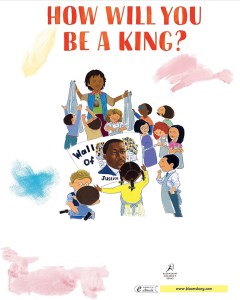
So many biographies are available to learn about Martin Luther King Jr., but this one tasks us to learn from him. What did he stand for and how can you be a King like Martin?  From simple starts such as, “Admit that you’ve done wrong. Just say, “I’m sorry,” and mean it,” to more activist calls to action like, “Beat the drum for justice. March to your own conscience,” Weatherford employs readers to take Martin’s philosophies and values and apply them to their own lives.  James E. Ransome’s detailed illustrations help to imagine what life could be like if you were to be a King.

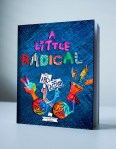
A Little Radical:  The ABC’s of Activism by Danica & Jason Russell

This is an excellent book for younger students or those wanting to get more involved in advocacy and social justice.  Each letter of the alphabet reveals a part of activism and asks readers to consider how they might get involved, even in the smallest of ways.  For instance:  “S is for spark. The start of a fire. How one little life can ignite and inspire. Strike when you’re hot, even if you burn out. You may never know what your glow brings about. Most people are afraid of the dark. For the world to light up, we just need your spark.”

When Rubrics Reign is it Time for a Coup?

By Mary Buckelew

41G46TubLhL._SS500_“Rubrics make powerful promises. They promise to save time. They promise to boil a messy process down to four to six rows of nice neat, organized little boxes. Who can resist their wiles? They seduce us with their appearance of simplicity and objectivity and then secure their place in our repertoire of assessment techniques with their claim to help us to clarify our goals and guide students through the difficult and complex task of writing” (2). Rethinking Rubrics in Writing Assessment (2007), by Maja Wilson

How many points is this assignment worth? How many lines do I need to write? How many pages? Where’s the rubric? Why did I get a 3 in organization? Why didn’t I get full credit? How do I get an A?

Students enter my college freshman writing classes with the above litany of questions, sometimes spoken, sometimes unspoken, but ever present. These questions are as natural as breathing and begin early in students’ K-12 school careers. Read more

Teacher-to-Teacher: Creating a Questioning Classroom Environment By Janice Ewing

In several posts on this site, bloggers have shared ideas for fostering positive teacher inquiry and for sparking student inquiry. As we welcome the new year, I invite you to explore a related question: what strategies can help us to nurture our questioning or inquiry stance as teachers, and how can we extend this stance to our students? Here are some ideas to consider, as we return to our classroom:

lake-430508_640.jpeg Read more

Sharing My Process

By Barbara DiLorenzi


When Lynne Dorfman kindly invited me to share my writing/drawing/bookmaking process with the Pennsylvania Writing and Literature Project Blog, I was thrilled. But then I remembered that writers will be reading my words. Despite publishing my debut picture book in 2017, and with another in 2018, I continue to feel like an imposter in the field. An artist, yes. An illustrator, yes. But if someone refers to me as an author, I feel inadequate. I should have a degree in English, or better command of language. Or at least grammar. I’m forever using too many commas.

Part of the reason I don’t feel like an author is because my books don’t start with words. Like most authors, I start with an idea that grabs me. But instead of opening up Word, and typing a draft, I sketch. I doodle characters. I think about the conflict, and how that would look in a spread. Sometimes these doodles take months. If I don’t have the arc of the story in my mind, I just keep tugging at the characters, asking them to reveal themselves in my drawings.

At some point, whether the arc of the story is satisfying or not, I start to organize my thoughts with tiny thumbnail sketches, plotting out the entire book in a basic 32 page format. (Though my first book is 44 pages, and the second, 40 pages.) This way I can see if the pacing will work within a picture book format, and if the plot has any hold on me. This stage can take a long time. I made close to 20 thumbnail storyboards for QUINCY over the years. With RENATO AND THE LION, I can’t even count how many drafts went into this story.

Read more

Books on the Blog: A Book for All Ages: A Book for Today and Tomorrow

By Lynne R. Dorfman

Different languages, different food, different customs. That’s our neighborhood: wild and tangled and colorful. Like the best kind of garden. (p. 54)


61al+P+9JDL._SX365_BO1,204,203,200_.jpg

Wishtree by Katherine Applegate is an amazing book told from the viewpoint of a red oak tree. Red is a city tree that has lived for 216 years (she has 216 rings). She’s also known as the wishtree, and on the first of May, people of all ages come to tie rags, tags, and even the occasional gym sock to her limbs with wishes scribbled on them. Red is an optimist and has strong opinions about things. Bongo, a pessimistic crow and a loyal friend, are two of the main characters along with Samar, a ten year old Muslim girl.  Red is home to owlets, possums, raccoons and skunks. They talk with one another, but nature has one rule: Don’t talk to people. Read more