What does it take to Engage Student Writers in the Process of Revision? Ask the 2017 Writing Institute Fellows
by Mary Buckelew
“Revision is the Party.” poet Billy Collins
In Fearless Writing by Tom Romano, Romano quotes poet Billy Collins on the act of revision: “Students think revision is cleaning up after the party. They have it wrong. Revision is the party” (p.87).
“Revision is the party.” How timely for the beginning of the school year and in light of the societal events of this year. Revision.
This past summer, I had the privilege of learning and working with more than one hundred teachers from grades K-16 in the Pennsylvania Writing and Literature Project’s (PAWLP) Young Writers program, in our graduate courses, and in our Writing Institutes.
The 2017 Writing Institute brought eleven awesome teachers together who explored and revisited themselves as writers and teachers of writing; who delved deeply into what it takes for students to see revision as more than drudgery, to see revision as an act that can truly change a piece of writing and in turn the writer. What does it take to engage student writers in the process of revision?
The thoughtful and dedicated teachers in the 2017 Writing Institute dove into theory and pedagogy books and articles to explore this question. They read, wrote and discussed reasons writers revise – Writers have authentic purposes and audiences for their writing; they often have choice in what, why, and how they write; writers have myriad ways of sharing their writing in all phases – Community, Collaboration, Active Listening and Transformative Talk are just some of the elements that empower writers and in turn create an environment conducive for revision.
We grew professionally and personally in the 2017 Writing Institute – and in order to grow, we not only explored topics like revision, we revised our own writing, and we examined elements of our teaching practices that might need revision in order to help student writers appreciate the results of revision.
Writing guru Vicki Spandel notes that writers are inspired to revise when — “The writer has some reason to make it better. Whether it be pride, a grade, or publication, revision is hard work, and everyone needs a reason to do it. Providing authentic audiences – creates a classroom atmosphere so that everyone is interested in each other’s writing inside and outside the classroom.”
This coming year, students will enter the classrooms of Writing Project teachers across the country who are writers and who know and understand the complexity of teaching writing. These teachers will create community and authentic opportunities for students’ words to matter in the classroom and in the communities outside their classroom doors.
I am certain that the eleven teachers who left the 2017 Writing Institute this summer will empower student writers and thinkers to both revise their words and the world for the better.
We know when Choice and Authentic Writing walk into the party–then Revision too can join in the revelry – and even become the life of the party.
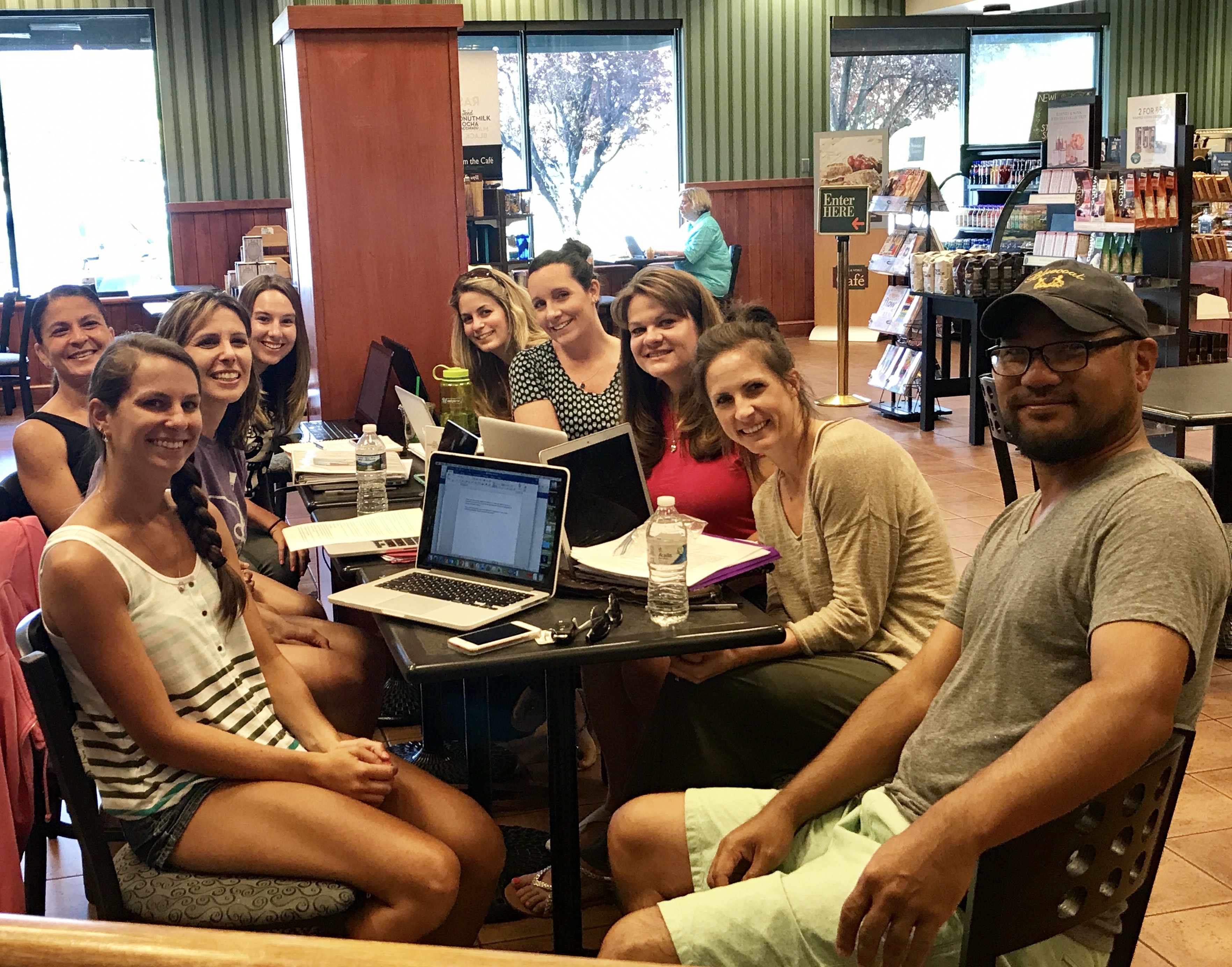
Molly, Michelle, Chrissy, Kristin, Lauren, Kristine, Amy, Molly K., & Peter
(Warren and Catherine in spirit)
Please share your thoughts on revision and how you encourage students to revise.
Dr. Mary Bellucci Buckelew is the Director of the Pennsylvania Writing & Literature Project and Professor of English at West Chester University. She is co-author of Reaching and Teaching Diverse Populations: Strategies for Moving Beyond Stereotypes. When she’s not facilitating workshops, leadership gatherings, and institute meetings; visiting youth sites for Young Readers & Writers; or teaching undergraduate and graduate courses – you may find Mary composing a poem about life in New Mexico, taking long walks with her husband Paul, visiting with family and friends, or reading a good book!






 write.share.connect