Skip to content

Posts from the ‘PAWLP’ Category

FOR SALE: An Assessable Writing Process

By Pam DeMartino

In the real estate industry, housing is the sellable commodity. People want a house, or an apartment, or a building within which to operate a dream.  Realtors market these living quarters by highlighting the square footage, updated amenities, and location, location, location. Buyers will also be told when the structure was built, but curiously, not how the structure was built. Documentation of the building process remains buried amidst the title documents because it is the dwelling – the finished construct – that possesses the tradable worth.

As I listened to my colleague’s discourse during one of our department meetings, I realized that we, as secondary educators, are increasingly taking part in this type of real estate market with regard to student writing.  We devote time and attention only to the final pieces of student writing: the polished or publishable draft.  It is that typed and neatly stapled paper that carries the tradable worth in our departments; only the end of the building process garners our assessment. Rubrics and scoring guides separate organization, focus, details and other discrete aspects of the finished paper, failing in all respects to give recognition to the building of the literary publication. Read more
Teacher to Teacher: Mining Your Writer’s Notebook

By Lynne R. Dorfman

According to Ayres and Shubitz (2010, 101), “Writer’s notebooks are the open-arms that pull students into writing.” They talk about the value of reflecting on everyday living and ordinary moments. Every human being is a story teller. Each day we wake up with a brand-new page to write on. It is a page in the story of our lives, making our day-to-day experiences important and worth writing about. Fletcher (2001, 26) says that most professionals consider a writer’s notebook as essential to their writing process. For us, it is a place where we can write and share pieces of our writing with our students so they can see us as writers, too.  For our students, it is a place where they can engage in risk taking since notebook entries are not graded. As we guide students to return to their notebooks as often as possible, we are helping them to lead a writerly life and establish their unique writer’s identity.

The value in a writer’s notebook is not simply writing in it every day or nearly every day. The true value of a notebook is to be able to return to it whenever you like, for myriad purposes. To mine a notebook, you probably should keep one for at least three weeks or so. Try writing in it to record observations, make lists, try out memory chains, hand maps, heart maps, and neighborhood maps. Create snapshots with words of people, places, and objects. Read more

Books on the Blog: Who Done It Books

by Linda Walker

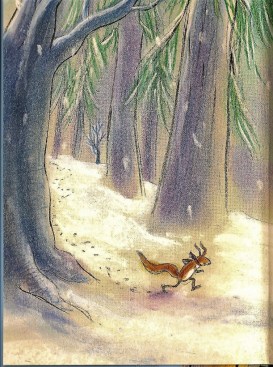
pic1.jpgWho Done It books help young readers and writers make inferences and draw conclusions. The opening pages of The First Case by Ulf Nilsson, a celebrated Swedish children’s author, illustrated by Gitte Spee, generates the questions of why is squirrel hurrying through the deep snow and what is the destination. The accompanying text arouses interest…” Wretched thieves!” cried a small creature as it scurried through the snow. “Thieving wretches!” It was late in the evening and the whole forest was asleep. It was snowing softly and beautifully. “Monstrous plunderers!” called the little animal in a trembling, squeaky voice. “Plundering monsters!” Read more

Tools of the Trade: Introducing Nonfiction Notice and Note Signposts


by Kelly Virgin

9780325050805.jpgIn their Reading Nonfiction: Notice & Note Stances, Signposts, and Strategies, Kylene Beers and Bob Probst write: “Fiction invites us into the writer’s imagined world; nonfiction intrudes into ours and purports to tell us something about it.” Now, perhaps more than ever, it is important that we teach our students how to navigate this intrusion and how to challenge the “truths” of nonfiction writing. In this book, Kylene and Bob share a scaffolded approach to teaching students how to do just this. Their strategies can easily be adapted to any grade level from high elementary to secondary.

My 9th through 11th grade students have found great success with the strategies this year. I started by encouraging them to ask themselves the three big questions: What surprised me? What did the author think I already knew? What challenged, changed, or confirmed what I knew? By asking these questions, students started thinking more in depth about the nonfiction articles we read together and our conversations went beyond just comprehension and regurgitation of facts.

Read more

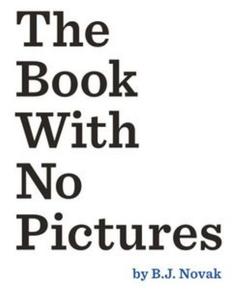
Books on the Blog: The Book With No Pictures

by Melissa Hurwitz9780803741713.jpg

“Warning! This book looks serious but it is actually completely ridiculous! If a kid is trying to make you read this book, the kid is playing a trick on you. You will end up saying silly things and making everybody laugh and laugh! Don’t say I didn’t warn you…”


Do you enjoy hilarious, laugh out loud fun?  Are you looking for a way to spark your students’ interest in reading?  If you answered yes, then look no further than B.J. Novak’s The Book With No PicturesRead more

Teacher to Teacher: Advocacy and the Arts – Moving Forward

By Janice Ewing


Are you concerned about a grizzly bear entering your classroom? Neither am I. However, as educators, many of us are deeply worried about other dangers lurking around our schools, such as xenophobia, racism, sexism, and the erosion of democracy. At PAWLP, we have been reflecting on the meaning of advocacy for teachers — finding a focus, garnering support, identifying meaningful and sustainable actions to take… Now, many of us see advocacy as an integral part of our identity and mission as teachers. At our Saturday Continuity sessions, we are engaging in reflective writing, sharing of ideas, and action planning to move forward in purposeful ways within our schools and larger communities. Please join us on February 3rd and April 8th, from 10:00-11:30 at the PAWLP office for collegial connection and inspiration. Read more