Skip to content

Posts from the ‘PAWLP’ Category

From the Classroom: Success Defined

By Brian Kelley
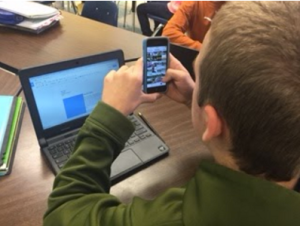
Searching photos on a phone while writing on a Chromebook.

Searching photos on a phone while writing on a Chromebook.

Change bothers most people.

We can be good teachers and still make room for change. Change does not mean we are bad teachers making bad decisions. There are many ways to teach, but consider this blog post as an invitation to grow.

Consider change as growth. Everyone can grow.

For example, I changed my approach in the classroom by adding writing and technology to my life outside of the classroom. It wasn’t a drastic change–and if writing and technology are changes you would like to make, neither needs to cause a seismic shift in your day.

Asking teachers to write is a scary proposition. Asking teachers to become more fluent with technology is a scary proposition. It sounds a little like going off of the script.  Read more

From the Classroom: Does Anyone Have Any Questions?

by Tricia Ebarvia

For years, whenever my students and I read a novel, I would pass out a study guide with a list of questions for each chapter. By giving students the study guide questions―questions I wrote―I could make sure that students wouldn’t miss anything in their reading. Too often, students would read too quickly and miss details. Requiring students to answer study guide questions was my way of getting them to slow down to notice what they were reading. To get them to see the dots that they could later connect together.

After we finished the novel, the next step would be a writing assignment. On that day, I would pass out a list of essay questions. I often included questions of varying difficulty in order to better differentiate instruction, and students could happily chose whichever essay question was most accessible (or least terrifying). In case none of the questions interested students, I always gave them the option of creating their own essay question (just so long as they reviewed it with me first).

Of course, rarely did students ever take me up on that option. After all, by creating essay questions for them, I had already sent the message that it was the teacher’s questions that mattered, not theirs. And while some students were more than happy to answer my questions―in fact, I think some of them preferred to―what I’ve come to realize that what I needed to focus on was getting students to answer their own questions about the text.  Read more

Writing Resolutions from PAWLP

What's your writing resolution-By Janice Ewing

Most PAWLPers don’t wait until New Year’s to engage in reflection and goal-setting; nevertheless, this time of year especially lends itself to those pursuits. For example, one PAWLPer said, “I firmly resolve to write something every day that is not just a compilation of events, but actual insights of life that I’ve noticed and contemplated.”

Here’s a sampling of some more of our Writing Resolutions, collected at our December Continuity and Leadership meetings: Read more

From the Classroom: Toughest to Teach

By Brian Kelley

In preparation for a guest appearance in a Classroom Management course at Temple University, adjunct professor―and PAWLP co-director―Jolene Borgese asked her college students to email questions to me.

One question gnaws at me. For several days I have felt the need to write about it: Which students are toughest for you to teach? How do you address those students?

If I answered this question twenty years ago, I would have said the resistant students. My answer is different today. Yes, even after 20 years, I still find some students tough to teach. And I think I always will.

The toughest students for me are the students whom I do not know.

This one, my friends, is squarely on me. Not on the students.  Read more

From the Classroom: The Perfect High School Read-Aloud

By Christine Soring

I was thrilled when asked to write for the PAWLP blog and immediately knew that I wanted to write about my new passion: children’s books. It wasn’t until I participated in grad school and the Writing Institute that I discovered a new love for children’s books. Why didn’t I think of this before? The versatility of these books is so powerful and something that I have been regretting not using before. My new goal this year: use children’s books as mentor texts for all aspects of writing.  Read more

Quarterbacks, writers, and resisters: Fostering a growth mindset in the writing workshop (Guest Post)

by Mark Overmeyer

Living in Denver means Broncos quarterback Peyton Manning is on the front page of the paper more often than anyone else. One story that emerged this summer is about Manning’s work ethic – what teachers would undoubtedly call a “growth mindset.” Manning spends time every year with his former college football coach. He isn’t there to visit, but to learn. Manning says his college coach knows more about his throw than anyone else in his life, so he needs his advice in order to improve. Peyton Manning makes millions of dollars a year, but he knows he is never “done”:  he understands the importance of feedback from someone who knows him well.

I often shy away from sports metaphors when thinking of effective instruction, but Manning’s story is a perfect fit with our work as teachers of writing. Manning’s coach knows him best. More than any other subject we teach, writing helps us to know our students in the same way Manning’s coach knows him.  Read more