The Color Conversation: A Classroom Strategy That Actually Gets Teens Talking
How do you get high schoolers to open up and share something real? If your students are anything like mine, they tend to deflect, joke, or suddenly become very interested in the ceiling when it’s time to make personal connections to literature.
So earlier this week, I tricked them—gently—into opening up with a “color conversation.”
The setup was simple: a pile of sticky notes and a handful of colored Sharpies. Before showing the prompts, I told students to grab one marker. Then I revealed the color-coded questions:
Green = Goodbyes: Who is someone you’ve had to say goodbye to?
Red = Bravery: When have you had to be brave?
Purple = Fear: When have you felt afraid?
Orange = Hope: What are some of your hopes for the future?
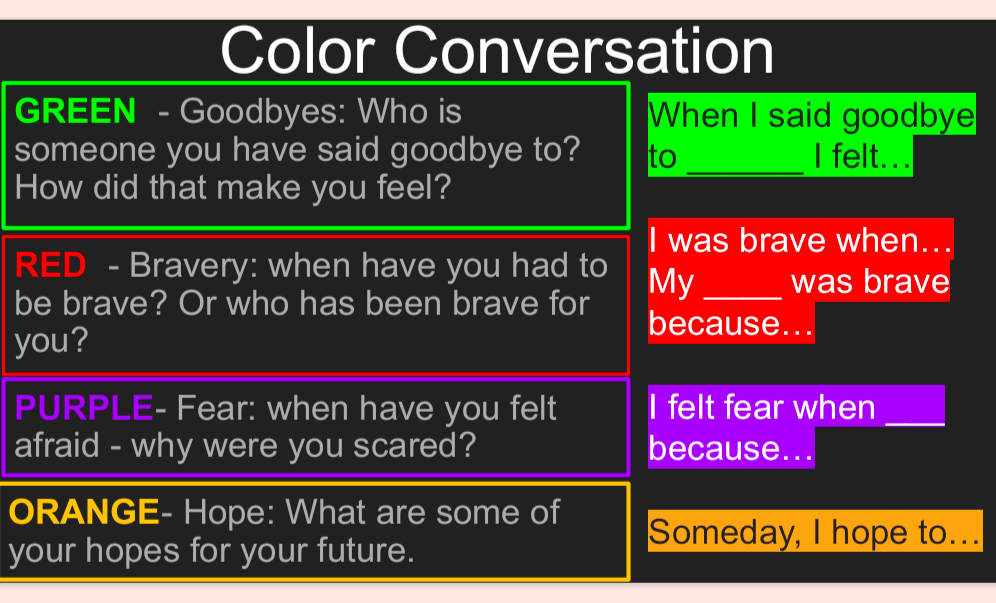
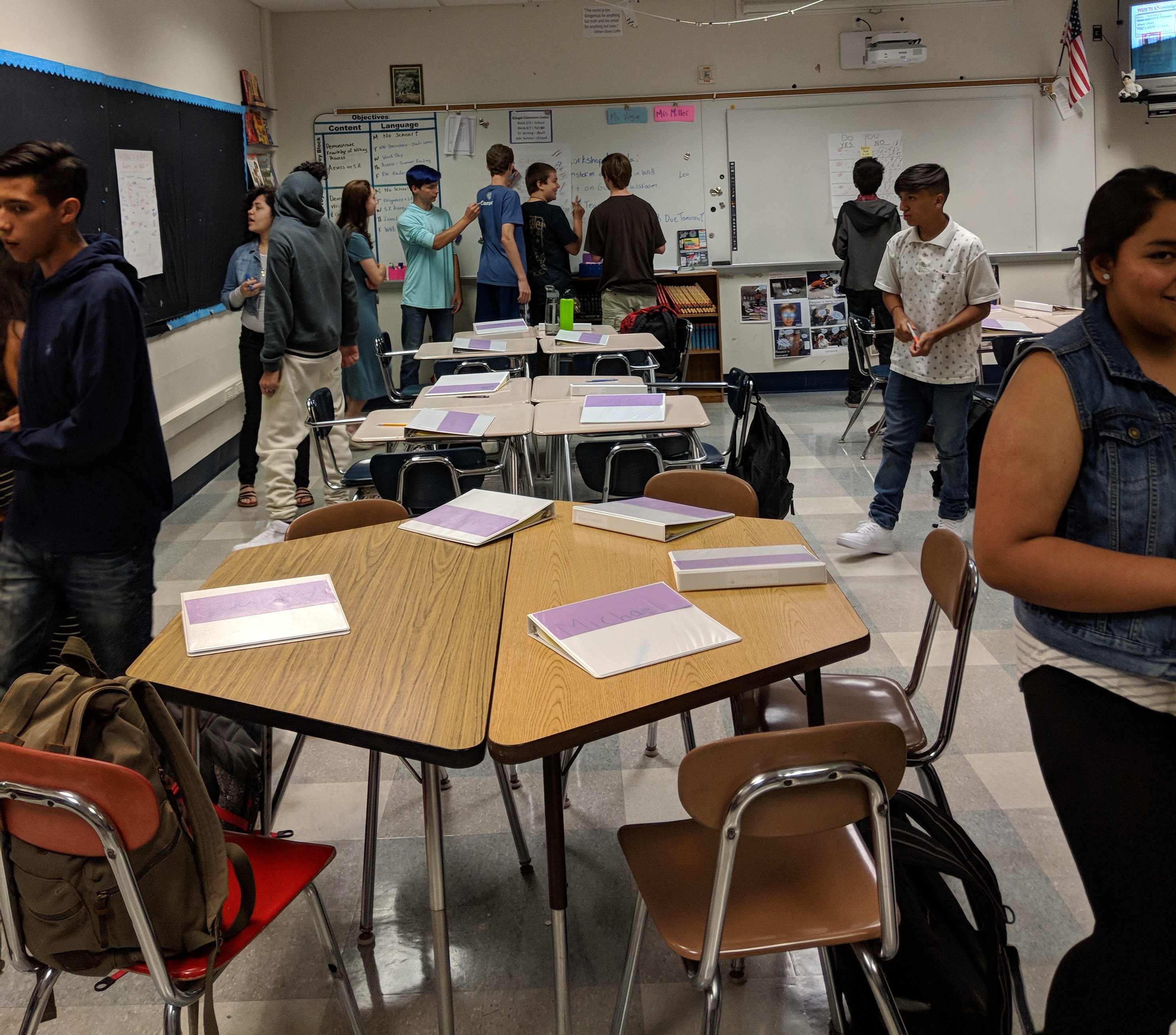
These emotions connect to the memoir we’re reading together, and because my students are English language learners, I also provided sentence stems to support fluency. I set a 7-minute timer and told them to create and post as many sticky notes as they could. For a bit of motivation, the table with the most notes earned a trip to the class snack bucket.
When the timer dinged, we took a silent gallery walk. Of course, silence didn’t last long. A few whispers broke through: “Wait—whose house caught on fire?” or “Hey, who’s from Ciudad?” While I reminded them there was no pressure to identify their notes, most students did. They wanted to.
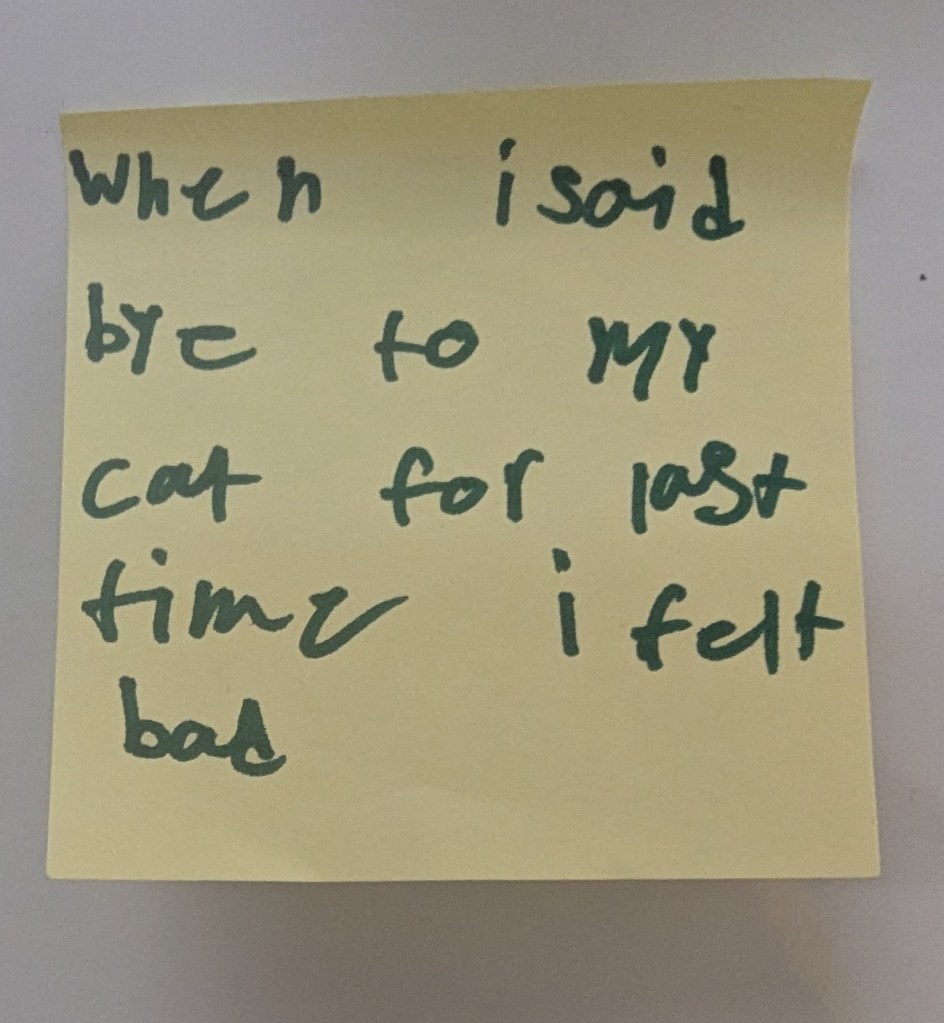
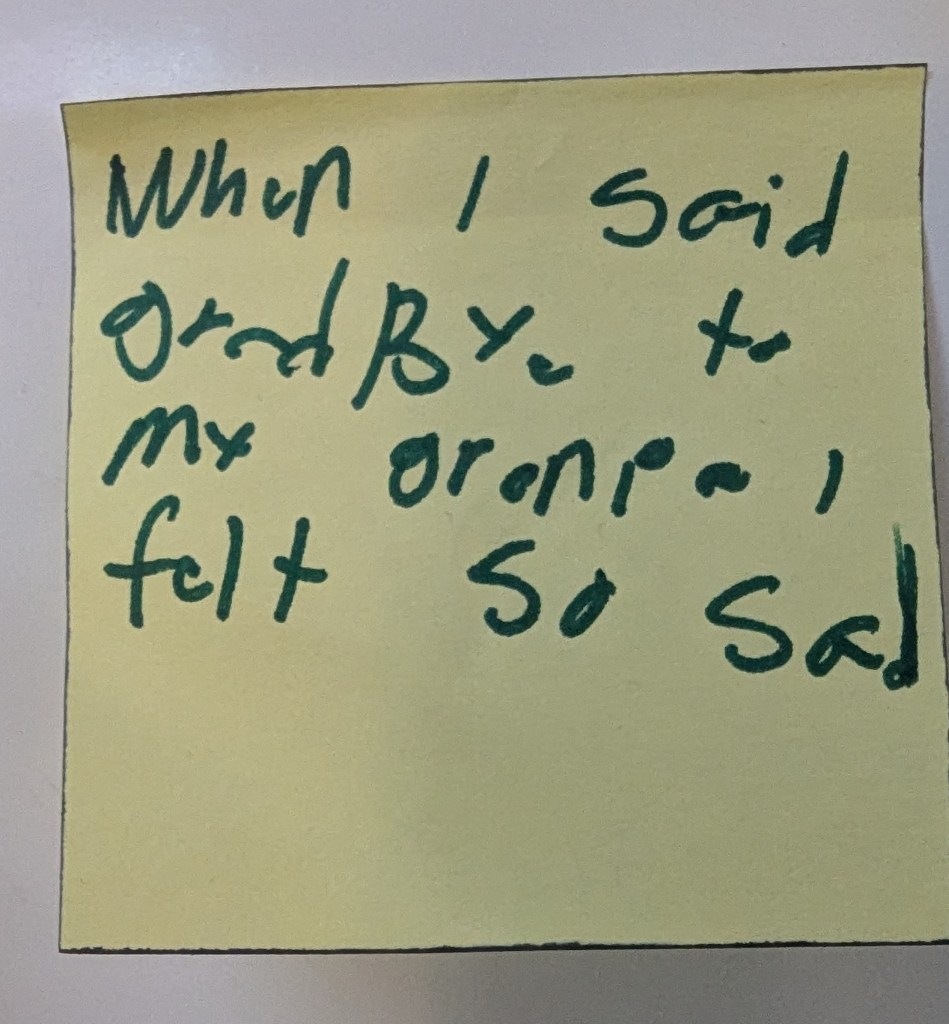


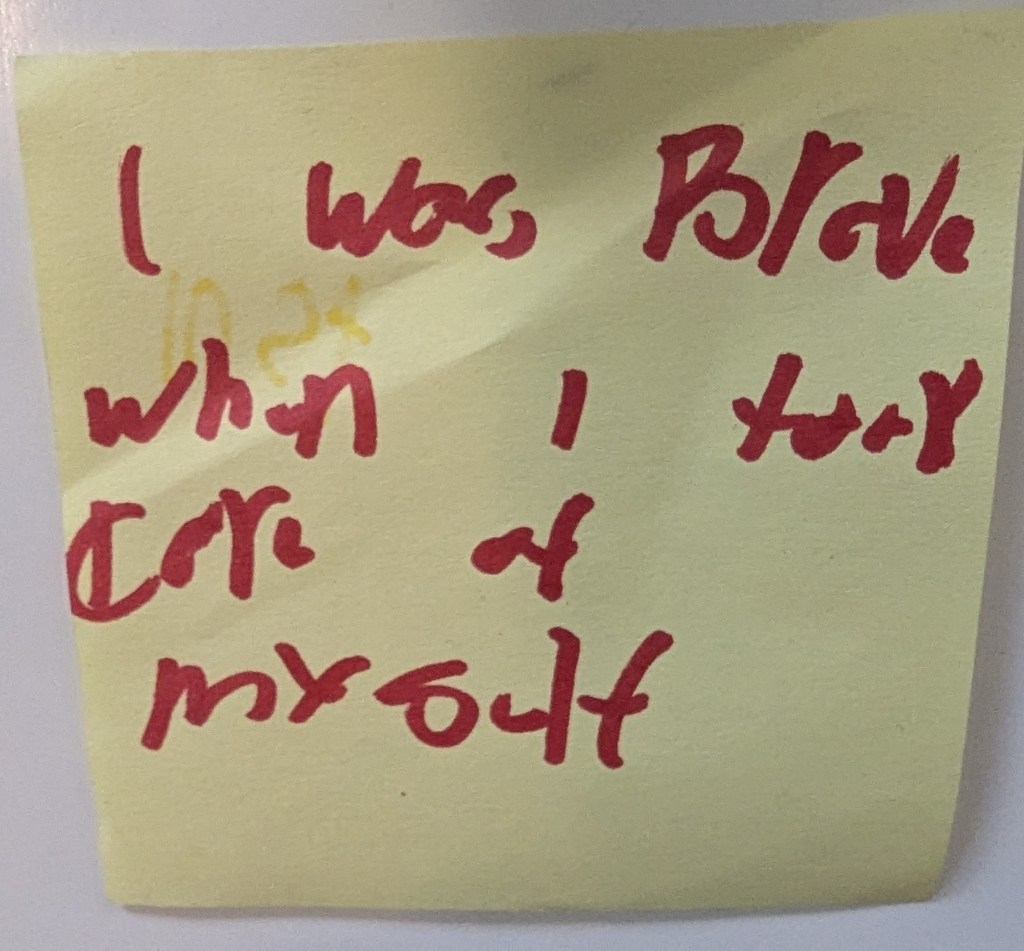


The best part? This activity works for any pre- or post-reading moment where students might hesitate to go deeper. And I’m saving the sticky notes. When it’s time for them to write their own memoirs and someone inevitably says, “I don’t have anything to write about,” I’ll point to their own words on the wall—a whole collage of lived experiences waiting to become stories.

Kelly Virgin is a WCWP teacher leader who teaches high school English for the Kennett Consolidated School District.






 write.share.connect