The sun’s rays stream through my slider door, painting golden streaks across my floor. Someone’s weed whacker, aggressive and annoying, threatens my concentration. I breathe and return to the world of dystopian YA literature. Twirling my mug of steaming hot tea, I turn the page, hanging on every last word. And, then . . . I read my line of inspiration: a smile and a reunited love interest. Immediately, my mind sparks alive as I quickly swap out my book for a pen and notebook. Furiously, I write, pouring possible leads onto the page. Finally, I realize the boy I mentioned in my prologue—a quick write I wrote more than a year ago with my students—is not my main character’s love interest but the key to taking down the enemy. Just a week ago, I had not the slightest idea of how he would fit into my story and wondered if I even needed him at all.
The summer of 2019 marked two years after taking PAWLP’s Invitational Summer Institute, and I had the itch to create but no plans to write an article. I just so happened to be out with two of my best childhood friends—a kickoff to summer. Mentioning a story that I started writing with my students during quick write time, they asked if I would continue developing it over the summer. The next thing I knew, they were challenging me to continue writing.
Well . . . Challenge accepted. But, I had no routine.
Don Murray’s words of wisdom from “One Writer’s Secrets” kept playing in my mind:
“Write daily.”
“Pick the best time for your writing and try to protect that time. Be selfish.”
“Read widely as well as deeply; read writing as well as writing about writing”
“Keep a list of questions to which you want to seek answers.”
“Write for yourself.”
“Be patient.”
“Write to discover what you have to say.”
“Lower your standards.”
“Write with your ear.”
With Murray’s secrets, I set out to find the time and space for writing that worked best for me. I felt like Goldilocks, trying out the kitchen table, living room, and porch. I experimented with reading and writing during breakfast and after breakfast. Before or after a walk. Read first then write or write first then read.
In my search, a new pattern started to emerge: after reading a YA book, I found some sort of inspiration whether it be the story arc, characters, writing style, word choice, etc. Pausing to recognize this observation and all of my experimentation, I established some consistency:
Over the day’s first cup of tea, I read a YA novel. Usually a chapter or two.
As soon as my mind wandered to my own story, or I found a nugget of inspiration, I would switch to writing.
I established a goal to write at least three composition notebook pages each day.
But, I also realized that I needed flexibility. Some days I wrote creatively, others professionally. Some days I listed ideas or sketched. Some days I wrote first.
If the day was going to be a real scorcher, I either woke up earlier or walked first.
Interestingly, I found that I liked to read and write in all of the places I tried—the kitchen table, living room, and porch. I allowed the day to dictate which worked best for me.
When I was away with my family, this schedule proved more difficult, but I never left home without a book and a smaller bound notebook that my mom gave me. When school started, I kept to this schedule for September and October, but then there was graduate school and daylight savings—which are no excuses—but I found my mornings filled with professional writing and a little bit of extra sleep.
The good news was that I carved out time on the weekends for my routine. I also found time most school days at lunch to read roughly 15 minutes, and I wrote my story each class period during quick writing and self-selected writing. Discovering this time, allowed me to continue being an authentic participant in our workshop. Moreover, I was still finding most of my mini-lesson examples from the YA novels I read, book talking the books I was reading, and sharing my writing with my students.
I am finding it equally challenging to remain on a reading-writing schedule with distance learning. I will admit it: I am staying up late to watch throwback movies with my family, so I am not getting up early enough to read and write before distance learning begins. I do not have the official pause to write with my students each day or a lunch period to read. It is also difficult to turn off the teaching switch once school is ‘done’ because my classroom is my home.
After reading Courtney Knowlton’s piece on priorities, I am striking a balance. I am taking back my mornings and resuming my reading-writing routine. I know this needs to happen—and I know I can do it because the first two weeks of distance learning I stuck to my morning routine. During that time, I revised the below portion of my story—after being inspired by the flowering magnolia trees in my apartment complex. I shared this section as my example for an assignment two weeks ago.
I know I am a better teacher when I am reading and writing for me and can share that experience with my students. In a discussion board conference, one of my students shared how she had writer’s block, and I responded with three possible ways to get out of the funk—three ways that help me. It worked for her, and she recommended those tips to one of her peers during a small-group Teams meeting.
In order to maintain my personal and academic reading-writing life, I need to dedicate the time to read and write creatively and professionally. Reading and writing are some of my most favorite things. I do not want to let anything stand in my way.
So, I challenge you! If you lost your reading-writing routine—for any reason—reclaim it! Take back that sanctified time! Do it. For yourself. For your students. For your profession.
Back in mid-March my principal sent an email entitled, “Emergency Staff Meeting at 3:15 pm.” It was a jarring phrase to read in the middle of an otherwise ordinary day. The purpose was to let us know that students would be off the following Friday and Monday, so we could prepare ten days worth of plans for distance learning. Little did we know that Thursday would be the last time this school year that the students gathered at the front doors of our school and we would need distance learning plans for much, much longer than ten days.
That Friday I sat in a classroom with my colleagues to develop a preliminary plan, and for the last four weeks we have taught our students from a screen. One of the most challenging parts of designing this online learning experience was sifting through the bombardment of resources. I received over 40 emails touting “virtual offerings” and “free access due to school closures.” The distance learning paradox is that I seem to have an unlimited supply of free resources, but I have a much more limited amount of time to interact with my students on a weekly basis. It felt overwhelming at first, but I discovered a process that helped to make the best of these challenging times.
When visualizing how to reach students virtually, it helped me to brainstorm a list of priorities. Here is my list so far:
I want to show students that I care using whatever means necessary, whether we connect by video chat, phone, or mail.
I want to develop something that my students can depend on, since they are dealing with so much change.
I want to incorporate elements that my students are familiar with to give them a sense of comfort.
I want to give students choice during a time that they may feel that so much is out of their control.
I want to use technology to my benefit to give students more one-on-one time and specific feedback.
I want to find ways for students to interact with each other.
I want to assess students with high expectations, but also with flexibility and understanding knowing they have different levels of accessibility and different home situations.
I want to remember to think about my own health and wellness and try to maintain a work life balance.
Throughout March and the beginning of April I have tried to keep these priorities in mind when creating my Google Classroom. So far, I would say I have been most successful with 1, 2, and 5, and honestly 4, 6, and 8 have been quite a struggle. For me, it was an act of inquiry. I would try something, see how my students responded, and adapt accordingly.
Regarding connecting to students, I learned most of them could be reached using the announcement page on my Google Classroom or via messaging their parents on Class Dojo. Thankfully my school was able to give out Chromebooks and once all the students had access to the technology, the best way to explain how to use it was by inviting them to a video chat and sharing my screen with them. Then, I could model how to navigate the site. I learned to be patient. At first hardly any students attended the chat, but over the weeks more and more logged in. Video chats were also a great way to bring a little fun into our situation. For example, we did one to sing happy birthday to a student, and I found an old party hat and bright pink noise maker in my basement that made the students laugh.
To create something the students could depend on, I consistently provided information for them and their parents on our Google Classroom. At the beginning of the week I posted a grid organized by day number with a numbered list of work. Then, within the assignments tab, I titled each assignment using the format: Week #, Day #, Description. When the students clicked on the assignment they found two resources. The first was a video that I made using Screencastify. Each video showed my computer screen, while I explained the directions for the assignment. The other resource was their own copy of a Google Doc that I created for them to submit their thinking. Sometimes after checking the students’ work, I realized my weekly plan needed to be tweaked. If this happened, I would add CHANGE IN PLANS to the assignment title. Even though the work was different week to week, I found that keeping these elements consistent helped to minimize the amount of questions I was receiving for how to complete it.
Over the next few weeks, I will continue to look for guidance with my priorities. Attending Zoom meetings with my professional communities has made me feel more grounded and better equipped to handle teaching from home. In some ways this shift to distance learning has made me feel more alone, but in other ways it has given me new ways to connect with others on a global level.
Call for Distance Learning Blog Posts
The PAWLP Blog would like to hear from you! What does distance learning look like for you, your students, and your school district? What digital programs are you using? What lessons have you tried out? What routines and expectations are you establishing? How are you finding a balance?
Blog posts will be featured in our Distance Learning column each Monday. Please email the PAWLP blog if you are interested or would like to find out more information.
Written by Katie O’Neill, Kimberly DiBiasi and Michelle Ruiz
In Pose, Wobble Flow: A Culturally Proactive Approach to Literary Instruction by Antero Garcia and Cindy O’Donnell-Allen, readers gain strategies for incorporating literacy into their diverse classrooms. Acting as professors to pre-service teachers in Colorado, the authors of this text emphasize that teachers should strongly consider what they hear from their students, as well as the contextual factors impacting their students’ lives, not just the standards laid out in the curriculum. They argue that these factors should shape and guide a teacher’s instruction, rather than simply following a one size fits all, curriculum-based approach to teaching literacy. To accomplish this goal, the authors suggest that readers must do three things: pose, wobble, and flow.
Posing entails teachers taking a stance on particular topic or idea, both within their classrooms and beyond. In order to establish a pose, however, the authors suggest that you must first wobble. By wobble, the authors intend for you to struggle and be open to different perspectives and stances, often going outside of your comfort zone. As the authors state, “It (wobble) causes us to stare and consider. Wobble taps us on the shoulder and induces us to ask why. It nudges us towards action” (Garcia & O’Donnell-Allen, 6). Flow is the ultimate goal that one accomplishes after a period of wobbling; “This harmonious and effortless state occurs when we feel immersed in achieving a worthwhile goal that is precisely appropriate for our level of ability” (7). The authors intertwine this framework throughout the text and use it to organize each of their six poses that they present in the text, making it an easy and enjoyable read.
Garcia and O’Donnell-Allen’s first chapter leads teachers through the development and maintenance of their first pose, culturally proactive teaching, which they claim ties together all of the other poses in the text and helps teachers to achieve the ultimate goal, “praxis.” The authors define praxis as “that inextricable union between critical reflection on oppressive conditions and the social action necessary to transform the world into a more just and equitable place” (17). They admit the difficulty, awkwardness and discomfort that culturally proactive teaching entails, as it involves dealing with issues of race, class, gender, and sexuality, but they also emphasize the powerful end result. The authors’ use of bullet points and sidebars summarize this pose well, helping teachers to understand the key features of culturally proactive teaching: questioning existing inequalities in your school and society, anticipating students’ needs, adapting teaching to students’ interests, forming your own cultural personality, reflecting on how it impacts your teaching, incorporating your students’ backgrounds into your teaching, and teaching literacy skills with the purpose of using them for social change. The authors suggest that teachers must reflect deeply and “recognizing that you possess privilege is the first step in using your unearned power for good” in order to achieve this pose (20). This message may be difficult for some readers to hear, but it adds to the overarching theme of wobbling in order to achieve flow. The authors end with a call for readers to disrupt the status quo and work with other teachers to enact change and bring about a greater sense of culturally proactive teaching. In the final lines of the chapter, the authors reiterate Bob Fecho’s powerful message; “The idea is not to achieve perfection, but to incline toward perfection” (30) This ideology of making change one step and one day at a time is one that all teachers can apply to their own classrooms and lives.
While the first chapter focused on a shift in teaching ideology and general teaching practices, the second chapter’s focus was more language arts specific. In this section the authors introduce the pose of “hacking,” one they claim will lead to culturally proactive teaching. As put simply in the opening lines of the chapter, hacking means we as teachers must “figure out how to fiddle with it in order to improve it” (33). While the authors acknowledge that this may be a difficult pose for new teachers, they challenge all teachers to wobble in this area. They align the traditional classroom to a “banking model,” suggesting that teachers actively deposit knowledge into students and then later withdraw it for the purpose of assessment. In this relatable and accurate model, the authors emphasize the passive and meaningless role that many students have in their own learning. In contrast, the authors suggest that teachers enact changes to create an environment that supports vulnerable learning, views learning as production oriented, and positions and views students as makers. Furthermore the authors encourage teachers to wobble by pushing back against systemic constraints that could limit student learning. Rather than the traditional banking model, the authors present scenarios and examples of vulnerable and inquiry driven learning where students learn that not knowing something is an essential part of creativity and of learning. This pushes students towards their “learning edge” where they can “take risks to consider new perspectives and ideas…to consciously take risks to learn something new” (37). The authors reiterate the importance of creating a safe and nurturing environment with clearly established norms in order for students to allow themselves to be vulnerable and engage in this new style of learning. As always, it must start with the teacher; “By taking on the pose of Teacher as Hacker, you can be a powerful model for your students that learning involves vulnerability, uncertainty and change” (34). The authors conclude with concrete and adaptable examples and activities to support teachers in establishing this flow in their own classrooms.
In the third chapter, a call to teaching social change through civic engagement is prominent. Antero and O’Donnell-Allen suggest that teaching reading and writing civically is our duty as educators and should be done using specific audiences and with tangible results our students can see. Some ways they suggest accomplishing this is through the use of technology, which students connect to more today than they ever have. “Henry Jenkins, et al. write, ‘Participatory culture is emerging as the culture that absorbs, and responds to the explosion of new media technologies that make it possible for the average consumers to archive, annotate, appropriate, and recirculate media content in powerful new ways’” (63). The access to digital information expands the platform for civic education and allows it to transcend from the classroom into the real world much easier than in the past. It also allows for more accessible topics to be discussed. Although examples in the text include using events such as Ferguson and the slaying of Michael Brown, which are much heavier than our fourth graders can handle, they can still become involved civically through events happening in Springfield or even in Philadelphia via newsfeeds, blog posts or local news sites. Teaching them to have a voice and a stance young can also give them confidence in their writing that can grow and evolve throughout the years so that they are ready to handle the more weighty topics Antero and O’Donnell-Allen described.
Following chapter three’s focus on civic education, chapter four discusses the pose, wobble and flow of turning the teacher into a writer, which was quite an abrupt shift in topics. To establish ourselves as writers, the authors suggest creating a routine for ourselves. “To write requires doing what writers do. Writers must create routines and habits that help them embody their writing identities” (79). By creating this routine for ourselves, we are able to reflect upon our preferences as a writer and apply those ideas in our classroom, which can sometimes feel like it’s easier said than done when so much starts to pile up. What Antero and O’Donnell-Allen do well here, though, is remind us that we need to experience the role of writer if we’re going to teach children how to be writers, which means making the time to write. “To adopt a Teacher as Writer pose means to commit fully to being a writer.” Our students need to see us struggle, they need to see us enjoy ourselves and they need to see us in our writing identity if they are to be writers themselves. This is a great reminder to educators that it’s acceptable to make mistakes and struggle in front of our students.
Chapter five focuses on rethinking reading in the classroom. It expands the idea of “text” and “reading” to explain the wobble teachers face in repositioning themselves as curators in their classrooms, schools and districts. Wobbling with curation means becoming an attentive reader. Teachers are the ones who help create a love of reading to their students. We need to be thinking about the types of books that are chosen for students. We cannot think of just creating a list of “right” books, but instead pick books that promote culturally proactive teaching. We have to think of the students who sit in front of us each day. As educators, it is our job to teach the classics, but not only the classics. We can not forget that our students want to read about issues that happen in their lives. It is our job to blend these types of books for our students and give them a choice. “A guiding principle to remember is that the texts that count in your classroom and in your teaching practice are the texts that you curate as valuable” (93). Our students will value what we value. We need to show our students that we read and not only one genre. They learn from us, so it is important for them to see us read a variety of books and struggle through some of them. “To see themselves as readers, students must also have opportunities to make decisions about what they will read” (98). Not only do teachers need to be curators for their students, but for themselves. Teachers need to remember the importance of reading education research and not just for them, but to share with their fellow teachers, so everyone’s teaching can be enhanced.
The book concludes with the pose of the Teacher as Designer. We need to shape culturally proactive classroom space, but also think of the other spaces for learning. Classroom learning is limiting, there are many obstacles that teachers face, which are out of their control, but we need to learn how to push through those obstacles and become the designer of our classroom. “The world, be it a classroom, a home, a park, a student commute from home to bus to school, must be understood and read” (109). Any space can be turned into a learning environment. Students come into the classroom with feelings regarding school, it is our job to change those negative feelings and create an environment that is welcoming. Students need to feel that they belong and they have ownership within the classroom. Students should be part of the design of their classroom. Technology has become a huge part of the classroom design, but if technology is not used effectively, it just takes up space in the room. In attempts to fix long-standing educational problems, technology is added to classrooms. Without proper training, the technology will do nothing to fix the problem in the school. The pose of Teacher as Designer should not stop at the classroom door. We need to support students inside and outside of our classrooms. The classroom needs to be a place where literacy is taught, but it should not end there. We need to engage the students beyond the classroom. Finding your “flow” can take time and you will most likely experience some big-time fails, but when working with your students, you can create a learning environment that works for everyone. When students help design their learning environment, they are more willing to feel a connection to the space and in turn learn more easily. The space needs to be a place where they can be heard and should reflect their culture. Remember that as you wobble with the pose of Teacher as Designer, don’t get discouraged, you will find your flow, but it might take some trial and error.
This text has many features that make it accessible and applicable for a variety of educators. For educators like us that have limited time for professional reading, this book serves as a great guide, providing modifications and changes that teachers can implement immediately to support and encourage a classroom that is accepting of diversity. Each chapter is a blend of specific teacher-student scenarios and a follow up description by the author of how this pose or ideology can be applied in the classroom. In addition to success stories, the authors were willing to share failures. These relatable scenarios make the reader feel that they are not alone in their wobble.
The organization and theme of “Pose, Wobble, Flow” permeate throughout the chapters. Even though different cultural stances are discussed in each of the six chapters, there is a consistency that incorporates the larger framework of pose, wobble and flow. This makes the text a predictable and flexible read. Similarly later chapters reference earlier chapters and “poses” from the text so that readers are constantly reminded of previously discussed concepts and see how they connect. One could sit down and focus on a single chapter or stance at a time, or read the entire text in one sitting.
As readers, our biggest take away is that as modern educators, we need to push ourselves outside of comfort zones in order to create a culturally relevant classroom. It is imperative for us to struggle in order to recognize the struggles of our own students. For some teachers this struggle is about being open to sharing oneself within the classroom in order to connect and understand one’s students. The authors emphasized how it is the responsibility of the teacher to draw a connection between the lessons in the classroom and the real world. This might also include changing your perspective from “my classroom” to “our classroom.” The authors provide relevant strategies for collaboration.
As much as the authors discuss the pose, wobble, flow concept and make it relatable and meaningful for teachers of all grade levels, many of the examples used in the text are not applicable in our fourth grade classroom. All of the sample scenarios are set in an urban classroom setting where teachers have more discretion to discuss controversial topics. As fourth grade teachers in a conservative, suburban school district, we have to be more careful about what we do and say in our classrooms. We noted this continually while reading the different scenarios and poses. Additionally, regardless of demographics, our fourth graders do not have the developmental maturity or experience to handle these weighty topics. Therefore, secondary teachers may benefit more so from this text than elementary teachers. While we were able to make connections and find applications throughout the text, we feel that the scenarios are better suited for an upper level teacher.
While Shakespeare is well known as a sonnet writer, anyone who has studied any of his plays, knows he had a few more poetry tricks up his sleeves. So, each year as my students study Romeo and Juliet, we notice his poetic language and use it to inspire our own poetry writing. The following are just a few of the poetry freewrites and prompts we experiment with together.
Two-Voice Poems:
When Romeo and Juliet first meet, they speak to each other in a two-voice sonnet. After we spend some time discussing the back and forth of this conversation (and the implications for their budding relationship), we look at other two-voice poems for additional inspiration.
One of my favorites to study is Sarah Kay and Phil Kaye’s “When Love Arrives.” In this poem, Sarah and Phil go back and forth, sometimes overlapping voices, to describe the different phases of love and relationships. It is a great model to watch and notice how they crafted their delivery to enhance the poetic meaning. Students also notice and discuss the contrasts between the relationship described in this poem and the short lived relationship between Romeo and Juliet.
The last few weeks have felt like a whirlwind blend of late August preparation and early September go time. The amount of new information, last minute changes, and not knowing what tomorrow will bring makes me thankful that I usually only experience the strain of back to school once a year.
Now in the throes of distance learning—with a scheduled meeting time for each class, priority standards in place, expectations for online behavior, and a revised year-long reading and writing map—one more item came up in my eighth-grade team’s text message thread: a work completion and grading policy.
At the middle grades level, students have a two-and-a-half-hour block of time each week for each class. (First and second period meet on Monday, third and fourth period meet on Tuesday, fifth and sixth period meet on Wednesday, seventh period meets on Thursday. Thursday and Friday offer additional office hour time and independent work time.) During that class period time, teachers are available for real-time virtual office hours, whole-group meetings, small-group meetings, and one-on-one conferences. There is a thirty-minute lesson with up to an additional sixty-minute long-term assignment. Although students are encouraged to complete the work during their period’s time slot, home and personal obligations may make this impossible for students to do. While all students have access to a laptop through our district’s 1:1 initiative, our students have varying levels of responsibilities at home. To help students be as successful as they can be and stay on top of their work, we are asking students to complete each week’s assignments before our next scheduled class time. With our district moving to a Pass/Fail option for the fourth marking period, we want to ensure that our students have the time, guidance, and help to be successful.
Like the start of any new school year, I needed to establish routines and expectations. I have started to do this with Canvas, our learning management system, by maintaining certain key components of our class and creating new routines like our Office Hours One-on-One Discussion Board. Our district asked teachers to develop class guidelines by explaining how distance learning would work within their own classroom. And, while we have a district-wide Pass/Fail grading system in place, my students and their parents needed more information on how this translated to our English classroom.
The science teacher on our eighth-grade team made a grading letter, outlining the expectations and guidelines for distance learning. With a few content-specific tweaks, I adapted it for my English classroom. First, we sent an email blast to all students. Next, we sent an email blast to all parents and guardians. See the emails below. By sending out an email that genuinely hoped students and families were doing well while simultaneously offering insight into how the rest of the school year would work in terms of work completion and grading forged a we-are-working-together-and-we-will-get-through-this bond. Being transparent and upfront with parents and guardians and showing I care for the well-being and success of their students has helped me maintain positive parent-guardian relationships. I sent out the email on Thursday, and I have already received two positive emails in reply.
Although I would like to think the letter will ensure all students turn in their work on time the first week, I know I will have missing work. Being flexible will also be an important part of making this grading policy work. Monday, April 24th will mark a complete, one-week cycle for all classes under our district’s Phase II of Distance Learning and of our new grading policy. For students, who have not turned in work that first week, I will reach out to students and their parent and guardians. Although my grading policy says work turned in late will be marked as failing, I will be flexible this first week, allowing a grace period to ensure everyone is on the same page and understands the expectations.
With the announcement that schools will not be returning to our physical classrooms this 2019-2020 school year, specific guidelines and a little extra TLC—for me, for my students, and my parents and guardians—will help us make it through.
Call for Distance Learning Blog Posts
The PAWLP Blog would like to hear from you! What does distance learning look like for you, your students, and your school district? What digital programs are you using? What lessons have you tried out? What routines and expectations are you establishing?
Blog posts will be featured in our Distance Learning column each Monday. Please email the PAWLP blog if you are interested or would like to find out more information.
Written by Robyn Chegwidden, Amanda Dudek, and David Richard
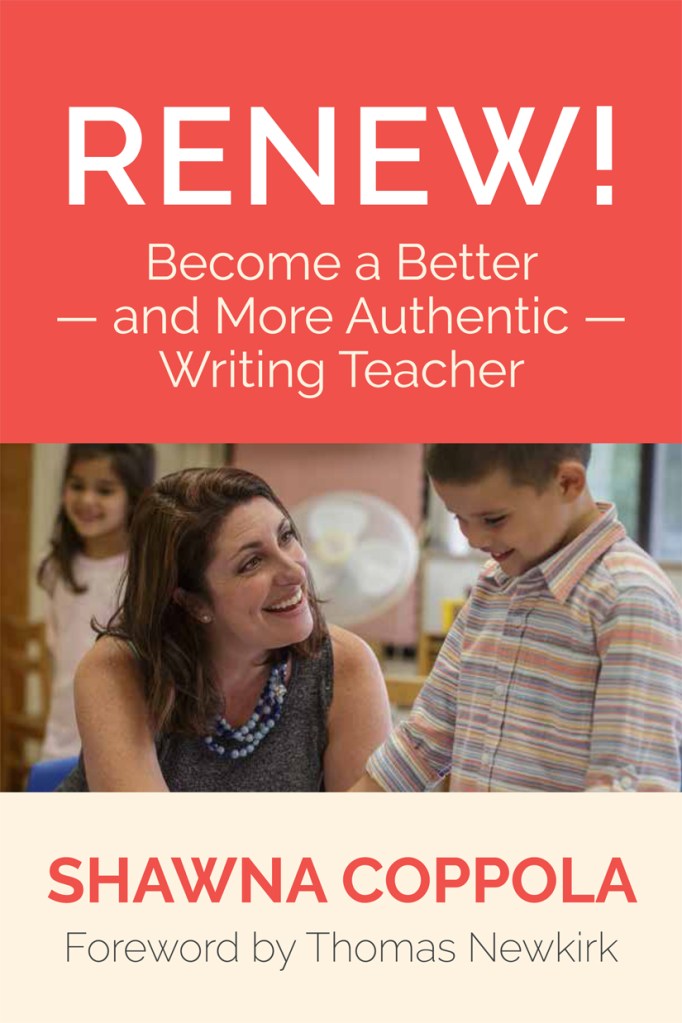
Take everything that you know about the “writing process” and put it on hold. Shawna Coppola challenges the effectiveness and orthodoxy of every aspect of what it means to be a writing teacher. At times cheerleader, at others a scold, Coppola leads the reader through many different methods of teaching emerging writers their craft.
“The minute—no, the very second—that we believe we have done all we can for our student writers—that we have learned all there is to learn about, say, teaching them how to write satisfying conclusions, or how to generate ideas for writing—well, that is also the very second we become less effective.”
The author contends that there is no one way to reach a finished project and many of the traditional methods may not be helpful to all students. Rather than a linear process that begins with a “brainstorm” on through a finished, polished final draft, the writing process may take many different routes. Rubrics may be too confining. Five paragraphs may not be enough. Five paragraphs may be too much. Indeed, limiting the process at the outset does both the author and the evaluator a disservice. Donald Graves, largely hailed as the creator of the early ideas regarding the writing process says:
“Don’t be fooled by the order in which I describe the writing process. I have to use words, which follow each other in systematic and conventional fashion, for you to understand what I am about. This suggests that thoughts follow in a systematic order for everyone. Not so.” (Grave 2003, 220-221)
Coppola is nothing if not passionate about her subject. Her anecdotes, gained from sixteen years as a public-school teacher and mother of two, illustrate the practices that she wishes to challenge. Are rubrics helpful? What should a graphic organizer look like? How is a story told? What should the revision process look like? What is the most effective way to grade? In the end, the most important idea about writing is that the story gets told. This can be accomplished either through visual composition, written word, or a combination of both. All these topics and more are discussed in her easy to read, 100-page work. The author includes many different ideas and concepts with which to assess our own writing pedagogy in the ongoing struggle to meet the ever-evolving needs of our students in a constantly changing social environment.
Renew! is easy to read; it is aimed at those that teach emerging writers in the elementary grades. Secondary school teachers may find that much of the content is inapplicable to students in high school, but this detraction is ameliorated by the upbeat tone and lively language of the author. There are so many different techniques offered that there is guaranteed to be something for every teacher of writing to apply in the classroom. Renew!: Become a Better—and More Authentic Writing Teacher, is sure to offer some new ideas for all. It is Coppola’s hope that we all can internalize a habit of rethinking, revising, and most–important –renewing our teaching practices.








 write.share.connect