Skip to content

Teacher to Teacher: The Importance of Being a Mentor

by Lynne R. Dorfman

From Oxford Languages dictionary

men·tor    /ˈmenˌtôr,ˈmenˌtər/

noun

noun: mentor; plural noun: mentors

  1. an experienced and trusted adviser.

“he was her friend and mentor until his death in 1915”

Similar: adviser, guide, confidant, counselor, consultant, guru

  • an experienced person in a company, college, or school who trains and counsels new employees or students.

“regular meetings between mentor and trainee help guide young engineers through their early years”

Similar: trainer, teacher, tutor, coach

  1. instructor

Years ago I read a book called A Hope in the Unseen: An American Odyssey from the Inner City to the Ivy League by Ron Suskind. I must admit, the title immediately drew me in. The author followed Cedric Jennings, an intelligent and determined honor student at a high school in one of Washington D.C.’s most dangerous neighborhoods, where the dropout rate was well into double digits, to his years at Brown University. Cedric Jennings’s driving ambition was to attend a top college.

The idea that stood out to me was the way Cedric seemed to know when he needed another mentor in his life. His strong mother, his pastor Bishop Long, a high school teacher, and his sponsor, Dr. Donald Korb all served as mentors for him in his journey to achieve his goal. In September 1995, after years of struggles and dedication, he realized his dream when he began as a freshman at Brown University. When I finished reading the book, I could not help but think that today’s teachers might be able to turn the tide around and provide some hope to more of our children in what is unseen now.

Students need mentoring relationships to grow and flourish. I thought about Allyn and Morrell’s Every Child a Super Reader: 7 Strengths to Open a World of Possible and how the authors address hope as a strength of a “super reader.”  These books have been important to me and have nurtured the idea of mentorship being key to our success as students and as capable, productive citizens. 

It’s important to have mentors in our lives; essential, really. Some of our mentors stay with us for a long time and continue to help us grow, push forward, and evolve. My grandfather was an important mentor. I think he modeled for me what is meant by the Golden Rule. I still try to live my life by his example. He is always with me. Often, if we are lucky, our parents and grandparents stay with us as mentors for a very long time. Other mentors may be short-term such as a grade school, a secondary school teacher, or a university professor. Coaches such as a basketball or Little League coach, or a gymnastics or dance coach can provide years of mentorship.

New teachers are often assigned a mentor who is a support, a guide, and a counselor during a three-to-five-year induction program. Often, the bond created here goes well beyond the program. In my case, the last mentor relationship I was assigned to in my district blossomed into a lifelong friendship. I read at Karen’s wedding and she was a bridesmaid at my wedding. We celebrate our birthdays and often, holidays. We email, talk and text; sort out problems, provide advice and support, laugh together, sharing bits and pieces of our lives. What joy it brings me to continue this mentor relationship past my retirement from Upper Moreland nine years ago!

Mentors encourage and enable another person’s professional or personal development. A mentor can help focus their efforts by setting goals and giving feedback.  A mentor’s knowledge can create a high-quality and productive workforce. Employees appreciate workplaces that encourage development, as it can demonstrate that their employer values them and wants to see them grow. A mentor can help their mentee set personal or professional development goals and help their mentee be accountable for accomplishing those goals.  When mentees find themselves struggling to perform their job or reach a goal, they can turn to their mentor for support. This encouragement can motivate them to keep moving forward despite challenges. A mentor can also identify and express their mentee’s strengths to instill confidence in them. Having a strong sense of confidence can make the mentee less likely to give up on their goals.

A mentor can serve as a resource to discuss new goals or problems that arise. The mentor can provide unbiased advice or opinions using their relevant knowledge and experience. With these insights, the mentee can better understand what steps to take and whether to pursue the idea or walk away. Similarly, a mentor can also listen and advise them on daily concerns, such as workplace conflicts. A mentor provides valuable, honest feedback. By establishing trust, the mentee understands that constructive criticism aims to build their professional growth. Both mentor and mentee improve their interpersonal skills as a result of their relationship. Being a mentor offers many rewards.

Becoming a mentor has many benefits. Mentors build leadership skills and confidence, grow networks, and provide a sense of fulfillment. Being a mentor reminds us of what we enjoy about our profession, fostering renewed engagement. Knowing that you made a positive impact on someone’s life or career is a reward beyond monetary compensation.  Thinking about the mentors in our lives can spur us on to be a mentor to family members, students, or colleagues at work. It can offer an opportunity to pay it forward, and how great is that!  And who knows? One day, you may serve as inspiration for your mentee to do the same for someone else.
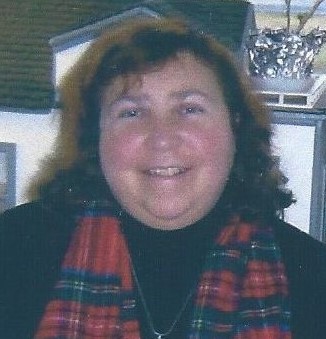
Lynne R. Dorfman is a 1989 Writing Project fellow and serves on the advisory board for the West Chester Writing Project. She loves to garden, write poetry and short stories, and spend time with her three goddaughters. Lynne is working on a new book for Stenhouse Publishers with Brenda Krupp, Succesful Readers: Creating Scaffolds, Structures, & Routines That Help All Students.

Memoir, Anyone?

Main Entry: mem·oir

Pronunciation: \ˈmem-ˌwär, -ˌwȯr\

Function: noun

Etymology: Middle French memoire, from memoire memory, from Latin memoria

Date: 1571

1 : an official note or report : memorandum
2 a : a narrative composed from personal experience b : autobiography —usually used in plural c : biography
3 a : an account of something noteworthy : report b plural : the record of the proceedings of a learned society

— mem·oir·ist \-ist\ noun

  • an account of the author’s personal experiences
  • an essay on a scientific or scholarly topic

THE CHARACTERISTICS OF MEMOIR:

  • It focuses and reflects on the relationship between the writer and a particular
  • person, place, animal, or object.
  • It explains the significance of the relationship.
  • It leaves the reader with one impression of the subject of the memoir.
  • It is limited to a particular phase, time period, place, or recurring behavior in
  • order to develop the focus fully.
  • It makes the subject of the memoir come alive.
  • It maintains a first-person point of view.

According to J. A. Cuddon, “An autobiography may be largely fictional. Few can recall clear details of their early life and are therefore dependent on other people’s impressions, of necessity equally unreliable. Morever, everyone tends to remember what he wants to remember. Disagreeable facts are sometimes glossed over or repressed ….” Cuddon, J. A. The Penguin Dictionary of Literary Terms and Literary Theory, 1991. The English novelist Anthony Powell said, “Memoirs can never be wholly true, since they cannot include every conceivable circumstance of what happened. The novel can do that.”

SUPPORTING SKILLS AND PRIOR LEARNINGS:

To write memoir, the writer should be able to:

  • narrow topic and focus.
  • identify audience and purpose.
  • use an individual voice.
  • develop characters through thoughts, characters, words.
  • use dialogue effectively.
  • use sensory details.
  • choose language appropriate to audience and purpose.
  • write a lead which engages the reader and sets the context for reading.
  • create a single impression of the subject of the memoir.
  • place ideas and details of the memoir in meaningful order.
  • focus on the purpose of relating the significance of the relationship between the writer and the subject of the memoir.

To write a memoir, begin by brainstorming on paper all the events you can remember from your life that were either very important to you in a positive way, or very important to you in a negative way. Talk to other members of your family to get ideas, help you remember events from when you were small, and to help fill in the details that might have been forgotten. Select the event, or series of related events, that seems most interesting to you right now. Brainstorm again but in more detail, trying to recall names, places, descriptions, voices, conversations, things, and all the other details that will make this turn into an interesting memoir. Work at this notetaking stage for a few days, until you feel you’ve got it all down on paper. Then begin to write. You will be surprised to see that even more details begin to appear once you start to write. For your first draft, write quickly to get all your ideas down from beginning to end. Don’t worry about editing. Before you revise, share your first draft with someone in the family. Consider their response but go with what feels right. Rewrite, and then start editing as needed. Good memoirs are about everyday things, but they are interesting, sometimes just as interesting to read as a good novel. Remember, a memoir is supposed to be true, so be careful not to exaggerate or embellish the truth.

Memoir is a form of autobiographical writing dealing usually with the recollections of one who has been a part of or has witnessed significant events, a slice of the author’s life, one centered on specific events. The memoir has the same characteristics of a fictional story: memorable characters, conflict or an obstacle to overcome, and movement of the protagonist to overcome the obstacle. Memoir is differentiated from autobiography which is a recounting of the events of the author’s life. Usually, we are pulled through an autobiography less by conflict and its resolution and more by our interest in the author because she/he is famous or familiar.  It must be true to life as the author experienced them.  In memoir, we consciously omit things and people that do not relate to the particular slice of life on which we are focused. We can add not events but sensory details that enhance the scene. We can also create dialogue as long as it is true to the event and the person speaking. Care should be taken, however, not to create someone else’s thoughts or motivations. All we know of another’s behavior is our own interpretation. While we can report on what we think or what we have thought of their thoughts and motivations; we cannot report them as their thoughts and motivations. Fictionalizing our lives provides a good alternative to memoir. Reasons to fictionalize our stories abound. We can protect identities. We can gain distance on people, so that we can truly see them as characters caught in their own dilemmas rather than people we assume we know. This distance allows us to see ourselves and our role in the drama in new and deeper ways. 

Memoir writing, anyone?

Lynne R. Dorfman is a 1989 Writing Project fellow and a co-editor for PAReads: Journal of the Keystone State Literacy Association. She loves to take walks with her three Corgis and read mystery stories and poetry.

Book-banning: Some Questions By Janice Ewing

            As we begin to see some indications that Covid numbers are receding, we are surrounded by another epidemic. Every day, it seems, we’re seeing more fanning of the flames of book-banning.  As a corollary, we see restrictive policies and proposed laws arising to prevent teachers from fostering critical thinking, respect for others, and an understanding of the complexity of our history. It seems that texts and curriculum are to be designed to prevent discomfort, to present a sanitized view of history, and to include characters that represent a limited view of human behavior. There are no easy answers to any of this, but I thought it might be helpful to share some questions; they might be of use for reflection as individuals or discussion in partnerships or groups. On the issue of book-banning, these are some question that I thought might be helpful to consider:

What do we know about the history of book-banning?

What groups have used it in the past? For what purposes?

What groups are using it now? For what purposes?

What do we see happening?

What might be happening that we do not see?

What is our role as individuals? As classroom teachers, teacher educators, librarians, authors, book-sellers, publishers?

What is our role in the communities of which we are members?

What do we need to learn?

From whom can we learn?

Where can we find support?

What is surprising us about others?

What is surprising us about ourselves?

            I am hoping that these questions can serve as place to begin or to deepen our understanding of where we are, how we got here, and how to move forward. There are no easy answers. What other questions are you asking? Please share your thoughts.

Janice Ewing is a 2004 Fellow of the Pennsylvania Writing and Literature Project, now the West Chester Writing Project, and a current member of the advisory board. Her interests include teacher inquiry, collaboration, and mentoring. She and her colleague Dr. Mary Buckelew, are the authors of Action Research for English Language Arts Teachers: Invitation to Inquiry (Routledge, 2019).

Teacher to Teacher: A New Year’s Resolution…Be a Reader

by Lynne R. Dorfman

We know that one of the ways we can help our students become lifelong readers is to provide choice and book titles that are engaging. A wide variety of genres and authors that are housed within our classroom collection for quick and easy access is important – absolutely essential. But perhaps the most important factor is the teacher. More specifically, the teacher as reader. In our classrooms we need to demonstrate our own reading processes – the strategies and skills that good readers rely on to make sense of a text, to deepen their understanding and appreciation of the author’s craft. When we examine our own processes, we can start to understand the complexity of the reading process and the reading difficulties our students may encounter. Only then can we begin to appreciate the hard work their students do every day to grow as readers.

As we share our own reading journals or logs, or as we share tidbits from an article in the latest Atlantic or National Geographic or a moving description about the weather in Newfoundland from The Shipping News by E. Annie Proulx, our students have proof that we are readers outside of the school day. We are models of what we are asking our students to do – not because they are offered extrinsic motivators such as a pizza party or some other prize for reading so many pages each night for a period of time as part of some contest – but to read to learn more about ourselves and our world, to travel to places we can only visit through the pages of a book, to complete us intellectually, emotionally, and even socially, and to deliver through story an  unparalleled ability to foster empathy. When we share what we are reading with our students, we are demonstrating what it means to have a true reading identity.

Having a reading identity means we are motivated to read and learn new things. We view reading as an activity we can choose as recreation. We view reading as a social activity – we want to talk about the books we’ve read with others – share what we’ve enjoyed and talk about what we found to be confusing, surprising, and even disturbing. When we keep our book or several reading books in a prominent spot so students can view them such as a corner of our desk, we are quietly whispering, “I am a reader.” When we share our invisible reading process to make an inference, draw a conclusion, or clarify the new information that has been presented and make the necessary accommodations to fit that new learning with pre-existing schema, then we are demonstrating to our students that we are readers – and we sometimes struggle to make meaning out of a text. After all, reading is hard work, but the payoff is enormous!

When we let our students learn about us as readers, they learn about our likes and dislikes, reading fears, reading loves, where we like to read, when we read, our reading goals. In order to share with others, we may have to track several weeks of our readerly lives – record what we are reading and the places and times of day when we engage in reading. We may start to look at the kinds of reading we are doing – perhaps mainly historical fiction, picture and chapter books, and gardening magazines. In Literacy Essentials (2018, p. 195) Routman tells us it is important to be a model for a reading life because we (teachers) may be the only reading role models some of our students have. She advises us to begin or renew our readerly life and that it is never too late! Tackling shorter books, poetry, and picture books may be a good place to start. As readers, we find ways to present our reading lives in both reading and writing workshops and across the day. For example, when my fourth graders were creating a dinosaur museum and learning about archeology in science and social studies, I had the good fortune of finding several newspaper and magazine articles about recent dinosaur digs and discoveries such as the sinosauropteryx discovery in China in 1996. Reading those articles to the students and posting them on the bulletin board in plastic bags for students to take to their seats to read with their partner or by themselves was one way I shared my “outside-of-school” reading life.  

Being a reader is part of being a leader.  Teddy Roosevelt consumed books, reading a minimum of one book a day — history, poetry, philosophy, novels — as well as newspapers and magazines. (https://www.washingtonpost.com/news/retropolis/wp/2018/01/09/trump-isnt-big-on-reading-teddy-roosevelt-consumed-whole-books-before-breakfast/?noredirect=on&utm_term=.d91c4b64adaa)  Some United States presidents have been writers, too, such as John F. Kennedy, Barack Obama, Jimmy Carter, and Teddy Roosevelt. But today more than ever, we need to read to understand the diverse populations that comprise our global society, to stay on top of new trends, new technologies, new research (for example, the newest brain research related to the teaching of reading and human development) and the best teaching practices. I urge my graduate students to be prepared to answer the question, “What are you reading?” during a job interview. Recently, a friend’s son came to his first interview armed with current children’s books that could serve as mirrors and windows for children in elementary school (see the work of Dr. Rudine Sims Bishop) and educational journals he had just finished or was in the process of reading. He was called back for a second interview and then hired for a teaching position at one of the elementary schools. I believe that sharing his reading life was an important factor in securing a teaching job.

In Literacy Essentials, Routman lists things we can do to take action to become a role model for a readerly life (p. 195-199). I have created a list and hope you will consider some of these actions as you find your way back to reading or as you try to fit reading into your busy teacher life throughout the school year.  

  • Know yourself as reader; your successes and limitations.
  • Don’t always play it safe – take risks and try new authors and genres such as young adult literature, a graphic novel, a collection of essays.
  • Recommend books to your students so they can see you reading and that you have a reading life.
  • Bring in the book YOU are currently reading and post it on a “What are you reading?” sign outside your door that includes what you are reading as a read aloud to your class and what you are reading outside of school.
  • Share a new goal you have set for yourself. My goal for 2022 is to start each day with some reading. To that end, I have a stack of books I can always depend on for a quick five to fifteen-minute read each morning. Here are some of my choices: Flying Lessons and Other Stories edited by Ellen Oh, Garden Poems selected and edited by John Hollander, Natural Meditation: Refreshing Your Spirit Through Nature by Barbara Ann Kipfer (can be less than a three-minute read), A Suitcase of Seaweed & MORE  by Janet Wong, and Live This Day: A Guided Journal to Inspire Positivity and Intention (some writing here as well) by Miriam Hathaway.

Read professional books about your craft.

Reference your reading life to your students when it is appropriate in a conference, a minilesson, or a class meeting.

Read magazines and newspapers.

Be a reader of books you will use in your classroom: wordless books, picture books, early chapter books, upper elementary/middle school, YA literature, poetry, essays, plays.

Try listening to books while you are in the car – audiobooks are on the rise!

Follow and establish GoodReads accounts.

Recommend books on amazon.

Keep a reader’s notebook.

Suggest a place in the school (perhaps a special shelf in the librarian’s office or in the copy room) where your colleagues can place books they’ve read so teachers can borrow to read and return when they are finished.

Create a “mailbox” in a local park. In Upper Moreland Township in Pennsylvania, “Little Free Libraries” dot the walking trail, so not only can you exercise your body, you can come away with a book to exercise your brain!).

Ask your school and local librarian for suggestions for read alouds and book clubs.

Talk about your readerly life by sharing when you decided to abandon a book, personal connections you made with a book, or sharing an excerpt where the words made you laugh out loud, shed a tear, or take action in some way.

Keep current – know what new books are being published. Follow Donalyn Miller’s blog https://bookwhisperer.com/blog/ or follow her on Twitter and Facebook. Mr. John Schumacher  http://mrschureads.blogspot.com/, Colby Sharp, Cindy Minnich, and Nerdy Book Club posts are wonderful educators to follow in order to learn what is available for you.

It is important for us to demonstrate that we are yearlong readers. Even though we may be reading for graduate courses or for a school committee, we cannot afford to designate the summer months as the only months we read recreationally. It is possible to do this. Strategize to succeed in this endeavor. I save longer, more complex reads like The World Is Flat: A Brief History of the Twenty-first Century by Thomas L. Friedman that analyzes globalization in the early 21st century for summer or holiday reading. During busy months I find comfortable reads like a Mary Higgins Clark mystery and The No. 1 Ladies Detective Agency series of novels by Alexander McCall Smith or a favorite author like Elizabeth Berg, Toni Morrison, Delia Owens, or Anne Tyler.


A New Year’s Resolution: Live the readerly life we want our students to develop. Our good reading habits will help us continue to develop into the expert we want to be. Reading daily will bring us into the inner classroom circle – being part of the reading community we establish with our students is crucial to our successes as reading teachers. What are your students reading? What are you reading?

Lynne R. Dorfman is a 1989 Writing Project fellow. She continues to serve on the West Chester Writing Project’s advisory board and highly recommends the invitational summer writing institute. In her spare time, Lynne writes professional books and posts for MiddleWeb and her own blog and remains a co-editor for PAReads: The Journal of Keystone State Literacy Association.

Teacher to Teacher: Writers’ Decisions By Janice Ewing

            As teachers, when we encourage our students to use the writing process, we are often referring to the acts of brainstorming, drafting, revising, editing, and publishing. The more teachers engage in writing of their own, the clearer it becomes that these components, while helpful to identify, are not necessarily sequential; they will interact differently for different writers and/or with different pieces of writing. For example, if you’re a writer who tends to make changes as you compose, you would not want a critique partner to remind you that we’re not “in revision” yet. Similarly, you would not appreciate a partner looking over your shoulder to point out needed edits while your ideas are flowing. I think it’s helpful to ask ourselves if we’re doing this with our students, either directly or by suggestion.

            I also think that there is a broader frame of reference that it’s helpful for us to reflect upon — the importance of the myriad decisions a writer makes in crafting their work. For students, the scope of their decisions will vary, depending in large part on the belief systems and resources that provide the foundation for writing in their classroom, school, or school district. For example, if they are following a highly structured and prescribed writing curriculum, the emphasis might be more on correctness and adherence to a formula than to making thoughtful choices. In a setting with no restrictions, but minimal guidance, students might have the freedom to make decisions but lack the opportunities to grow and learn from other writers.

            My view is that in an authentic reading/writing workshop model, one of the lenses that students read through is that of reading like a writer. In my experience, I have seen this start as early as kindergarten, where students might read different versions of a fairy tale, for example, and discuss which one they preferred, based on features such as the beginning or ending, the way the story made them feel, the illustrations, or other relevant factors. In higher grades, this lens might provide insight into any number of features, such as point of view, genre, format, time span, tone, perhaps viewing multiple texts on the same topic crafted in a variety of ways, depending on decisions that the writer has made. A related authentic step is for students to try out some of these “noticings” in their own writing; this is how we frequently use mentor texts. There is great value in using a shared text to highlight a writing feature, but the goal of course is for students to develop this lens on their own, so that reading like a writer becomes a natural part of their experience of interacting with text.

            As reflective teachers, coaches, administrators, or teachers of teachers, here are some questions we might ask ourselves:

            *What is our own comfort level with reading as writers and making decisions about our own writing?

            *What degree of agency do our students have in making decisions about their writing — topic, genre, format, point of view, etc.?

            *Do we have writer-to-writer conversations and conferences with our students, rather than assuming an assigner, time-keeper, and assessor role?

            *Have our students, from the earliest grades, had experiences with texts that encourage them to include reading like a writer in their approach to reading?

            *Are we supporting our students in the process of expanding their toolbox of approaches that they might use to enhance their writing?

            Ultimately, we want students to find their own voices, their own strengths and interests, their unique writing identities. Along the way, how can we create the conditions that will give them the experience and agency to make their own decisions as writers? You’re invited to share your thoughts in the comments section.

Janice Ewing is a 2004 Fellow of the Pennsylvania Writing and Literature Project, now the West Chester Writing Project, and a current member of the advisory board. Her interests include teacher inquiry, collaboration, and mentoring. She and her colleague Dr. Mary Buckelew, are the authors of Action Research for English Language Arts Teachers: Invitation to Inquiry (Routledge, 2019).

Teacher to Teacher: Read Alouds Help Our Student Readers & Writers Grow in School & at Home


Read alouds are the time we gather students together to discuss texts we value and often write about them. This time brings all readers into the same experience even if their reading levels vary greatly. Reading aloud gives children an opportunity to access books that may be more difficult to comprehend because of the subject matter and readability. By sharing the text aloud, readers can rely on each other to come to a deeper understanding of the text. Shared discussions open up new possibilities. Through the read-aloud comprehension strategies come to life as they are demonstrated by the teacher and used by the students.  The read-aloud can push readers into a deeper understanding of the text as children study the work of the author.

Choose a book you love and may use as a read aloud in reading and/or writing workshop. Read it as a reader with sticky notes on hand to note your thoughts and feelings. Read it as a writer and find writing in the text you can highlight later for your young writers. Is the lead something they could emulate? Does the author use interesting vocabulary or descriptions? These noticings could become mentor texts for read alouds in writing workshop and across the day. Mark sentences and/or passages that can be used to model craft moves in your minilessons. Use them in your writer’s notebook to study craft and imitate it before you teach it to your students.

Poems as read alouds can last for a week and be used for word study, vocabulary building, and fluency. Three-minute poems can reap rewards throughout the language arts block and become mentors in both reading and writing workshop. Poems are a great way to read aloud to students to begin a science, math, or social studies lesson, too. Visit http://www.poemfarm.amylv.com/ to glean ideas and find poems shared by Amy Ludwig VanDerwater.  Visit https://pomelobooks.com/ where Sylvia Vardell and Janet Wong share poetry and books such as the Poetry Friday Anthology Collection series such as The Poetry of Science: The Poetry Friday Anthology for Science for Kids.

If read alouds help our students learn how to think, talk, and write about texts, then we should make sure our read-aloud choices are varied. Keep a list to track read alouds and be sure to include a wide variety of authors and genres as well as ways you might use the book with your students.Keeping a sticky note on the inside cover can remind you of possible ways you can use this book as a mentor text. Lynne tags pages where she will stop to do a think aloud to introduce a strategy or skill such as making a prediction or making an inference. Read alouds are often tagged in numerous places for teaching possibilities – similes and metaphors, rich description, evidence of the author’s voice, unusual sentence structures (adjectives appearing after the noun or an example of a compound/complex sentence), an example of an anecdote, and times to stop and reflect. 

The experience of sharing reading doesn’t have to stop at school. Sharing books at home allows parents and children to connect in a very special way.  This is quality time we spend with our children. It strengthens relationships and helps children develop interpersonal skills. As we read together, we build curiosity, memory, and language, especially early on. Children who are read to at home come to school with a greater vocabulary and are ready to learn to read in school. Access to books in the home allows children to see themselves as readers in a family of readers. When children own their own books, they further develop their own reading identity in their family. Parents often want to know how to help their children at home, you might want to offer them some of these suggestions during conferences, Open House visitation, or in a monthly newsletter. Here is advice for parents:

  • Ask your child for his/her opinion of the book you are sharing – orally or in writing. Share your opinion, too. If it is written, consider posting it on facebook or tweeting about it. Your child can keep a log of his/her opinions and take it to school to start a “Book Reviews” section on the classroom bulletin board or request a “Book Reviews” section for the classroom website.
  • Ask your child to choose the book to read aloud.
  • Read the book to yourself before you share it with your child. Your read will help with fluency and could determine whether this book is a good match for your child’s interests.
  • Share the read aloud as you take turns reading – your child reads as one character and you as another, or take a paragraph or page (depending on the amount of print on a page).
  • Ham it up and take on different voices for the characters!
  •  Create a book basket for each family member to hold their own personal book choices that reflect their interests and passions for read alouds.  Remember, favorite books can always be read more than once!
  • Start a family book club with the nuclear or extended family – relatives do not have to live close by. Technology allows us to chat with Zoom, Skype, Google hangouts, or FaceTime. Here is a chance to highlight a family interest such as a sport, culture, favorite genre or character, or vacation spot through a book that everyone is reading.
  • Read the book before you watch the movie and then talking about the differences, the similarities, and your child’s preferences. Write a movie or book review – or combine them into one review.
  • Check out the school and local library for audiobooks that your family can listen to when traveling to visit a relative or a sports event or just whenever travel will take more than ten minutes. Remember, when you have a library card, you can use it at other local libraries, too. The library card is obtained from the library in the community where you live, but you can access books anywhere with your card. Your library can often check for audiobooks in other locations and have them sent to your library for pickup and use.

Provide a bibliography of poetry books for parents. A good place to start is “A Treasure Chest of Books” in Poetry Mentor Texts: Making Reading and Writing Connections, K – 8. We know parents are busy people, but everyone can find the time to share a poem. Post favorites on your website or a designated school page that parents can easily access. Vary the genres and formats to include joke and riddle books, nonfiction, graphic novels, picture books, and even wordless books. Share links to websites such as WNDB (We Need Diverse Books) introducing books written and/or illustrated by people of color, the Brown Bookshelf (designed to raise awareness of black voices who are writing for young people), Colorín Colorado to serve our families of English Language Learners, and Jane Addams Peace Association that annually gives book awards to children’s books that engage children in thinking about peace, social justice, global community, and equity for all people (https://www.janeaddamschildrensbookaward.org/).

And do not forget to provide some tips for reading over holidays and summer vacation! In Shelly Keller’s kindergarten class, students wrote reviews for their favorite books. Shelly created a “Read a Good Book” newsletter with students’ reviews to help parents choose books for their soon-to-be-first grader to read over the summer months.  In It’s All About the Books: How to Create Bookrooms and Classroom Libraries That Inspire Readers Illustrated Edition, Landrigan and Mulligan (Heinemann, 2018) help their students create a plan for summer reading before they leave school, providing their students with a calendar that shows when school ends and starts again so they know how many reading days they will have (123). They suggest summer book swaps by appointment at the school where a teacher, the principal, a literacy coach, and parents can volunteer to organize books and oversee appointed times for book swaps. Post invitations on the school website to visit the public library for special events such as author readings or book talks about new releases. Highlight a few great read-aloud choices for parents – books that may be a slightly higher level than most students’ independent reading level. These books will introduce new vocabulary, sentence structures, and author voices.

Lynne R. Dorfman is a 1989 fellow and serves on the West Chester Writing Project’s advisory board. She loves to read and write poetry, plant flowers, and spend time with her three godchildren and her three Welsh Corgis. Lynne is currently working on a book for Stenhouse Publishers with Brenda Krupp. She hopes to see you on the first Saturday of each month at the WCWP Continuity Sessions with Jolene Borgese and Kelly Virgin.