A Writerly Life: Wisdom from Lynne Dorfman
Giving students the inspiration to be “writers” begins with encouraging them to be admirers of other writers.
-Maureen Pfeiffer (2016 participant of Grammar Matters)
Aug 8
Giving students the inspiration to be “writers” begins with encouraging them to be admirers of other writers.
-Maureen Pfeiffer (2016 participant of Grammar Matters)
Aug 3
By Janice Ewing
Do you think of August as a transitional month? For many teachers, June and July have provided time and opportunities to pursue professional learning and have the collegial conversations that broaden their thinking and inspire new avenues of inquiry. Now, the weather and the calendar tell us that it’s still summer, with the possibilities of travel, family time, and more professional learning, but it’s also a time when many teachers begin thinking more directly about their return to their classrooms.
The TV, print, and online ads tell us that it’s time to start gathering coupons and looking for those great deals on pocket folders and notebooks. (Raise your hand if you’ve gone Staples-hopping to take advantage of ten-per-customer pocket folder bargains!) More importantly, it’s time to start the transition from summer renewal to fall implementation, regardless of one’s grade level or subject area.

For educators at all levels, returning to school this year might have a different feel from previous years. In addition to new ideas for things like grouping structures, assessment, or authentic writing practices, we are also grappling with questions of how to address issues that are not pedagogical in nature, but directly affect our lives as teachers and students. Issues such as ever-present outbreaks of violence around the world, political campaign rhetoric, police and community relationships, our society’s growing understanding of diversity (and instances of pushback in response). We have always faced serious issues in our classrooms, communities and the larger world. Now, more than ever, the rapid pace of events and reactions to those events, shared as they’re happening on multiple news and social media sites, seem to change the very wiring of our brains. Read more
by Linda Walker
Robots…what do I know about them?
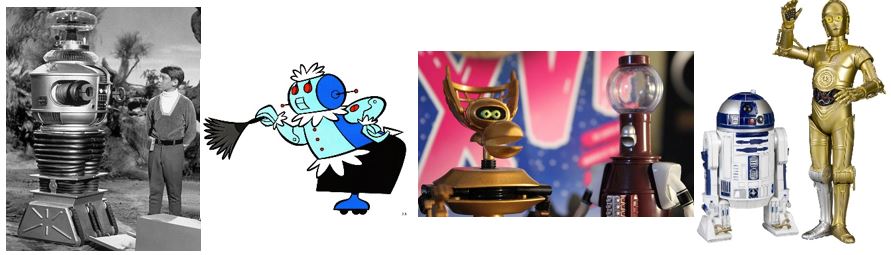
“Danger, Danger Will Robinson,” the robot in Lost in Space calls out its repetitive warnings. Will was always in trouble. This lumbering mechanical alarm system didn’t even have a name? Rosie from the Jetsons, a frilly aproned house keeper rolled around on a single leg offering cheery advice. Two of my favorites were Crow T and Tom from Mystery Science Theater. Along with Joel, their creator, they are forced to watch B-rated Sci-Fi movies. Their critiques were always humorous. And then from the first Star Wars movie I fell for R2-D2 and C-3PO. Who wouldn’t? C-3PO was all decorum and procedure speaking millions of languages. On the other hand, there was the mischievous R2-D2, the bleeping rolling vacuum cleaner shaped character everyone wanted to call, friend. Their personalities and actions appealed to me.
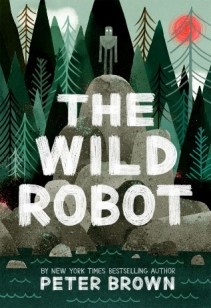 Peter Brown, author of The Curious Garden, introduced me to a new favorite robot, Roz. She is the main character in his 2016 release, The Wild Robot. A hurricane’s lashing rain and wind sinks a cargo ship loaded with hundreds of crates. One washes up onto a wild rock island. Inside that crate is a robot. By fate, some playful otters discover the broken box. Curious by nature, they paw at the contents and click activate the robot. As you know robots are programmed by their creators to store and compute data. They do not learn or have emotions. When Roz is turned on her survival instinct for which she has been programmed kicks in but so does something else…a new feeling – curiosity.
Harry Noden’s words spoke to me because we are constantly adding to our writing just as an artist would perfect a painting.
-Katie Boyer (2016 participant of Grammar Matters)

Jul 27
by Brian Kelley
Since we write blog posts From the Classroom, I am writing to education students or recent graduates about how to join us inside the classroom. While every school building will have its own unique criteria for prospective candidates to interview, I thought I might be of some service to English teachers seeking a position. I have been involved in the hiring process during several occasions throughout my career–twice for assistant principals, three times for teaching positions.
Recently, I was asked to consider 100 applicants for an ELA position and to pull a very small sample for screening interviews. Several colleagues also went through this exercise.
First, I did not expect to feel a grave responsibility–but I did. Sure, I wanted to respect our kids, staff, and community, but I felt an overwhelming responsibility to read and think through each application in order to honor each applicant. The decisions I made (yes/no) impacted one hundred people. Ultimately, my decisions would contribute to someone starting or continuing their career. Read more
Jul 20
by Rita Sorrentino
What do James Britton, Fisher and Frey, and Vicki Spandel have in common? Let’s review some facts.
James Britton (1908-1994) was an influential British educator and researcher who developed a theory of language and learning that helped guide research about the teaching of writing in school.
Fisher and Frey are renowned educators, prolific authors and leaders in the field of language and literacy education.
Vicki Spandel is a well-respected author of numerous books and instructional materials, and was co-director of the team that developed the 6 Traits model.
Hmm. All three have something to do with the components of language; the use of oral and written communication to better understand ourselves and the world around us. Let’s take a closer look. Read more




 write.share.connect