Skip to content

Posts tagged ‘Lynne R. Dorfman’

Book Review: AI – Enhanced Literacy: Practical Steps for Deepening Reading and Writing Instruction By Lynne R. Dorfman
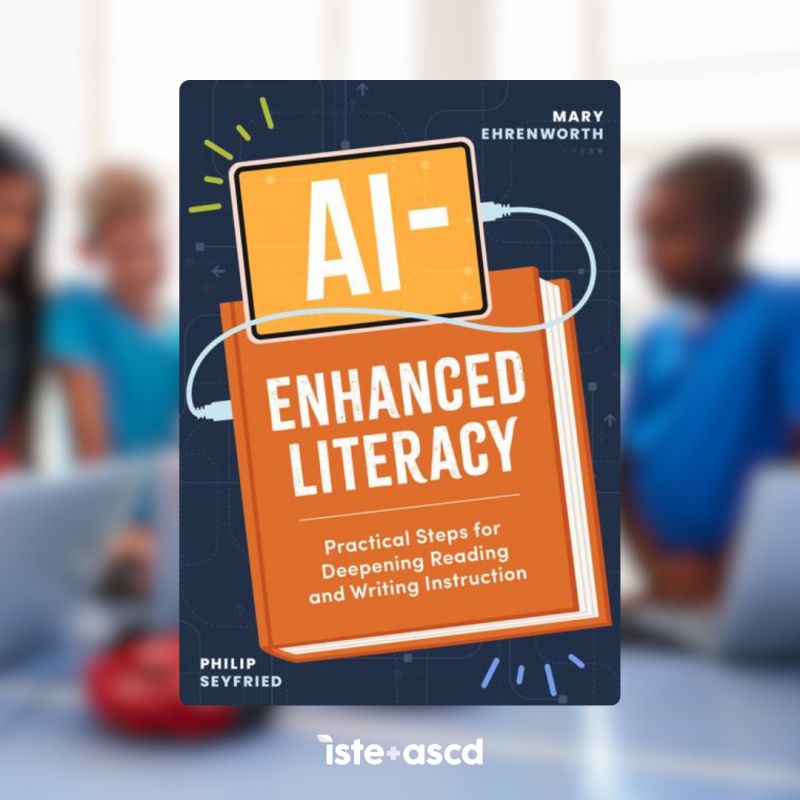
In AI – Enhanced Literacy: Practical Steps for Deepening Reading and Writing Instruction by Mary Ehrenworth and Philip Seyfried (published on Oct. 6, 2025), teachers will discover how each chapter examines AI’s possibilities to expand literacy instruction and develop our students’ comprehension with digital texts and tools.

Regardless of how you may feel about using AI tools to improve reading and writing instruction, it is a critical skill for today’s literacy teachers. Through both theoretical approaches and practical examples to help you, K-12 teachers will learn more about the powerful capabilities of artificial intelligence to teach students to think critically and engage in reflective practices.

Each chapter examines the limitless potential AI has to expand literacy instruction and make the teacher’s role more interesting and satisfying while also saving valuable time. I know that most veteran teachers need to feel more at ease with current AI tools. Mary and Philip’s book will help you create AI-enhanced spaces in your classroom, use the power and efficiency of AI as a writing coach, and teach students to use AI tools in a thoughtful, critical, and ethical way during your reading and writing instruction block.

The authors of this book are well-suited for the task. Mary Ehrenworth, EdD, co-led a think tank on global literacy at Teachers College, Columbia University, for 20 years. Presently, Mary works nationally and globally to empower teachers and students through critical literacies and collaborative inquiry. Her most recent research fields are AI and literacy and vocabulary acquisition. Her co-author, Philip Seyfried, spent over a decade in the classroom as an English Language Arts teacher. He is presently a doctoral student in curriculum and teaching at Teachers College, Columbia University. His research focuses on digital literacy and artificial intelligence in education.

Well-defined headings in each chapter and the myriad figures in this book make it easy to navigate. Key information can be found in figures like Figure 1.5 (Effective Prompt Strategies for Educational AI), Figure 3.1 (AI Collaboration in the Writing Process), Figure 4.2 (Digital Comprehension Strategies), and Figure 4.3 (AI Tools for Readers). While it’s best to read the book slowly and carefully, it provides an absorbing introduction to the topic that is accessible and not intimidating. It is a satisfying read that will help you say, “Okay. I can do this. I am ready for more!”

I loved their practical advice such as “Rereading is a superpower” (p. 93) and digital reading is challenging but look at your curriculum for places “…you might insert some attention to digital reading practices” (p. 110). In addition, this book takes a good look at five different ways that classroom teachers can add AI-powered translation tools to the tool set they already use to help deepen the learning of their multilingual students.

Chapter 6 addresses the building and use of text sets to increase reader engagement and help them make meaningful connections while improving accessibility in our curriculum. Included is a figure that displays an AI-generated diverse text set for teaching The Giver by Lois Lowry and a figure that gives practical strategies for incorporating AI-suggested texts such as linking the literature with other subjects or pairing texts with related podcasts and other multimodal forms of expression and related STEM resources when applicable. The authors explore the use as auditory support as a powerful way to orient your students to new topics and texts. This strategy is useful K-12 and beyond! Figure 6.5 provides a useful guide for co-curating text sets with AI.

Using AI tools to improve reading and writing instruction can feel overwhelming, but it is a critical skill for today’s literacy teachers. This powerful book invites educators to engage in inquiries around AI in the classroom: to explore, think, and grapple together about new digital visions for literacy learning. I was hesitant to think about AI use for myself and in the classroom, but I have slowly changed my mind as I have read, experimented, and attended helpful presentations at conferences. Ehrenworth and Seyfried have helped me think more about digital versions for literacy learning and imagine the possibilities! I recommend it as a good place to start — a must-read!
Celebrate with Poetry! Plus a Treasure Chest of Poetry Books

by Lynne R. Dorfman

A poet is, before anything else, a person who is passionately in love with language. 
~W.H. Auden

It is sometimes hard to define something, even when we feel we know it fairly well. Emily Dickinson, once confided in a letter, “If I feel physically as if the top of my head were taken off, I know that is poetry.”   We might offer these ideas: Poetry is a story, the painting of a scene, a thought, a small moment in time. The trouble is that most dictionary definitions of poetry are dry, limiting, and vague; and so we are left scratching our heads.  What, then, is this magical writing that has such power and range, capable of ever-renewing our spirits? Read more

Reflections from an Author: Why Teachers Must Write (Guest Post)

By Frank Murphy

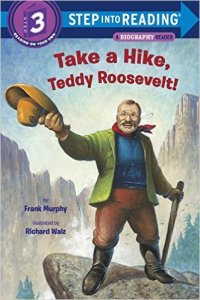
Recently, Lynne Dorfman wrote a Teacher to Teacher post about using my newest book, Take a Hike Teddy Roosevelt, as a mentor text to help guide the instruction of teachers of young writers.  (Of course, I was, and still am, flattered!!)  Soon after, on a Saturday in January, we co-presented on the same topic for some dedicated members of the Capital Reading Council in Harrisburg, PA.

In a nutshell, I started the event off by sharing the story of how Teddy became so dedicated to environmental conservation; then Lynne went about analyzing how she could use this book as a mentor text for elementary school student writers. (If you’ve never seen Lynne present – she’s like a literary surgeon on Skittles!!).  She focused on many things, from strong verbs to exact nouns.  Even artful sentence fragments!  (I hope she thought that one was artful!)  All of Lynne’s analysis forced me to recollect so much of the writing and rewriting and imagining of writing that I did over the last few years of constructing and crafting this book in collaboration with my editor, Anna Membrino.  It also made me reflect on a recent lesson that I taught to my current sixth grade students that I’ll discuss later.  Read more

Teacher to Teacher: Promoting Greater Independence in Writing Workshop

By Lynne R. Dorfman

It is always a challenge to teach writing and run an effective writing workshop, but part of the problem may be our reluctance to set our writers free. We must trust that they will make good choices, use materials and their time appropriately, be able to offer advice to each other, and assess their own writing and set goals.  It is important to realize that we are not the only teacher in the classroom. Our classroom is a giant think tank, a community of writers that can come together in many different formats to assist, advise, critique, and challenge. Read more

Teacher to Teacher: A Journey with a Mentor Text   

by Lynne R. Dorfman

take a hikeI am always amazed how much fun I have rediscovering the joy of studying a new read as a mentor text. In this case, as I am reading and rereading Take a Hike, Teddy Roosevelt – the newest book by author Frank Murphy, I am thinking about the first time I met Frank fifteen years ago. Now a fellow of the Pennsylvania Writing & Literature Project and a personal friend I know well, I remember that Rose Cappelli and I had absolutely no idea who Frank was the summer day he arrived at our PAWLP Author Study course on the West Chester University campus to present his books, Ben Franklin and the Magic Squares and The Legend of the Teddy Bear. Chris Coyne Kehan had recommended him, and we trusted Chris’s judgment.  Frank was personable and exciting to listen to, but he completely won us over when he spied our copy of Wondrous Words by Katie Wood Ray. Clutching it in both hands he declared, “I used this book to write my own!”  Indeed, Katie Wood Ray is one of our mentors for our books about mentor texts (along with Ralph Fletcher, Shelley Harwayne, and Regie Routman).  Read more

Teacher to Teacher: Independent Reading – What should I read next?

By Lynne R. Dorfman

Students in all grade levels are always asking, “What should I read next?’ It’s an important question because you want your students to continue to find books that they can read independently inside and outside of school. In Readicide author Kelly Gallagher talks about McQuillan’s study of reluctant readers (2001). It that showed a statistically significant gain in reading and writing fluency and writing complexity with students who had had a negative attitude towards reading at the beginning of the year, but at the semester’s end had improved significantly after having finished several books on their own. How did this happen? The students were given time to read books of their choosing in school without having to complete a book report, track points, or fill in a worksheet.

Csikszentmihalyi (1990) talked about reading flow – where students can get lost in the pages of a book and achieve true pleasure in the act of reading for reading’s sake without the promise of extrinsic rewards or grades. If we want our students to achieve this state of reading flow, then we have to help them find books that are interesting and inviting to them. We must provide the time and space for them to read in school before we can hope that they will read outside of school. Often, we find our busy schedules do not allow much time to consider the question, “What shall I read next?’ We find that even during a library special, we hurry from the room lined with inviting books just waiting for a recommendation (“Pick me! You’ll find adventure here!) to use the prep period to record reading, math, and writing data on the schoolwide system or respond to a parent’s phone call or e-mail. There is always so much to do, and yet….

Read more