Skip to content

Archive for

NCTE November: NCTE Stands for Something More

By Chris Kehan

Although NCTE stands for National Council for Teachers of English, after experiencing their national conference in Baltimore, Maryland this weekend I can see those letters standing for something more – Networking, Collecting, and Teaching Excellence.
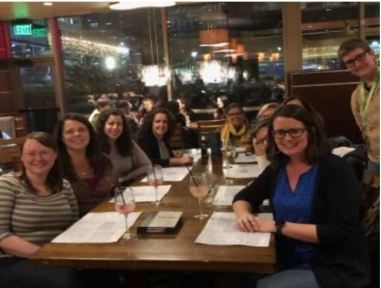
Walking the long halls and gathering in the rooms enabled teachers an opportunity to network across districts and states.  I was able to talk with teachers from around the country and make connections through our common desire to discover best practices in the teaching of reading and writing and bring them back to our students and colleagues.

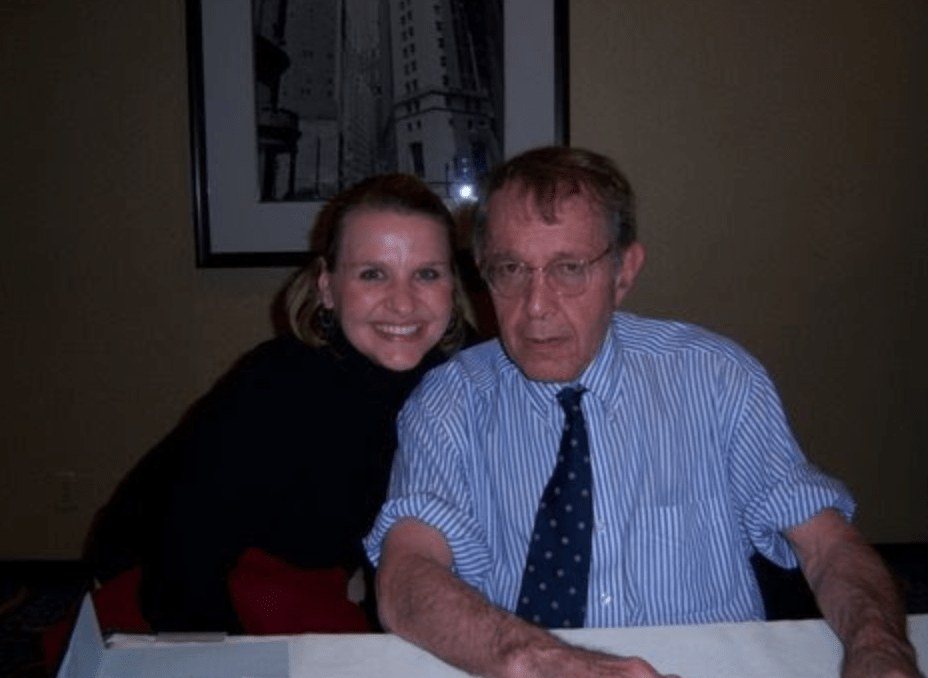
dinner pic.JPG

Sitting in each session and writing quickly all of the strategies and amazing quotes provided by the speakers inspired me to continue to grow as a teacher and a person.  I collected numerous strategies and books throughout the days I attended, and I am anxious to share them with my school community when I get back.

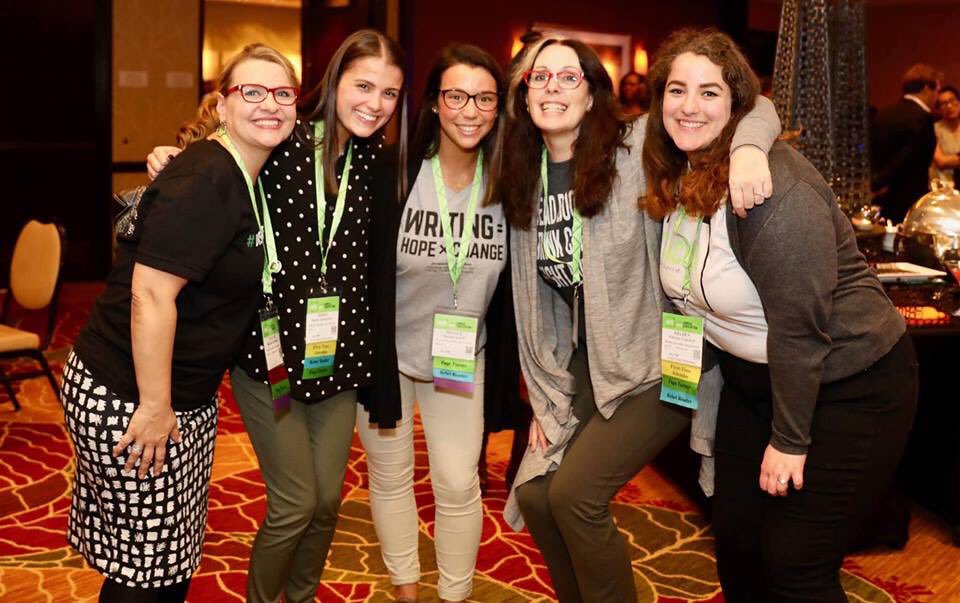
pic 2.JPG

Attending this conference was such a treat.  You find yourself in awe of the teaching excellence that abounds among the presenters, the authors, and the attendees.  I loved my experience and I hope to get another opportunity to attend this incredible conference.  Attending the NCTE Conference is something EVERY teacher should do at least once in their career.

pic3.JPG


From the Classroom: Happy Picture Book Month!

While I use picture books all year long in my high school classroom, it is a happy coincidence that I use them almost daily during the month of November – picture book month. They make a more regular appearance this month because this is when we shift our focus to a short story unit and picture books are ideal for introducing students to literary elements and easing them into literary analysis.

I start the unit with a fun trip down reading memory lane by putting picture books on display all around the room and asking students to share their earliest reading memories. The excitement is palpable as students giddily share memories of gathering on carpets, or signing books out of libraries, or laying side by side with a parent and a good book. This year I used this article to prompt the sharing and had students reply with a classroom “tweet” on our discussion board.

After our discussion, students were excited (literally racing) to Read more

NCTE November: Embracing the Professional Journey

By Pauline Schmidt

For years, I heard about NCTE during my undergraduate and masters programs, but I could never afford to go. The schools where I was teaching didn’t support teachers traveling for professional development (or if they did, I didn’t know about it); and, I didn’t have the voice to advocate for myself…yet. Once I went back to the University at Buffalo for my doctorate, I knew I’d find a way to get there!

In the Fall of 2007, everything came together. I could get a relatively inexpensive flight from Buffalo to NYC, a tiny hotel room near the conference, and the college where I was teaching had funding to support faculty travel. So, there I was, six months pregnant with my daughter, and preparing for my FIRST national conference. I paid the extra $20 to get the program mailed to me ahead of time and went to town highlighting and tabbing pages for ALL the sessions I’d plan to attend! It was a challenge, but I had a session selected for every time slot! After all these years of missed opportunities, I was going to make the most of this experience!

In my excitement, I didn’t realize that some of the sessions were held at the Marriott Marquis in Times Square and some were held at the Javits Convention Center (about a mile away from one another). I had to quickly revise my plan to accommodate for the travel time, but still successfully attended meaningful keynote addresses and smaller, more intimate roundtable sessions. I knew, without a doubt, I would never miss this opportunity again.

Pictured above (from left to right) are authors Gregory Maguire, Amy Tan, and author-educator-hero, Jonathan Kozol.

I have kept my word. I have not missed the NCTE Annual Conference since that first experience. I waited until 2009 to submit a proposal to present – mostly because I was still working on my dissertation & wasn’t sure what I’d present. I was invited to share the results of my study at the WILLA (Women in Literacy and Life Assembly, now called Gender and Literacy Assembly) session. The teacher that I wrote about agreed to co-present with me, and here we are in Philadelphia:

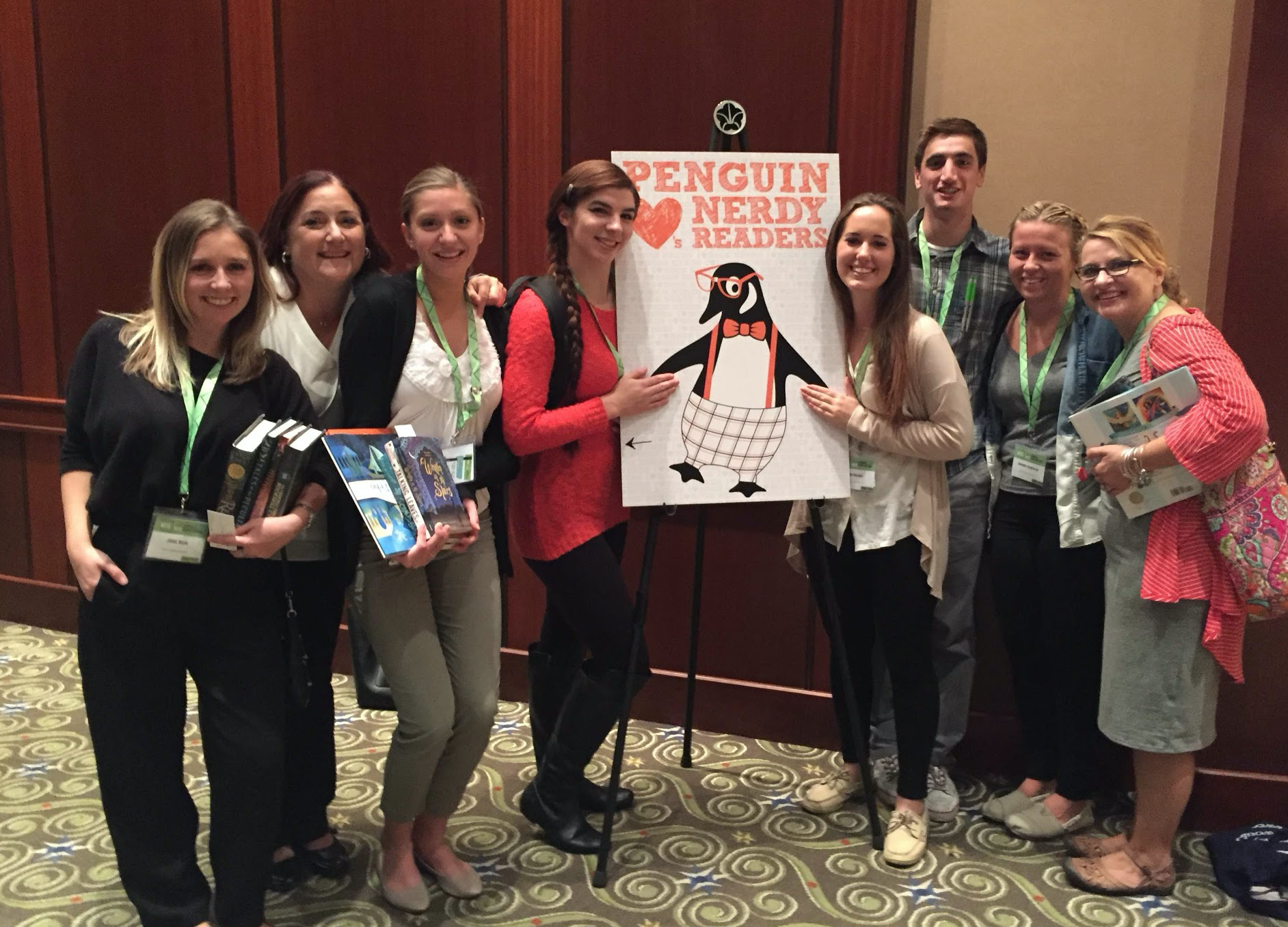
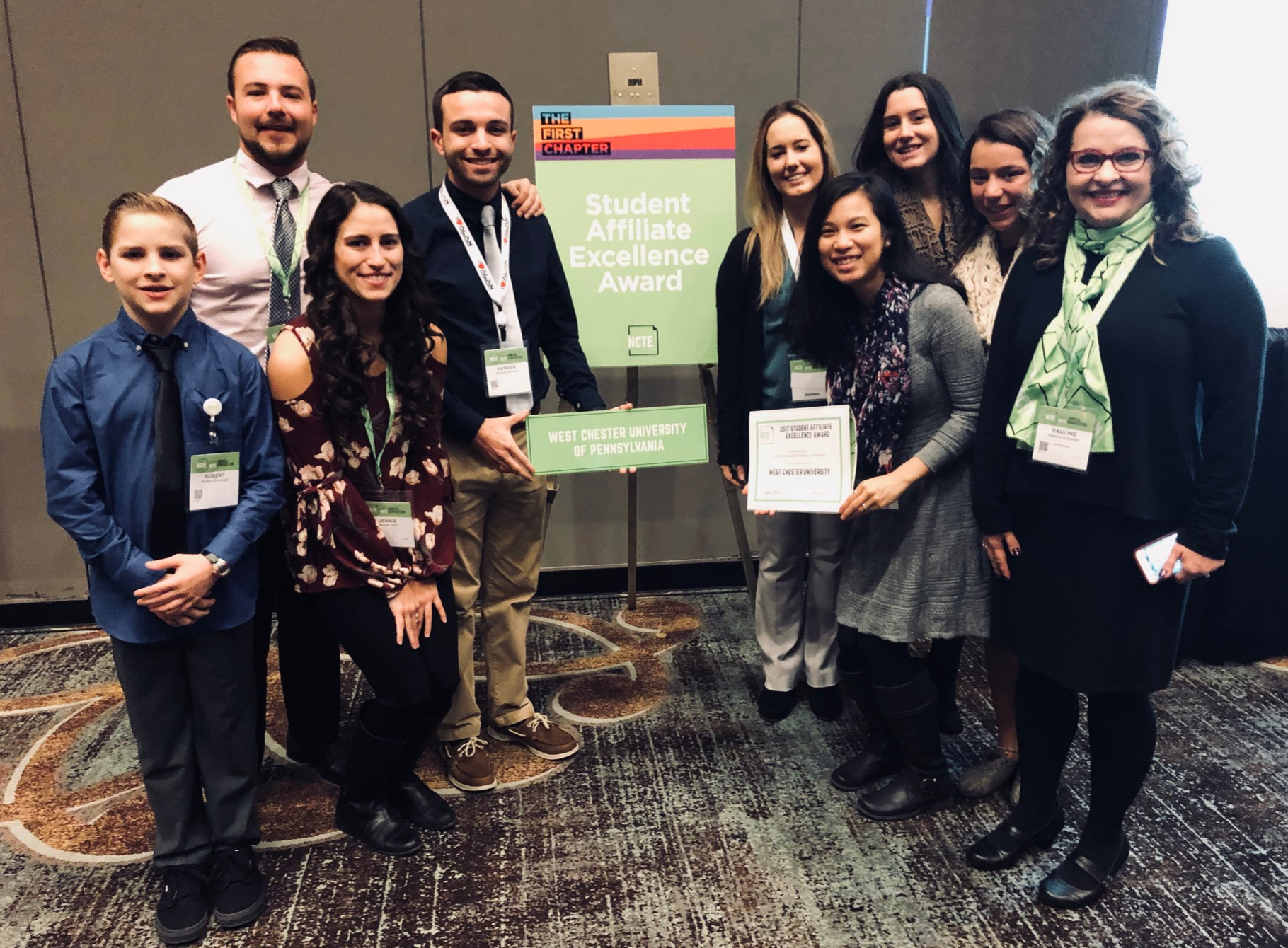
Since this time, I have certainly grown in my approach and in my professional network as well. I have presented in a variety of sessions, chaired roundtable sessions for the Commission on Arts & Literacies, connected with people via social media, met some of my favorite authors, seen some really cool cities, and have even made the case to bring preservice teachers to the conference as well! I’ve received funding from WCU to support and mentor the experience for our students. Here they are in Washington, Atlanta, St. Louis, and Houston!

What I’ve realized about the conference over the years, is just how much I missed in my early years; I can’t go back in time, but I can get as many of my preservice teachers to see how valuable this annual experience is. As we prepare for this year’s conference, I shared some of my tips.

Tips for First-Timers:

  • You can’t do it all, so don’t even try! Plan for a rich experience, but know when to take a break.
  • If you are flying, back your smaller suitcase into your bigger one and then you will have space for all the books and goodies you will bring back.
  • Pick 1-3 sessions for each time frame. If you are in a session that doesn’t seem to be what you thought it was, quietly leave and head to one of your other choices. Remember, you are in control of this learning & this professional development.
  • Bring your writers’ notebook and your favorite pens! You are going to want to take notes!
  • Wear comfortable shoes and bring snacks that you can eat in between sessions. Of course, stay hydrated!
  • Enjoy the downtime – conversations in line at the exhibit hall – eating lunch with friends. It’s all part of the experience.
  • Don’t forget to experience the host city! Check out a local restaurant or bookstore or one of the local attractions.

Giving Thanks

Showing gratitude is one of the simplest yet most powerful things humans can do for each other. 

~Randy Pausch

When was the last time you received a handwritten thank you note or wrote one? As Thanksgiving approaches, I am reminded of one of my favorite writing activities – writing thank you notes. My classes spend some time discussing the importance of saying thank you. We talk about reasons why you would send someone a thank you note, and of course, the students usually say, “When you get a birthday present.”  When I ask how many of them write handwritten thank you notes, very few of them raise their hands. Since the world moved to electronic devices and social media, a handwritten note has become a lost art, but one that is very satisfying when resurrected. 

To get started, I have the students brainstorm a list of people in their lives who deserve their thanks but are often taken for granted.  The list includes obvious people like parents and grandparents, but as we continue to talk the list grows to include bus drivers, crossing guards, maintenance staff, school secretaries, coaches, neighbors, and even siblings.

Once we have our list compiled, I introduce the activity.  Each student will write a handwritten note to someone they need to thank. Some of them still aren’t sure, so  I read a few picture books for inspiration. I have included a shortlist below. If you have a favorite, please add it in the comments.  I am always looking for more.

Ten Thank You Letters by Daniel Kirk 

I Am Thankful by Suzy Capozzi

Thankful by Eileen Spinelli

Being Thankful by Mercer Mayer

Grateful: A Song of Giving Thanks by John Bucchino

Thanks a Million by Nikki Grimes

Thank You, Mr. Falker by Patricia Polacco

The Thank You Letter by Jane Cabrera

Next, we talk about what should go into a thank you note, such as: tell your recipient what you are thanking them for; be sure to expand on why you are thankful for the gift or act and add a closing statement that is directed toward the recipient. Students then write their rough drafts.

I provide the note cards.  I try to get a variety so that everyone has a chance to choose one that suits their personalities.  You can get note cards on sale during the year, purchase them at the dollar store, or use those spare ones hanging around your house.  The kids provide the addresses and the stamp.  

Lastly, the students write their letters (I take a quick peek to make sure there are no glaring errors), address the envelopes, (which is a lesson in itself), and affix the stamp (another lesson). I am tasked with dropping them off at the post office.  

The kids always look and feel satisfied with themselves as they hand me their letters, but that is nothing compared to how they look and feel when they receive feedback from the recipients.  They learn that small gestures can make a great impact on someone else.

I can’t tell you what a difference thank you notes made in my life a few weeks ago.  After a few rough days at school, I was surprised by a large yellow envelope in my mailbox.  Inside were these lovely thank you notes from some teachers in Springfield Delco School District.  In early October, I presented in their PAWLP class, and they sent me handwritten thank you notes. The evening I presented they were all so gracious and said thank you which I appreciated, but the fact that they took time to write me a personal note really made me feel special and lifted my spirits at the perfect time.

Thank you notes

Who is on your thank you list?  Whose life will you or your students brighten with handwritten notes?  I look forward to your ideas in the comments, and thank you for reading this post!
 

NCTE November: NWP Brunch and Beyond By Mary Buckelew and Janice Ewing

Whether attending or facilitating sessions, listening to the keynote speakers, or catching up with familiar colleagues and connecting with new ones, we always look forward to and enjoy the National Council of Teachers of English (NCTE) and the National Writing Project (NWP) combined conferences.

This year, we have a unique opportunity. Elyse Eidman-Aadahl extended an invitation for us to present at the NWP Brunch on Sunday morning. We were humbled by this invitation but gladly accepted it. Elyse was one of the advance reviewers of our book Action Research for English Language Arts Teachers: Invitation to Inquiry (Routledge, 2019). Her view was that the thinking and work that went into this book would be a good fit for the theme of this year’s conference – Spirited Inquiry. Our overall focus for the brunch presentation is connecting and highlighting some of the principles and practices of the National Writing Project with action research as we present it in our book. We will focus on the inquiry stance, reflection, collaboration, and publication.

It seems only fitting that we have invited several PAWLP fellows and friends to contribute to the NWP brunch presentation. Our book was inspired by their thinking at Continuity sessions, on the PAWLP Blog, on Twitter and in the many venues in which Writing Project folks interact to write, collaborate, reflect, and publish – all to improve their practices and the literacy lives of their students!

While we look forward to all of the conversations and learning the NCTE/NWP conference will inspire –we also look forward to embracing another important “R” — relaxation. Whether a communal meal or an opportunity to get to know our host city better, our community extends beyond the classroom. Here’s a memory from Atlanta — looking forward to more from Baltimore!

NCTE Atlanta.png

Reflections on Assessment

By Lynne R. Dorfman

In education, the term assessment refers to the wide variety of methods or tools that educators use to evaluate, measure, and document the academic readiness, learning progress, skill acquisition, or educational needs of students. A good part of the school year in most districts has focused on student assessment as well as in the teaching and learning in higher education. Student assessment is a critical aspect of the teaching and learning process. Whether teaching in elementary school or at the undergraduate or graduate level, it is important for educators to strategically evaluate the effectiveness of their teaching by measuring the extent to which students in the classroom are learning and applying the concepts and strategies.

Understanding our purposes for assessment and thinking about how we collect rich data to drive our instruction is essential. Assessment should always be purposeful, informative, and useful to us as facilitators of learning. Martha L. A. Stassen et al. define assessment as “the systematic collection and analysis of information to improve student learning.” (Stassen et al., 2001, pg. 5) This is the most important task of student assessment in the teaching and learning process – to improve student learning. Here are some thoughts about assessment. Can you add to these lists? Read more