Skip to content

Posts from the ‘PAWLP’ Category

From the virtual classroom – practicing socially distant teaching

If you are anything like me you went from an in-person educator to an online educator overnight. And if you are anything like me, your biggest concern as you transition into this new and unfamiliar role is how you can engage your students in meaningful literacy activities that will move them forward as readers, writers, and learners. Throughout the upcoming weeks or possibly months, I want to avoid miring my students in pointless busy work. So, for these first few days I’ve embraced the “keep it simple” approach by inviting students to spend time each day reading, writing, and participating in learning extension activities. Below are some of the resources I’ve found most helpful as I’ve started to develop our new online approach to learning.

Kelly Gallagher’s Instructional Materials:

As Kelly explains, “The last thing I want to do with my home-bound students is to load them down with brain-numbing packet work. So this lesson plan was designed to honor student choice, student agency, student voice.” One of my favorite things about Kelly’s plan is it invites students to spend time journaling about this developing situation everyday. He not only acknowledges that we are living through history in the making, but he creates space for students to spend time reflecting on and cataloging their histories as they unfold. I am now on day three of engaging in this journal writing approach with my students and have been astounded by some of the observations they are making and sharing (note: my students are invited to share their thoughts with each other and/or me, but not required). One student reflected:
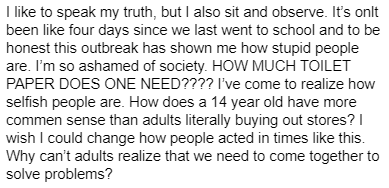
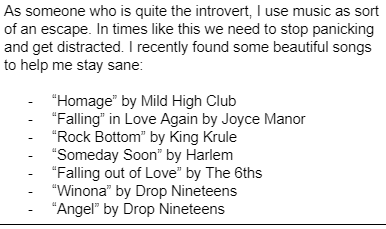
Another wrote about how she’s been coping and shared her song suggestions with the class:
While I’ve invited students to write about whatever is on their mind in any format that feels right for the moment, I’ve also been sharing daily seeds/prompts to help them with their thinking if needed. For example, tomorrow, I plan to share this poem with students and encourage them to write their own poems in response if they feel inspired to do so:

My School Librarian:

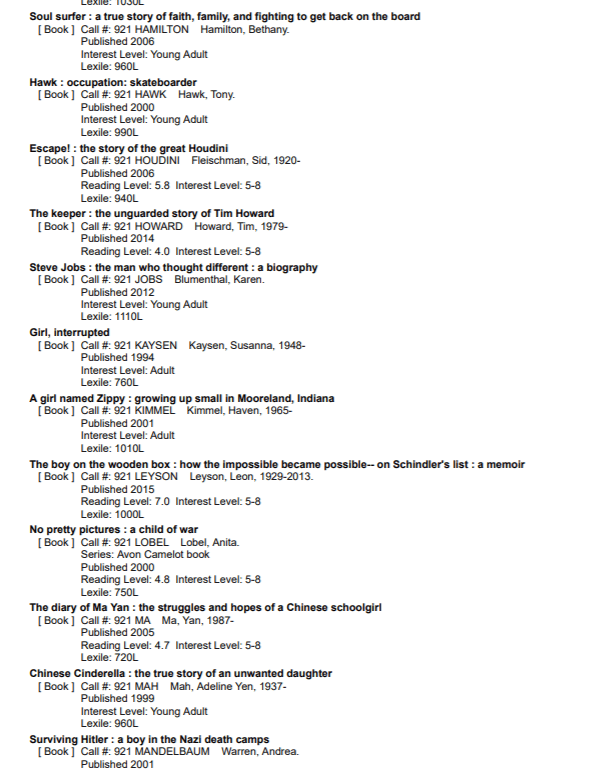
If your librarian is anything like mine, first you are very lucky, and second he/she is eager to help you and your students access books throughout the school and library shutdown. Above I linked a document my librarian created and shared with our staff. It provides a wealth of resources for students to access free ebooks and audiobooks, as well as a plethora of suggestions for them to engage in additional literacy activities. If you have not done so yet, contact your school librarian as soon as possible for school-specific resources you can pass along to your students.

While my students all went home with independent reading books, many will finish them in a manner of days. These resources will prove vital in enabling them to continue reading what interests them as we move further into social isolation.

School Library Journal:

Not only is this journal a great way for educators to stay up to date on the latest books to recommend to their students or add to their classroom libraries, but they have been working hard to keep us up on the latest industry news in relation to the shutdown. For instance, one of their recent posts details ways various children’s and YA authors are offering their services as we transition to online learning across the nation.

Common Sense Media:

This linked article from Common Sense Media offers ways we can take our current circumstances and turn them into teachable moments. They also suggest ways we can help our students reduce and manage their stress.

NCTE:

I addition to moving our instruction to an online platform, my district is also asking us to spend time engaged in professional development throughout the week. For this, I turned to NCTE and the collection of resources they curated for virtual learning and online teaching. I have only just begun to skim the surface of the 9 pages of linked materials they suggest. However, I highly recommend checking out the blog post titled “Audiobooks in the Classroom.” This post presents a podcast that discusses the production of and merits for audiobooks. They also play samples from an array of high-interest audiobooks. I plan to share this podcast with my students in the coming weeks in an effort to encourage them to find new books to read and new ways to read them.

How have you been transitioning to online teaching? What are some of your go-to resources?
Your Local Library: A Hidden Gem

I don’t have to look far to find treasures.  I discover them every time I visit a library. ~ Michael Embry

I have always loved the library. As a young girl, I spent many summers participating in the Vacation Reading Club at the Northeast Regional Library in Philadelphia.  I also worked as a “page” shelving books in the picture book room. It was heaven!  But oh how libraries have changed.  Back in those days, the library had books and magazines, microfiche, and a card catalog.  Today, you can find just about anything you need or want.

According to a Gallup Poll, “In U.S., library visits outpaced trips to movies in 2019.”  The library is most utilized by young adults, women, and residents of low-income households. “Visitin the library remains the most common cultural activity Americans engage in.”  They average about 10.5 trips a year.  Frankly, I don’t know why even more people aren’t using libraries.

Take my local library, The Horsham Township Library, for instance. I spend a good deal of time tutoring there during the summer. On any given day you will see senior citizens using the computers to check email or watch movies, teenagers gathering to study or to hang out and have coffee, or young children who are happily searching for books or playing in the picture book section.  It is delightful.

Here is just a taste of what my local library offers.

  • Book Clubs – fiction & nonfiction
  • Summer Reading Incentives
  • Museum Passes
  • Movies – to borrow & movie viewing events (day & evening times)
  • Story Times – preschool (day & evening times) – Stories & STREAM
  • Career Readiness – resume writing & polishing
  • Watercolor Classes 
  • Holiday events

Of course there are many things to borrow besides books.  My library has kits & cake pans, movies, audio files, and e-resources all available for its patrons, and they are adding materials and services often.

I do have quite a nice collection of books in my classroom, but I could never afford to get every picture book title I might want to use with my students.  I simply go online and reserve the titles I want, and I am notified when I can pick them up.  If my local library doesn’t own the title, they import it from another library.  This has been an invaluable service to me over the years.

What have been your experiences at your local library?  Give a shout out to your favorite library, and tell us what you love about it. How has your library helped you to be a better teacher? A better writer?  Looking forward to hearing from you!


Teacher to Teacher: Grammar and Conventions Instruction in Our Classrooms

The way we deliver grammar instruction will have a significant impact on how students retain the information and apply it in various contexts. Studying grammar in isolation does not make someone a lover of words nor a better speaker and writer. Neither will isolated grammar lessons and workbook pages create confidence and proficiency in grammar and mechanics. There is ample evidence to support this:

  • “…the results from tests in grammar, composition, and literary interpretation led to the conclusion that there was little or no relationship between grammar and composition or between grammar and literary interpretation.” (1986. C. Weaver, Teaching Grammar in Context)
  • “The study of traditional school grammar… has no effect on raising the quality of student writing.”(1991. Hillocks, Grammar and Usage)
  • “The meta-analysis [of grammar instruction involving the explicit and systematic teaching of the parts of speech and structure of sentences] found an effect for this type of instruction for students across the full range of ability, but surprisingly, this effect was negative. This negative effect was small, but it was statistically significant, indicating that traditional grammar instruction is unlikely to help improve the quality of students’ writing.” (Writing Next, p. 21)

The simple truth is that grammar is always a writing trait that is on the backburner, regardless of whatever we focus on in our writing classrooms and across the day.  We often embed the teaching of grammar and conventions implicitly, stopping to chat about a skill or concept during conferences, small group instruction, or end-of-workshop reflection time. Sometimes, when we introduce something new, we move grammar to the front burner and do some explicit teaching. Read more

From the Classroom: Nonfiction Reading and Research with Choice

Lauren Heimlich Foley

8th Grade English

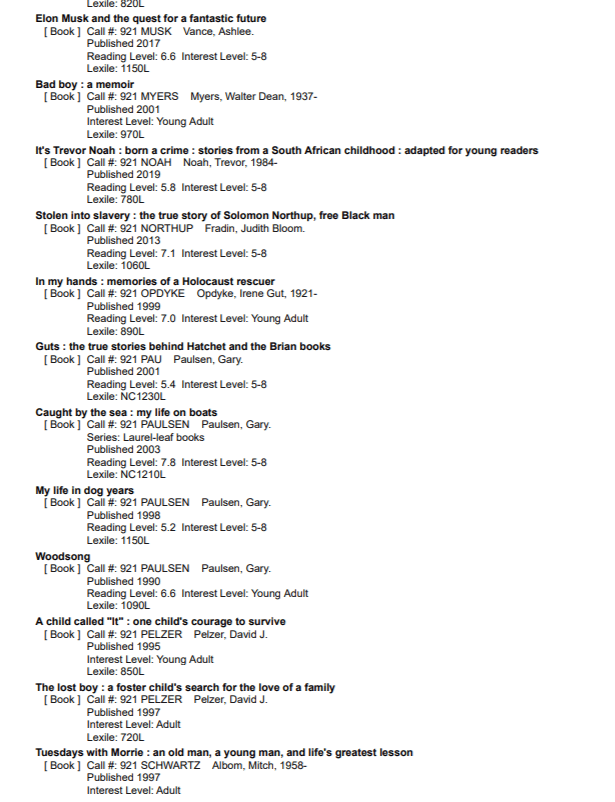
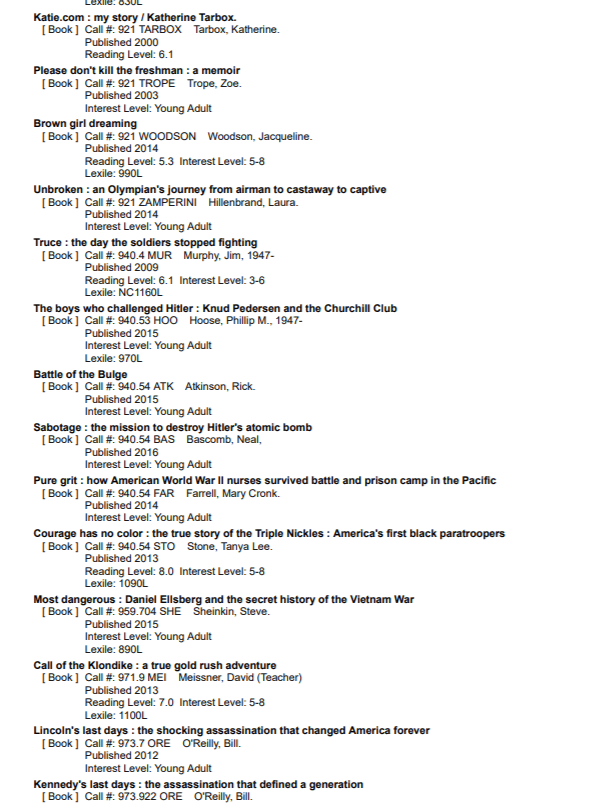
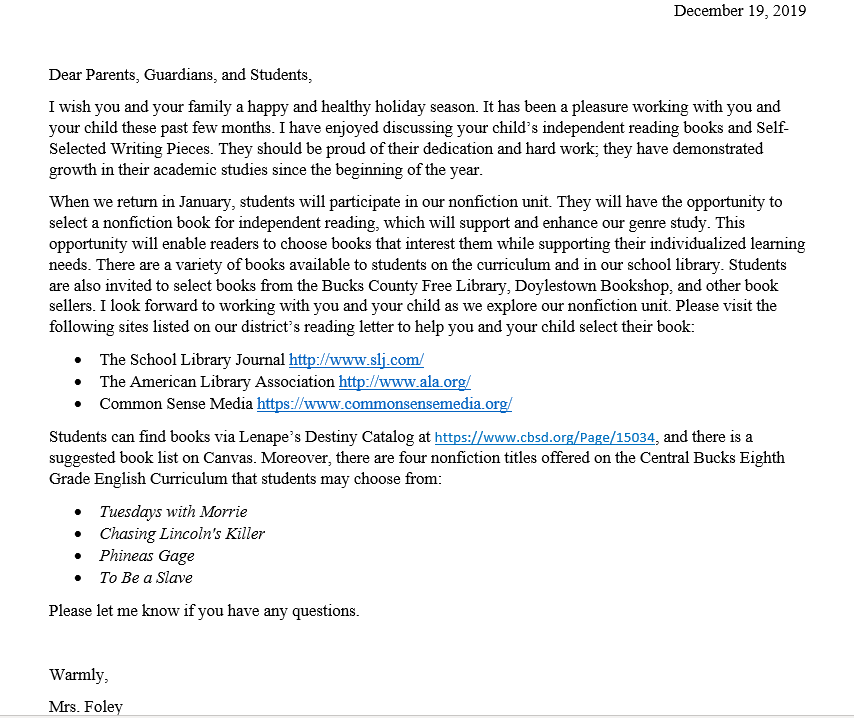
While I prepared for our nonfiction and research unit, I wrestled with how to balance choice and a required text. Students must read at least one long nonfiction piece by the end of eighth grade. We have four nonfiction titles on our curriculum: Tuesdays with Morrie, Chasing Lincoln’s Killer, Phineas Gage, and To Be a Slave. Possibilities emerged: a whole class reading of one text or book clubs grouped by each title. Or, book club options selected by my students, me, or a combination of both? Did I want to launch independent nonfiction reading books?

In the end, I offered these titles but also invited students to choose any nonfiction or narrative nonfiction book. I enlisted the help of our librarian to collect books that met the requirements in our school library, and students browsed at our community library, local bookstores, and Amazon. Sending home a letter to parents and guardians helped students obtain books outside of school.

Students’ nonfiction independent reading book selections revealed a wide range of interests: a variety of historical time periods, true adventures, biographies, autobiographies, self-help books, and current social issues. While most students chose different books, one group of eighth graders decided to read Undefeated and two other groups read I Will Always Write Back as book clubs. Ultimately, choice created engaged students and supported differentiation. The majority of students selected narrative nonfiction texts.

For the first week of the unit, we increased our regular ten to fifteen minutes of daily reading time to twenty to twenty-five minutes. While students read, I conferenced with them as usual, but our discussions focused on the new genre, the facts they were learning, and how authors developed true narratives. By the end of the week, I had spoken with every student at least once. During our whole- class mini-lessons, we further explored craft moves, style, voice, presentation, and messages. Students noticed how their authors implemented a variety of modes to share their content: letters, journal entries, pictures, emails, poetry, crime reports, medical files, text messages, a combination of narrative and informational writing, etc. As students shared exemplar texts, I posted their findings on our learning management system (Canvas) for everyone to see. Students’ independent reading books would later become our mentor texts.

To foster the reading-writing-research connection, I combined our nonfiction genre study with our research study. During the second week, we resumed our ten to fifteen minutes of reading as students brainstormed what they wanted to research and what information they wanted to share. To help guide them, I suggested that their research might relate to their future, a current interest, our community, or their personal life. As with most of the authors and texts they were reading, I wanted students to feel connected to their topics in a way that would ultimately help them to create meaningful and original final products. Additional mini-lessons during the writing process guided students to narrow their topics, select reliable sources, compile notes in a way that worked for them, complete a works cited, include MLA in-text citations or end notes, and present information in an authentic manner.

The final products ranged from historical fiction, narrative nonfiction, biographies, graphic novels, comics, sci-fi stories, newspapers, crime reports, magazine articles, scholarly journal articles, web pages, and multi genre pieces. Offering these options helped students and supported them in making decisions beyond text. They considered where their writing might be published, who might read their work, and who they wanted to reach. Their focus on content and mode created a wonderful symbiotic relationship. By fostering creative thinking that occurred outside of the typical research assignment box, students bought into the writing process and were motivated to complete their research and final pieces.

This assignment also prompted me to reflect on my teaching practice. Originally, I imagined students writing narrative nonfiction pieces to align with their books. However, as I listened to my students’ ideas, I had to rethink my initial plan. Joe wanted to write historical fiction that explored the origins of Halloween. CJ hoped to write a sci-fi story about dark matter. Sara voiced her interest in writing letters from a mom to her future daughter during the mom’s pregnancy. Dara, inspired by her grandma’s immigration story, wanted to transcribe an interview and create a magazine article. And, Luke wanted to develop a book chapter on space and time. More and more creative ideas poured in as students became closer to selecting their final genre, and I began to realize that I was limiting and stunting my students’ potential by choosing the genre for them. When I reflected on the purpose of the assignment, I realized that I wanted students to take part in the research process. I wanted them to understand how messy research can be and should be. I wanted them to question their sources and determine what specific information they needed and wanted to share with an audience. I also wanted them to think about how technology could help them as readers, writers, and learners.  Finally, I wanted to help my iGen students explore PowerPoint, Canva, and We Video and learn more about Word: how to change the page orientation, add columns, switch the text wrap on pictures, add background color, etc. The genre did not make or break the standards or curriculum. Students would meet the requirements whether they wrote in a genre of their choice or mine—but this choice made the difference in their work ethic and overall products.

Finally, I asked my students about the length of this unit since it was my first time implementing it. Based on their feedback and my own observations, I extended the writing portion and final submission date to accommodate their needs. Being flexible helped to support their process and quality of work.

I am excited to see how this reading and writing genre study will impact their future choices. Since finishing their narrative nonfiction books, six students have selected another narrative nonfiction book to read and many students are interested in conducting research for their Self-Selected Writing (SSW) Pieces. Two students are even continuing their research and writing as their next SSW.

From the Classroom: Sustaining Independent Reading Throughout the School Year

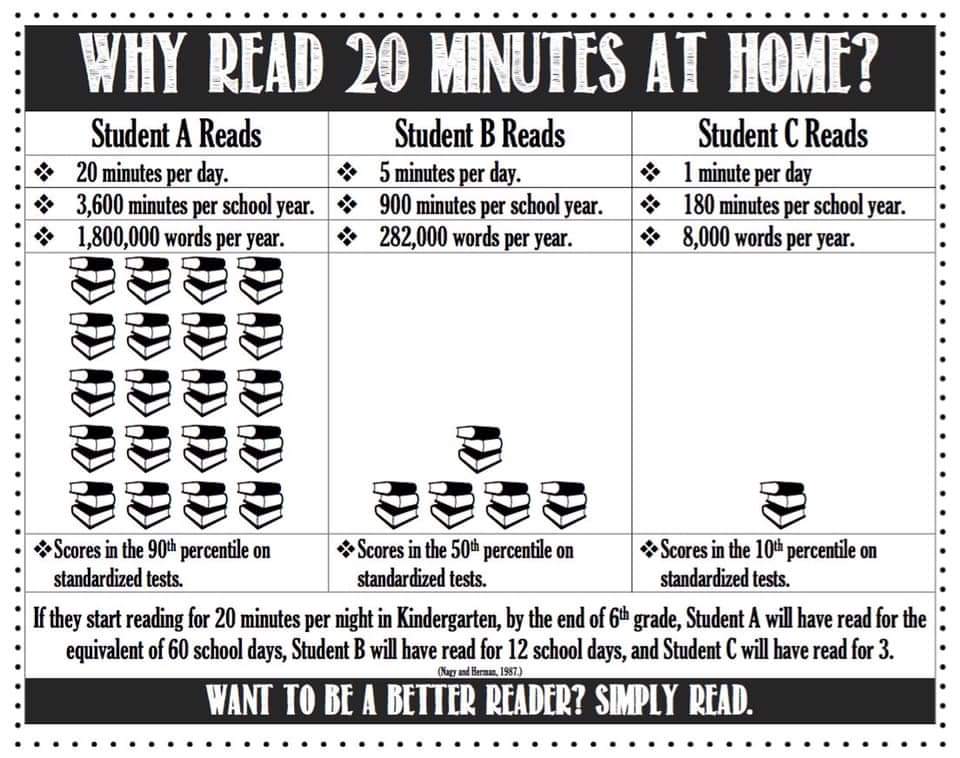
facebook_1582122285326.jpg

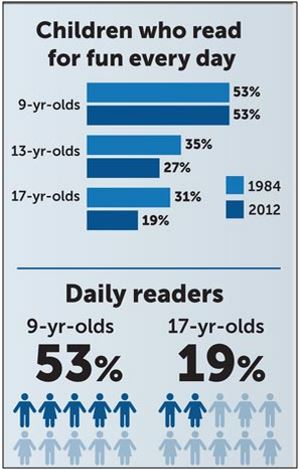
Colleague, Rita DiCarne recently posted the above image on her Facebook feed. While my students are already familiar with these stats as well as many of the other researched benefits of reading daily, they still tend to hit a lull in their reading motivations at about this time of year. This is why, when I saw Rita’s post, I took the opportunity to copy the infograph and invited my students to tape them into their reading notebooks and write in reflection. Reminders like the one above, when combined with continuous opportunities to explore and discuss new books, help us sustain that energy for daily reading in and out of our classrooms.

Reading reflection prompts: Throughout the year I invite students to pause and think not just about what they are reading, but why they are reading. Some of the prompts below have lead to thoughtful reflection and meaningful conversations:

  • Teacher and writer Kelly Gallagher said, “Reading books helps us to enter the feelings, imaginings, and thoughts of others. We temporarily leave our world for theirs, and when we return, we hope our thinking will be expanded and strengthened. We hope to be enlarged intellectually and/or emotionally.” How has your reading expanded and strengthened your thinking? How have you been enlarged intellectually and/or emotionally by what you’ve been reading?reading trends over time.JPG
  • Study the infograph on Children who read for fun every day. What do you learn about reading habits as children age? Why do you think this happens? How can we fight against these stats?
  • “‘Fiction is a kind of simulation, one that runs not on computers but on minds: a simulation of selves in their interactions with others in the social world…based in experience, and involving being able to think of possible futures,,” cognitive psychologist Keith Oatley is quoted as saying. Literary fiction, in other words, works like a flight simulator, only it trains you to avoid crashing and burning as a human rather than as a pilot.” With this in mind, what training have you gained from your fiction reading so far this year? (Source: New Study: Reading Fiction Really Will Make You Nicer and More Empathetic)
  • After listening to an interview with Walter Dean Myers and Christopher Myers, reflect on the comparison they make – “these books are used as fantasy, these books are used as ways that kids can make road maps for their own lives, and if we don’t give them proper road maps, where are they going to end up?” Create a visual of the ways your reading this year has created a road map for you.

Book Flood Activities: I combine these moments of reflection with numerous opportunities to look at and discuss new books throughout the course of the school year. I have discovered it is not enough to merely surround students with lots of varied and engaging reading materials. You have to also give them lots of opportunities to engage with these materials. Below is a brief list of some of the ways I actively immerse students in wading through the classroom book flood:

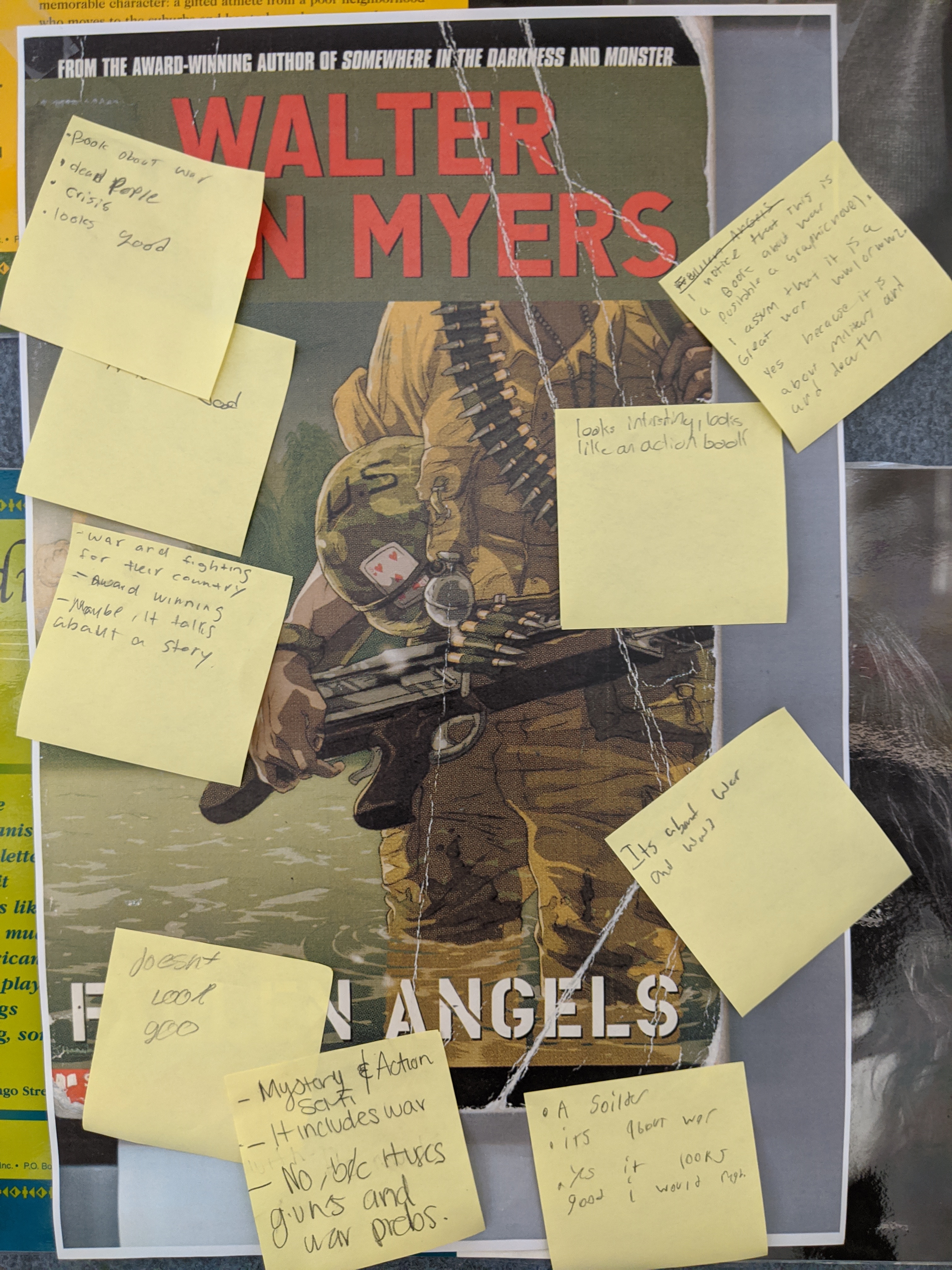
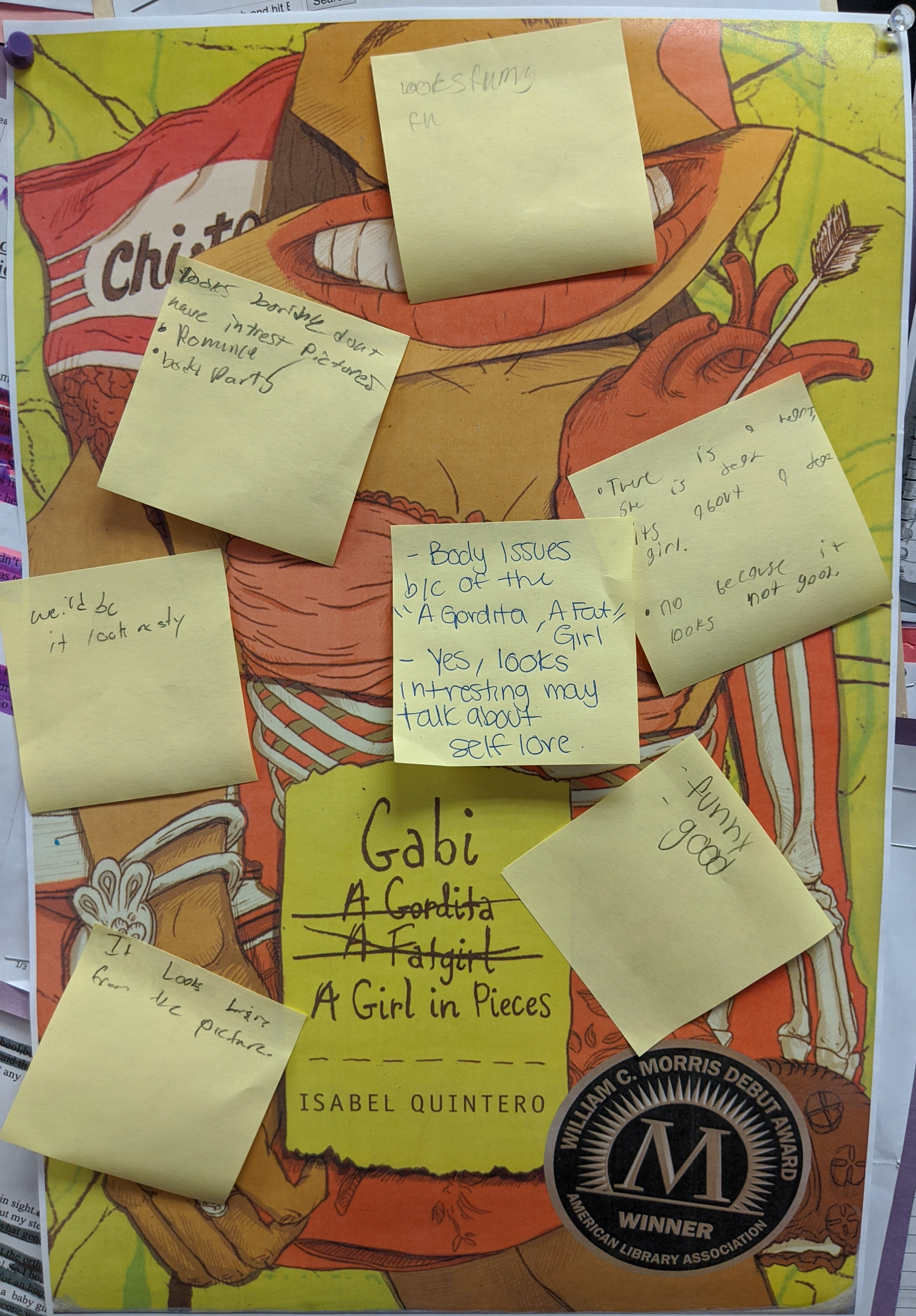
  • Judge a book by its cover – I enlarge several book covers and give students time to walk around the room and evaluate the books based just on their covers. As you can see from the pictures, many students express a desire to actually read the books based on their assumptions. I keep these covers on display for several weeks so students have visual reminders of books they want to read.

IMG_20200220_144055

  • Judge a book by its first page – I photocopy the first page of several books and invite students to react to how these books begin. They do not get to see the covers or know the titles or authors until after they have made their judgements. Therefore, their assumptions are based solely on the writing. For each of the first pages pictured below, I had students listen to the audiobook versions, so they were also judging by the voice narration as well.

IMG_20200220_144522

  • Book displays – I use every surface of my classroom to display books and I regularly change displays based on student interest, reading assignment or activities, new book arrivals, etc. I do this to keep the displays fresh, but also because the books on display do not last long. I also have a rotating display of student recommended reads. I throw a few points towards students for crafting a short write-up and adding to the display. Again, books are rotated in and out of this display, but I keep a running list of all the titles that have been recommended below it.

IMG_20200220_071834.jpgIMG_20200220_071827.jpg
IMG_20200220_145138.jpg

  • Make my reading visible – Not only do I regularly read and discuss books with my students, but I also keep a running visual of the reading I’m currently doing, the reading I’ve done, and welcome suggestions for the reading I should do next. IMG_20200220_150132.jpg
  • Make their reading visible – we begin all of our class reading time with a reading minute. Borrowed from Kelly Gallagher, students lead these reading minutes by briefly telling us the title of a book they’re reading and describing it in one sentence. Then they read for a minute. No more, no less.

An integral part of each of these book flood activities is I always invite students to take the time to add any interesting titles to their running to-read lists in their reader notebooks. The key to sustaining an independent reading habit is to maintain a healthy list of backup and next reads.

How do you fight the mid-year lull in independent reading motivation? What activities spark your students to want to keep picking up book after book?

Bulletin Board Battles and Black History Month

by Renee Jacobs

Happy Black History Month! Although we know that good practice is to teach accurate history every day of the academic year, Black History Month is a wonderful time of year to highlight the contributions that Black people have given to the United States and the world. This year, during your school’s preparation, I would advise you to gauge the degree of crazy behavior or avoidance that could ensue.

Every year as February approaches, I see very caring teachers become crazy with trying to get Black history month bulletin boards up in the school. In some cases, the precision and focus involved with making sure things are colored, cut, and mini-lessoned is unmatched. Sadly, we feel accomplished, but the level of understanding that the students have about the importance of such contributions as the pacemaker (invented by Otis Boykin) is dependent upon if the students paid attention during the thirty second speech on the morning announcements or if they noticed the facts on those strategically placed bulletin boards. We don’t teach any other aspects of history with such disregard. I would like to recommend that you take some time to think through your presentation of our shared history because there is actually no Black history, only history. However, our curriculums don’t reflect this fact so we need to continue celebrating the month for now so our students can see and celebrate heroes of every race.

There are also schools that are so uncomfortable with discussions about race that they choose to avoid any story related to Black History that isn’t sweet or does not have an ending that ties a pretty bow on the way we “should” remember the past. It’s predictable that the same story of Dr. King’s dream, Harriet Tubman’s railroad trip, and Rosa Park’s seat will be on repeat in classrooms all over the country throughout the month of February. Many versions of these stories lack depth and in many cases are not shared accurately at all so that the teacher and our organizations can remain comfortable. Another form of avoidance is the “family heritage” approach. In these schools, teachers assign all students a project that requires them to research their family heritage in celebration of “Heritage Month” or “International Food Day”. This way, we can say that we looked at Black history as we looked at the family history of all our students. 

In case no one else told you, I will be your Black teacher friend that is going to tell you a bit of truth that will improve relationships and the authenticity of your practice. Crazy last-minute bulletin board frenzies and avoidance are not respectful. Your Black families are often inferring their significance to your school community based on many interactions, and this is one of them. This opportunity is important to connect with families. We need to approach Black History using professional reflection and excellence. For example, do educators ever discuss with students the fact that Harriet Tubman and Susan B. Anthony lived during the same time period? Black history is American history; it must be intentionally integrated. If teachers understood the importance of taking the time to find meaningful resources to engage students in rich conversations about the contributions of Black people throughout the year and also highlight this learning during the month of February with students and families in mind rather than remaining in the personal comfort of the repeating last year’s lesson, it would be so impactful. Our relationships can be strengthened by the amount of effort that we put into community building work such as respectfully and authentically celebrating people. This will be a process, but in the meantime try to remember… it’s not about the bulletin board.