Skip to content

Posts from the ‘PAWLP’ Category

Tools of the Trade: Tech Tasting

by Rita Sorrentino

September arrives with the turning of the calendar. It marks endings and beginnings, a bittersweet month. We transition from the free and relaxing days of summer to the more focused and organized schedules of autumn. We begin to feel a nip in the air, take note of the days getting shorter, and marvel at the graceful navigational skills of geese overhead.

For me, September is the perfect time for reflecting and setting goals. The fall foliage colorfully convinces us of the certainty of change. The year ahead is full of promise and energy. Without the fanfare of New Year’s, September whispers a gentle yet serious invitation to set the pace for our personal and professional lives.

Recently, I received an invitation to attend a Back-to School Professional Development Social Event: Tech Tasting. Yes, you read that right – tech tasting not test taking. Although I could not attend, I found the concept and the format intriguing. The event was sponsored by PAECT (Pennsylvania Association for Educational Communications and Technology). In addition to wine samplings, participants had an opportunity “ to taste” a variety of technologies and approaches to learning. With or without the wine, this type of event fosters enjoyable and rewarding learning opportunities. I can imagine the energy that resulted from exploring technologies and discussing implementation strategies. How wonderful to infuse our practices with a taste of excitement for teaching and learning. Read more

A Writerly Life: Words of Wisdom from Brian Kelley

Brian Kelley reminds us all that the most important part of grading is not the rubric, but the growth our students display when given the chance. – Lauren Baxter (2017 Grammar Matters Participant)

Teacher to Teacher: Getting to Know Our Students

By Lynne R. Dorfman

When we examine the important, long-lasting effects of formative assessments in writing workshop, we discover that they deepen student writers’ understanding of why and how writing is a valuable tool they will use throughout their lives. Formative assessment helps students understand that writing is a means to achieve goals and develop an understanding of themselves and others.

What can teachers do in the beginning of the year to get to know their students right away and help them make good decisions about their students’ instructional needs? Interest surveys and inventories help students develop a writer’s identity, to consciously declare, “I am a writer.” Surveys, autobiographical sketches, and time lines can help the student and teacher discover more about attitudes, interests, motivation, and self-concept, which all contribute to students’ successes or failures. These formative assessment measures may be the most important things we can do to foster student engagement in our writing workshops and across the day. Read more

What does it take to Engage Student Writers in the Process of Revision? Ask the 2017 Writing Institute Fellows

by Mary Buckelew

“Revision is the Party.” poet Billy Collins


In Fearless Writing  by Tom Romano, Romano quotes poet Billy Collins on the act of revision: “Students think revision is cleaning up after the party. They have it wrong. Revision is the party” (p.87).

“Revision is the party.” How timely for the beginning of the school year and in light of the societal events of this year. Revision.

This past summer, I had the privilege of learning and working with more than one hundred teachers from grades K-16 in the Pennsylvania Writing and Literature Project’s (PAWLP) Young Writers program, in our graduate courses, and in our Writing Institutes.

The 2017 Writing Institute brought eleven awesome teachers together who explored and revisited themselves as writers and teachers of writing; who delved deeply into what it takes for students to see revision as more than drudgery, to see revision as an act that can truly change a piece of writing and in turn the writer. What does it take to engage student writers in the process of revision?

The thoughtful and dedicated teachers in the 2017 Writing Institute dove into theory and pedagogy books and articles to explore this question. They read, wrote and discussed reasons writers revise – Writers have authentic purposes and audiences for their writing; they often have choice in what, why, and how they write; writers have myriad ways of sharing their writing in all phases –  Community, Collaboration, Active Listening and Transformative Talk are just some of the elements that empower writers and in turn create an environment conducive for revision.

We grew professionally and personally in the 2017 Writing Institute – and in order to grow, we not only explored topics like revision, we revised our own writing, and we examined elements of our teaching practices that might need revision in order to help student writers appreciate the results of revision.

Writing guru Vicki Spandel notes that writers are inspired to revise when — “The writer has some reason to make it better. Whether it be pride, a grade, or publication, revision is hard work, and everyone needs a reason to do it. Providing authentic audiences – creates a classroom atmosphere so that everyone is interested in each other’s writing inside and outside the classroom.”

This coming year, students will enter the classrooms of Writing Project teachers across the country who are writers and who know and understand the complexity of teaching writing. These teachers will create community and authentic opportunities for students’ words to matter in the classroom and in the communities outside their classroom doors.

I am certain that the eleven teachers who left the 2017 Writing Institute this summer will empower student writers and thinkers to both revise their words and the world for the better.

We know when Choice and Authentic Writing walk into the party–then Revision too can join in the revelry – and even become the life of the party.
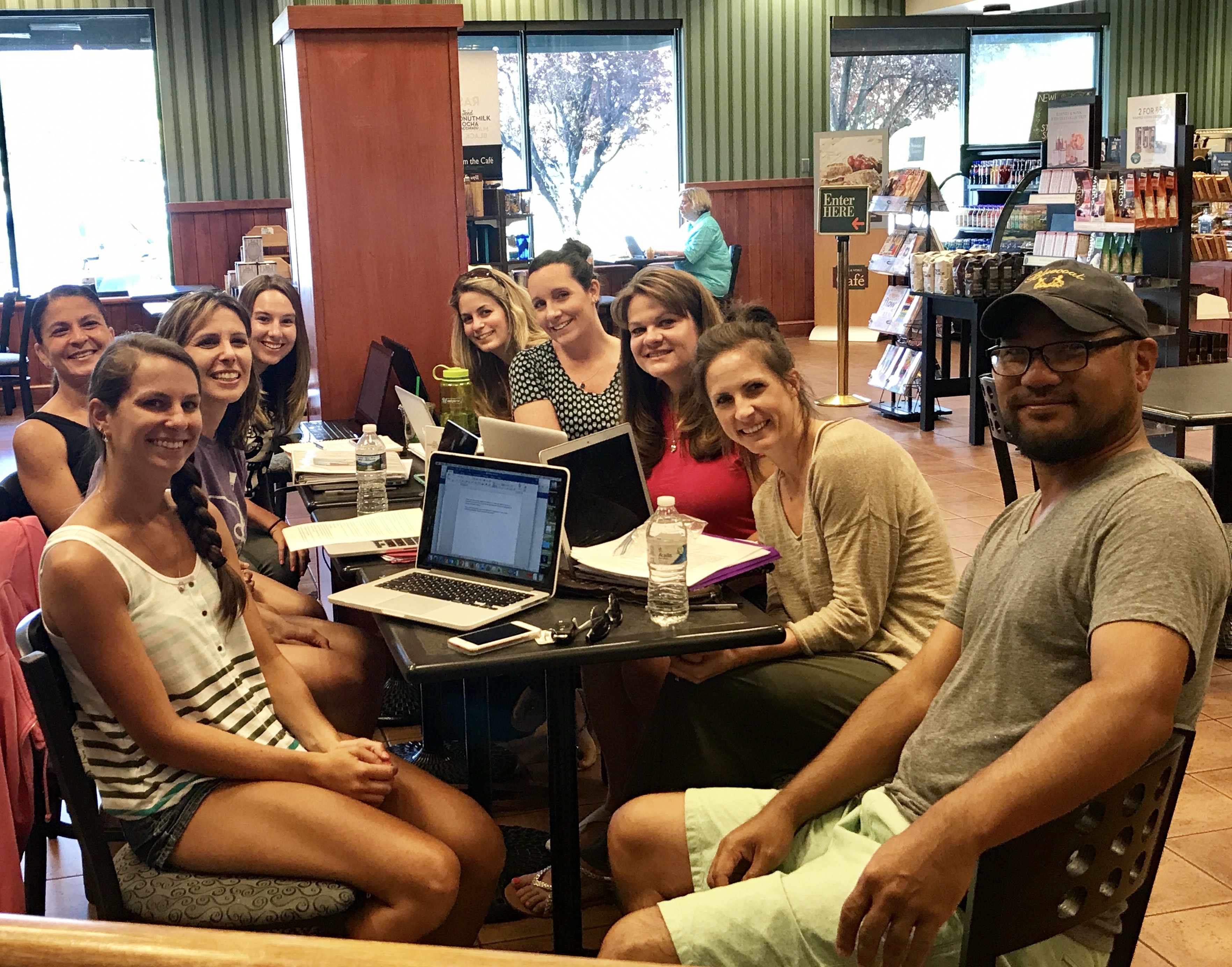
 

2017 Institute at Barnes and Noble FullSizeRender (5)

Molly, Michelle, Chrissy, Kristin, Lauren, Kristine, Amy, Molly K., & Peter
(Warren and Catherine in spirit)

Please share your thoughts on revision and how you encourage students to revise.

Dr. Mary Bellucci Buckelew is the Director of the Pennsylvania Writing & Literature Project and Professor of English at West Chester University. She is co-author of Reaching and Teaching Diverse Populations: Strategies for Moving Beyond Stereotypes. When she’s not facilitating workshops, leadership gatherings, and institute meetings; visiting youth sites for Young Readers & Writers; or teaching undergraduate and graduate courses – you may find Mary composing a poem about life in New Mexico, taking long walks with her husband Paul, visiting with family and friends, or reading a good book!


Mary Buckelew 3.29.17

A Writerly Life: Words of Wisdom from JoAnn Portalupi and Ralph Fletcher

Words are powerful, and conventions allow us access to this power.-Michelle Polito (2017 Grammar Matters Participant)

Comprehension Strategies Across Space and Time

by Mark Weakland

The other day, while playing through the Lennon and McCartney song Across the Universe, two lines captured my attention: “Thoughts meander like a restless wind inside a letter box. They tumble blindly as they make their way across the universe.”

It’s definitely a great sixties lyric, evocative of the mind-expanding ethos of the times, and for some reason it set off a small avalanche of thoughts about literacy in my brain. First, a text-to-self connection: the lyric reminded me of a few students I’ve taught over the years. Next, a thought about how difficult it can be to lead students, whose thoughts “meander like a restless wind,” to a deeper comprehension of the texts they read. Finally, feeling grateful that effective comprehension strategies have been identified, and we can bring them to students.

Over the past three years, as I’ve read studies and articles and as I’ve listened to literacy gurus speak at conferences, I’ve learned that three categories of strategies are especially effective at leading students to greater comprehension: activating prior knowledge, summarizing, and asking and answering questions. In addition, as I’ve worked with teachers in elementary schools, I have learned that when a handful of already effective strategies are applied across space and time, literacy strength is built within a system. In other words, when multiple teachers in multiple content areas across multiple grade levels employ a few well-chosen comprehension strategies, the literacy program of an entire school is made stronger.

Read more