Skip to content

Posts from the ‘PAWLP’ Category

Tools of the Trade: Know Talking

by Rita Sorrentino

What do James Britton, Fisher and Frey, and Vicki Spandel have  in common?  Let’s review some facts.

James Britton (1908­-1994) was an influential British educator and researcher who developed a theory of language and learning that helped guide research about the teaching of writing in school.

Fisher and Frey are renowned educators, prolific authors and leaders in the field of language and literacy education.

Vicki Spandel is a well-­respected author of numerous books and instructional materials, and was co­-director of the team that developed the 6 Traits model.

Hmm. All three have something to do with the components of language; the use of oral and written communication to better understand ourselves and the world around us.  Let’s take a closer look.  Read more
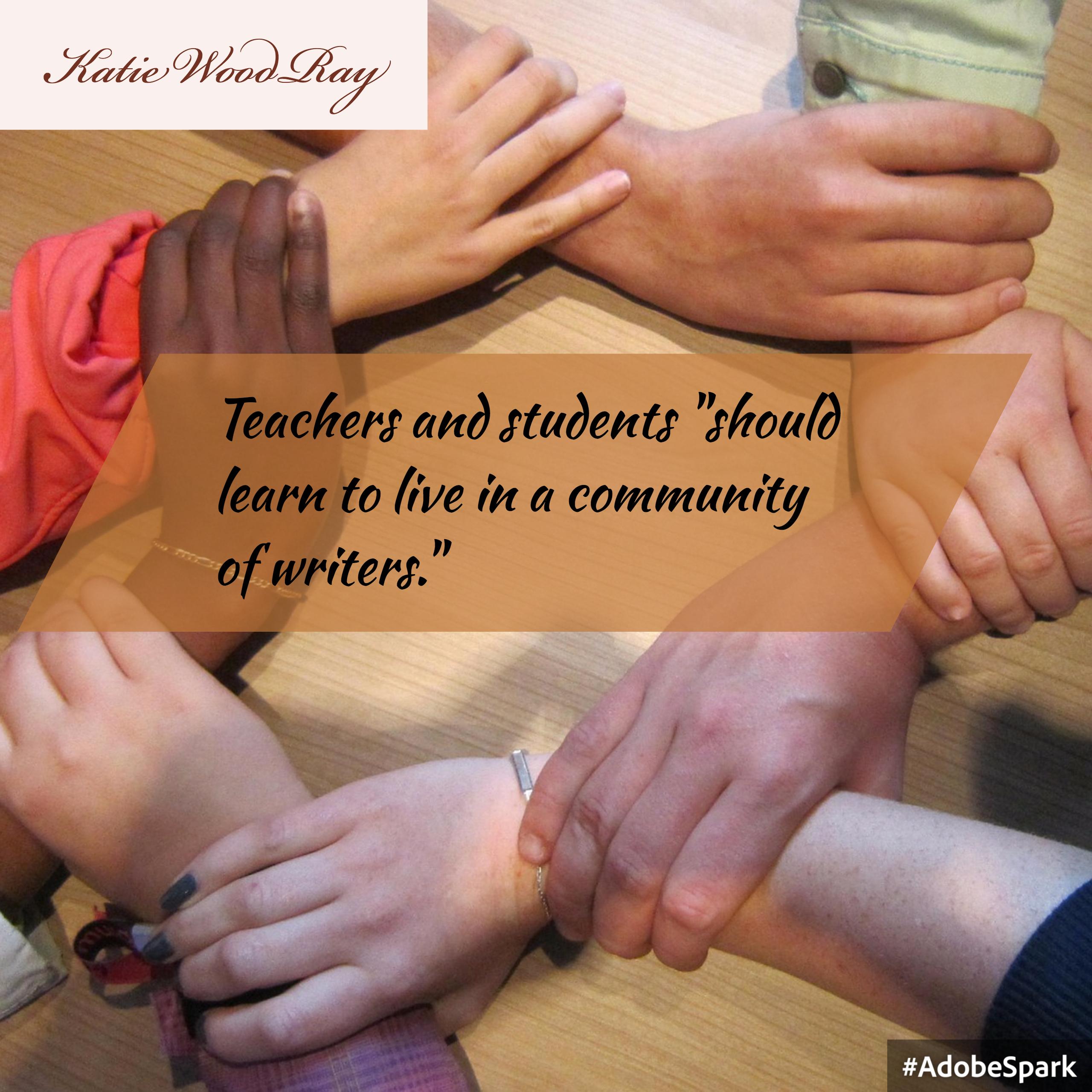
A Writerly Life: More Wisdom from Katie Wood Ray

Lisa McCarthy Adobe Spark

Let’s be teachers and students who trust each other, write together and respond to one another as writers. –  2016 PAWLP Fellow Lisa McCarthy

Teacher to Teacher: The Many Layers of an ILA Conference

By Lynne R. Dorfman

Curiosity is the wick in the candle of learning. ~William Arthur Ward

The International Reading Association annual conference, “Transforming Lives Through Literacy 2.0”  is exciting and informative, with many options for teachers to explore. The program is filled with workshops and sessions on literacy, and four exhibit halls offered opportunities to browse, purchase, and question vendors and authors.  Signings for professional books and children’s books were taking place every day almost all day long. I had books signed by nonfiction children’s author Stephen Swinburne and purchased  two professional books at the Stenhouse booth, Craft Moves: Lesson Sets for Teaching Writing With Mentor Texts  by Stacey Shubitz and Story: Still at the Heart of Literacy Learning by Katie Egan Cunningham.

This year’s location, Boston, offered other opportunities, too. When I arrived on Friday, my husband and I wandered through Boston’s North End, Boston’s “Little Italy.’’ It’s famous for its Italian food and feasts. Boston’s oldest neighborhood takes in a one-square-mile waterfront community not far from Faneuil Hall .  A large part of the Freedom Trail runs through the North End. It is also home to the Paul Revere House.  The Old North Church is here, too, founded in 1722. The church boasts the oldest set of change ringing bells in North America. Indulge in 18th-century chocolate at Captain Jackson’s Historic Chocolate Shop. We played several games of bocce ball and dined at Lucia Ristorante before indulging in sweets at Mike’s Pastry on Hanover Street – a must when visiting Boston!  Read more

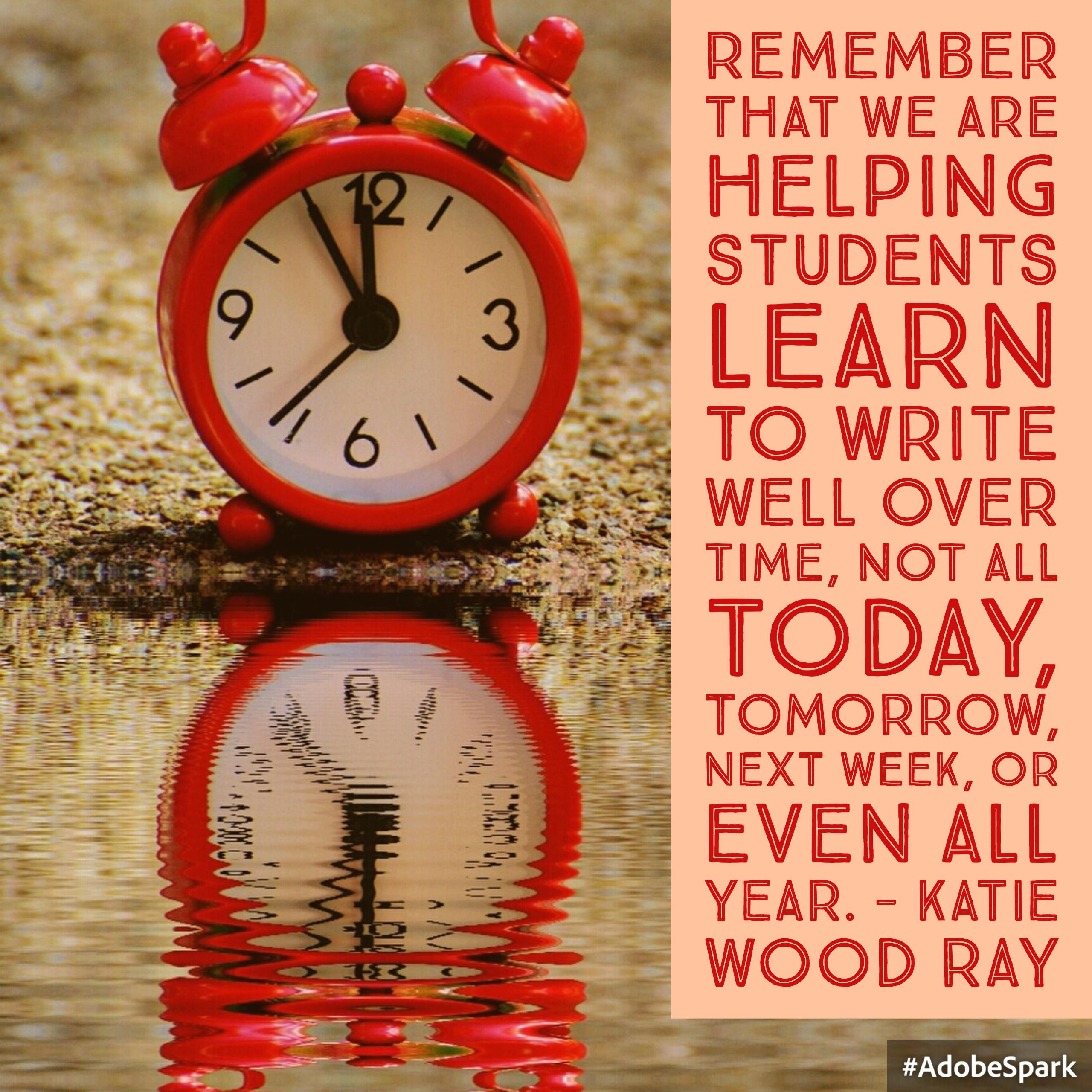
A Writerly Life: Wisdom from Katie Wood Ray

Melissa H Katie Wood Ray quote 1

This quote reminds us all to teach alongside our students, at whatever level that may be.  We are teaching a process, not a product. – W2016 PAWLP Fellow Melissa Hurwitz

A Writerly Life: Wisdom from Ralph Fletcher

This is a quotation that captures how I hope my students will feel about their notebooks next year. Bernadette Langdon  PAWLP Fellow 2016

From the Classroom: The Pressure to Do Versus the Possibilities of Doing

by Tricia Ebarvia

Whenever I blog, especially here for PAWLP, I try to offer fellow teachers some practical strategies to use in the classroom. After all, I know how I much I appreciate picking up ideas that I can try with my own students right away, sometimes even the very next day.

Of course, now that summer is just about here—tomorrow is our last official day with students!—there is no more “very next day.” Instead, as the weather warms and lazy days at the pool run together, the planning for next year begins. Sometimes the planning is purposeful: reading pedagogy texts or writing up lesson ideas. But other times, the planning is a little more serendipitous: stumbling upon the perfect article for class or finding inspiration while on an errand to the store. Summer may be here, but I’ve found that my “teacher brain” never really goes on vacation.

Without the pressure of “the very next day,” the ideas I come across during summer have room to sit, and breathe. There’s no pressure to do—simply the possibilities of doing. The extra time summer offers allows me to think this could work or maybe I’ll try this or what could that look like?

Summer, then, becomes a time to reflect on another year gone by and to gather new ideas for the year ahead. How? Below are just a few of the things I’ll be doing this summer to reflect and re-energize:  Read more