Teacher-to-Teacher: Back to School: Beyond Pocket Folders
By Janice Ewing
Do you think of August as a transitional month? For many teachers, June and July have provided time and opportunities to pursue professional learning and have the collegial conversations that broaden their thinking and inspire new avenues of inquiry. Now, the weather and the calendar tell us that it’s still summer, with the possibilities of travel, family time, and more professional learning, but it’s also a time when many teachers begin thinking more directly about their return to their classrooms.
The TV, print, and online ads tell us that it’s time to start gathering coupons and looking for those great deals on pocket folders and notebooks. (Raise your hand if you’ve gone Staples-hopping to take advantage of ten-per-customer pocket folder bargains!) More importantly, it’s time to start the transition from summer renewal to fall implementation, regardless of one’s grade level or subject area.

For educators at all levels, returning to school this year might have a different feel from previous years. In addition to new ideas for things like grouping structures, assessment, or authentic writing practices, we are also grappling with questions of how to address issues that are not pedagogical in nature, but directly affect our lives as teachers and students. Issues such as ever-present outbreaks of violence around the world, political campaign rhetoric, police and community relationships, our society’s growing understanding of diversity (and instances of pushback in response). We have always faced serious issues in our classrooms, communities and the larger world. Now, more than ever, the rapid pace of events and reactions to those events, shared as they’re happening on multiple news and social media sites, seem to change the very wiring of our brains. Read more
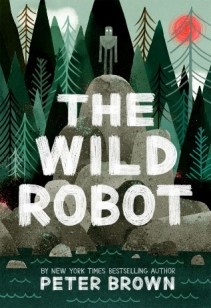 Peter Brown, author of The Curious Garden, introduced me to a new favorite robot, Roz. She is the main character in his 2016 release, The Wild Robot. A hurricane’s lashing rain and wind sinks a cargo ship loaded with hundreds of crates. One washes up onto a wild rock island. Inside that crate is a robot. By fate, some playful otters discover the broken box. Curious by nature, they paw at the contents and click activate the robot. As you know robots are programmed by their creators to store and compute data. They do not learn or have emotions. When Roz is turned on her survival instinct for which she has been programmed kicks in but so does something else…a new feeling – curiosity.





 write.share.connect