Skip to content

NCTE November: My First NCTE

By Jolene Borgese

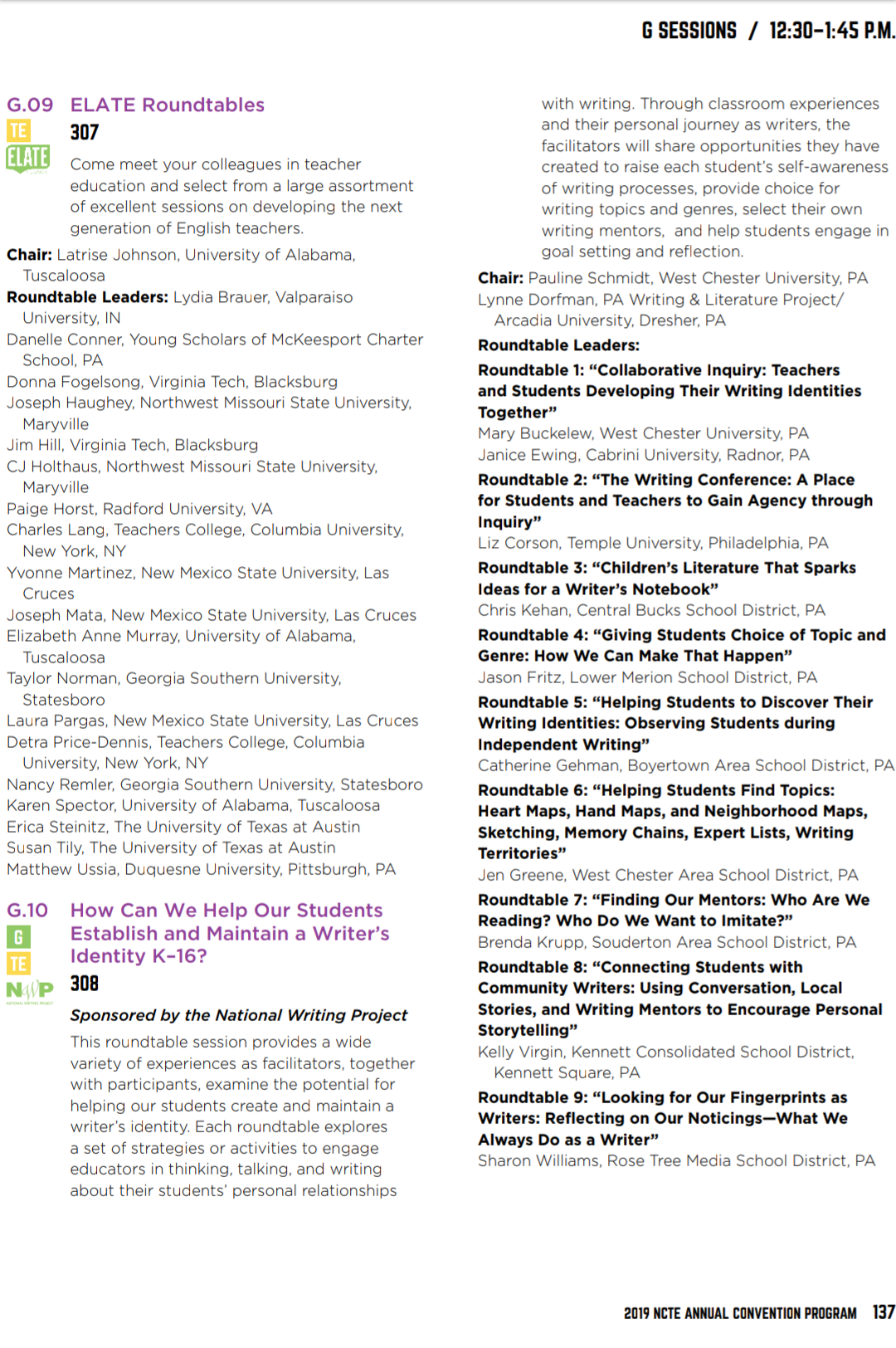
NCTE 1982 was in Philadelphia, two years after our first writing institute at West Chester University. Martha Menz, Lois Snyder and I had all attended the institute the summer of 1980.  We submitted a proposal for a workshop on Revision since NCTE would be in our home town. These two women were the stars of the project. They were smart, fabulous teachers and able to get along with the director Bob Weiss. Martha Menz was a high school History teacher at Upper Darby High School. She had earned an undergraduate and graduate degree at the University of Penn. She would go on to become the supervisor of Staff Development and the Curriculum Director for UDSD. Lois was an elementary teacher for Upper Darby SD and would later go on to become the superintendent of Interboro SD and earn a doctorate from Widener University in record time! I was in great company.

Our presentation was accepted and scheduled for Saturday morning. The day before I had attended my first National writing Project (NWP) meeting and met the director James Gray. He was a former high school English teacher from Berkley CA. He was a big man, a little gruff- not the serene college professor type at all. He ran an efficient meeting with maybe 50 sites. I was excited to meet other writing project site directors and learn what they were doing. We were all so new and didnโ€™t really understand the power or impact our sites would have 40 years later! Mary Ann Smith, a co-director of NWP took me under her wings.  She became a role model for me and I treasured our time together at NWP meetings.  

 We arrived at the convention center assigned room and were amazed they gave us such a large room โ€“ we were sure no one would attend. We did our own sound check by pretending to be the three Supremes singing โ€œStop in the Name of Love!โ€  Little did we know the convention center had real sound check men who caught us in the middle of our song! To our surprise and delight over 50 people attended our first national presentation including my English college professor from Lock Haven State โ€“ Dr. Vaughn. She sat smiling through the entire presentation โ€“ she was so proud of me.  Any fear or nervousness I had quickly dissipated. I canโ€™t remember anything we did or said that day โ€“ just a warm feeling when you know you are in like minded company.  

For the next 30 years I would attend every NCTE annual convention. In the 90โ€™s I presented many presentations with a writing project director Lela Detoye from Illinois on using picturing books in the secondary classrooms as mentor texts. We received a book contract from Stenhouse but for a year we tried to come together on a book format. Unfortunately, we couldnโ€™t so the book was never written.  But the number of secondary teachers hungry to use picture books in their classrooms grew every year. In San Diego we had over 200 teachers attend our presentation โ€“ sitting on the floor, standing โ€“ the room was packed. 

I also was appointed to the executive committee of Council on English Leadership (CEL) โ€“ for ten years as the membership chair. The CEL conference was held the two days following the NCTE convention so I would have two more days of presentations and learning with new friends. NCTE was my home for many years and I learned so much from the convention and the journal. I owe NCTE a huge thank you for my career and teaching.ย 


Dr. Jolene Borgese began her career as a middle school English teacher before moving on to teach English and writing in high schools. Trained by the National Writing Project (NWP), Borgese aims to increase studentsโ€™ pleasure and confidence in writing by helping educators teach the skill as a process and a tool for learning. Borgese served as codirector of the NWP for 15 years, where she taught the NWP model to, and developed writing courses for, teachers. In addition, she created the Young Writers summer camp for students from elementary through high school.

NCTE November: Magical Moments

Happy November! With NCTE right around the corner – physically and metaphorically – we want to dedicate this month’s feature to the conference. Please check back regularly to enjoy posts about NCTE past and present as our teacher consultants reminisce about past conference experiences and share their plans for presenting at this year’s event.


With the flip of my calendar page, my excitement for this year’s conference became palpable. As I count the days until my next NCTE experience, I can’t help but think back on past moments that are filled with memorable encounters and game-changing presentations.

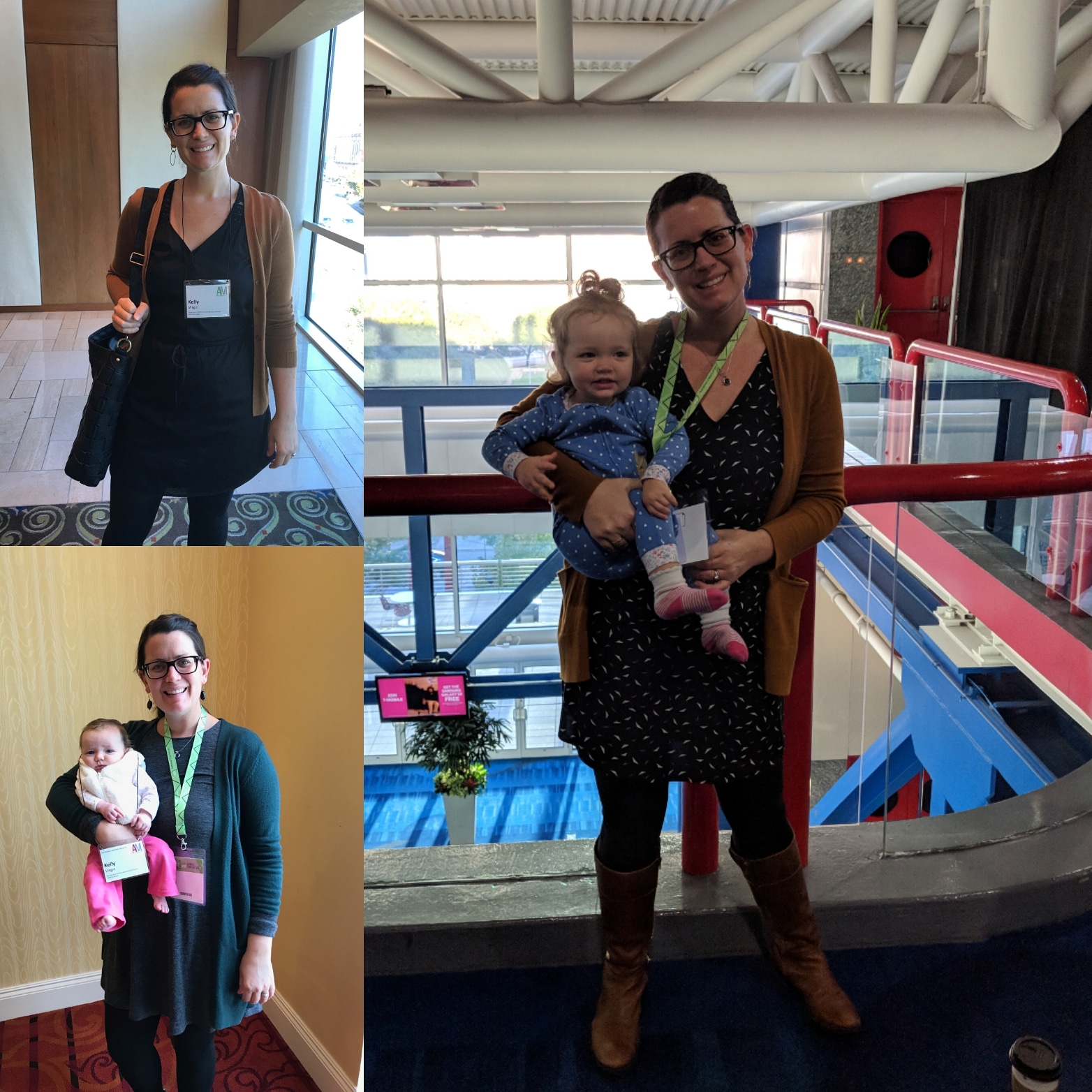
There was the elevator ride with Matt de la Peรฑa. With my infant daughter wrapped to my chest, we chatted about our children, bed time stories, and his books. I was able to thank him for creating the sweet story, Love, which without fail lulls my daughter to sleep each night while bringing tears to my eyes.

There was the Kylene Beers’ presentation when we were asked to share memorable reading experiences with someone nearby and I turned to find Bob Probst standing to my left. We introduced ourselves and chatted in response to Kylene’s question for a bit before I let my excitement take over and I gushed about his influence on my teaching. I was able to thank him for his reading signposts, which have changed my reading instruction and strengthened my students reading engagement.

There was sitting next to Nic Stone as she read aloud from Dear Martin and led us in a book discussion. Afterwards, I was able to thank her for writing a book that made my husband, a strict nonfiction reader, fall in love with fiction again.

There was meeting a friend for dinner, and upon arrival being introduced to the “kind person who kept her company while she waited” – Linda Rief. We chatted about books and writing and our kids and her grandchildren until our tables were ready. Before we parted ways, I was able to thank her for her quick writes, which have made my students and me better, more confident writers for years.

And there are the countless hard-working, thoughtful, innovative educators who take the time to share their craft. From them I have gained new insights into teaching poetry, fiction, nonfiction, writing, reading, and, of course, my students. Because of them I am a better teacher.

Finally, there are my colleagues and friends, who have co-planned, co-presented, and collaborated with me. They have invited me to join them in sharing our voices. They have pushed me out of my comfort zone. They have encouraged me to take chances on my own. And they have celebrated every success along the way. I cannot wait to make more memorable experiences with them in just a few short weeks.

If you have attended NCTE in the past, what magical moments happened for you? If you are attending this year, please stop back later and share your experiences. Please also stop by the PAWLP roundtable – How Can We Help Our Students Establish and Maintain a Writer’s Identity? – and say hi!

Prompt-ober: Short Stories as Writing Prompts

Nearing the end of October, when the leaves shift hues, the temperature dips, and Halloween dances in the near future, the students of room 294 venture into the haunting short story, โ€œThe Landladyโ€ by Roald Dahl. This is the perfect story to revitalize our energy, coming fresh off our memoir unit, and to continue the practice of sensory details and imagery in writing.  

Throughout Roald Dahlโ€™s famous piece, images and details such as โ€œpaint was peeling from the woodwork,โ€ and โ€œShe had a round pink face and very gentle blue eyesโ€ cover the pages. One of Dahlโ€™s most detailed descriptions occurs when the main character, Billy, peers into the window of the Bed and Breakfast:

“Billy caught sight of a printed notice propped up against the glass in one of the upper panes. It said BED AND BREAKFAST. There was a vase of yellow chrysanthemums, tall and beautiful, standing just underneath the notice . . . Green curtains (some sort of velvety material) were hanging down on either side of the window. The chrysanthemums looked wonderful beside them. He went right up and peered through the glass into the room, and the first thing he saw was a bright fire burning in the hearth. On the carpet in front of the fire, a pretty little dachshund was curled up asleep with its nose tucked into its belly” (Dahl).

During class, a discussion on the use of details and imagery that Dahl utilizes in creating this passage ensues. After some time, the students sketch and color their depiction of this room. From here, we use Dahlโ€™s passage as a model to create our own descriptions of a window we are โ€œpeeking in.โ€ In the student’s Google Classrooms, I post about fourteen different photos of unique and colorful rooms (as seen below).

After the students have taken some time viewing the various images, they choose their favorite photo and write a passage to describe the room, just as Roald Dahl in โ€œThe Landlady.โ€ The key to this prompt is adding details and imagery. The end result is wonderfully descriptive passages that further emphasize and practice the use of sensory details and imagery in writing.

A Giraffe stood in the middle of a tiny room, too tall for his own good. His neck bent at a 90 degree angle with his front feet. The giraffe stood on a worn out turquoise rug, that covered the whole ground. The walls glowed a beautiful tan, with pictures framed with gold along the back side. A green silky chair lay aloft the ground in the back left corner. The chair has an intricate design, with xโ€™s stitched across the whole surface. In the bottom right corner, adjacent to the chair, stood a brittle old table, with four drawers that curved like a wave. An old time radio stands tall on top of the table. The giraffe has blobs of brown, that lay upon the white fur of the giraffe. Although the giraffe doesnโ€™t stand tall, the hair on the back of its neck stands tall. Imprints of feet align the floor, turning the worn out turquoise rug into a white one. The phrase Getty images is what it said in the top left corner, in a white color and big font.” Period 7 Student

Creativity in the Classroom

This is a question that has influenced my teaching for as long as I can remember. Even before I saw the iconic TED Talk by Sir Ken Robinson, I was always trying to think outside of the box with my young, 9th grade students. I’ve waffled back and forth over showing this since it was originally posted in 2006, but it remains the most popular TED Talk, and I see its message as (still) relevant today.

Before Viewing…

I start my students with a “Four Corners” activity. I give them a series of statements all found here and they have to pick a corner representing Agree, Strongly Agree, Disagree, or Strongly Disagree. I’ve witnessed some interesting discussions and I’ve even had to allow students to pick the ‘neutral zone’ of the classroom’s center.

After we do this activity, I tell them we are going to do a little experiment. We are going to take an IQ test. I use one that’s been used by Mensa but I am sure you can find others online. I give them 7 minutes, then I ask them to journal their response to taking this ‘test’. Once we go over the answers, we also engage in a discussion about the inherent biases they observe in the questions themselves. Then, we talk about how this particular tool did/didn’t measure their intelligence.

As a follow up, we then do a Multiple Intelligences Assessment created by Howard Gardner at Harvard’s Project Zero. We follow the same protocol: timed, reflection/writing, discussion. And the students quickly realize that this particular assessment didn’t undermine their intelligence, it just illustrated their strengths and weaknesses.

Communal Viewing

I think there is value in watching this video together. I provide this note sheet for my students but tell them they can also just use their Writer’s Notebook. Then, we watch. Maybe you’ve seen it before, maybe not…I’d love to know.

Post-Viewing

This video inevitably leads to fantastic and passionate conversations in the class. I reveal – at last – the point for my students. They are just heading into their multi-genre research and I want them to feel empowered to pick a topic that inspires them! Of course I give suggestions and show them the wide variety of topics that former students have selected…the point is, write about something you care about. I am not going to kill that creative urge that may be lingering inside of my students.

So, ask yourself, how do YOU cultivate creativity in your classroom?

“I’m A Writer When . . .”

Most of the students I work with who come to writing centers begin their tutoring the same way: โ€œIโ€™m not a writer,โ€ they vow. Or a confession–โ€Iโ€™m really bad at writing.โ€ And then the combination: โ€œIโ€™m a bad writer.โ€ These admissions come from voices within or outside voices that persistently tell them who they are and arenโ€™t and what theyโ€™re capable of. As writing partners together, I want us to escape these binds. I want us to learn how we can grow and discover through writing almost immediately. So, we free-write in our tutoring sessions from the first day.

I learned about using the stem, โ€œIโ€™m A Writer Whenโ€ from Dr. Hannah Ashley when I participated in Writing Zones, a college access program for high school writers. We hosted students on the West Chester University campus, honoring the writers they were and introducing them to writing opportunities they would encounter in college. When asked to complete the phrase, โ€œIโ€™m a writer when โ€ฆโ€ students said, โ€œWhen Iโ€™m sending a text message, when Iโ€™m writing a list, when Iโ€™m using a hashtag.โ€ย 

Acknowledging the writers we already are dispels the notion that โ€œwriterโ€ is a far-away identity, for some unattainable. Weโ€™re taking a strengths-based approach to respect the diverse foundations of literacy we each draw from. At the Penn State Brandywine Writing Studio, we introduce the โ€œIโ€™m a Writer Whenโ€ prompt as a free-writing activity on the first day. Students take five minutes to write as many ideas or stories that come to mind to extend the statement.

Some students record all the ways they write–for what occasion, for whom, something about the rewards and challenges about their writing. Others dip into specific moments in their writing histories and write about a time when writing got them through hardship, or how writing is elusive. And some writers write about their dispositions, what compels them to record words and thoughts on the page or what frustrates them from doing so. Importantly, they are all writing. I write alongside students every time. I have easily written fifty pages of โ€œIโ€™m a Writer When.โ€ Iโ€™m struck by what shows up frequently and what new observations I record in this iterative process. Itโ€™s important that students and I share this activity, especially at the beginning of our relationship. Weโ€™re building trust and visibility with one another.

Writer WhenJasmin is a writer this year who immediately drew on her strengths to tell her experience of writing: โ€œIโ€™m a writer when I feel as though the story has to be told. The way I want the story to be told is most important.โ€ She took the opportunity to look at herself and introduce herself to me. I’m also struck by the hopefulness in our work side by side, how we’re both searching to move and connect with others and ourselves in our writing.

โ€œFor someone with so much rhetorical power,โ€ I later asked Jasmin, โ€œDo you call yourself a writer?โ€ย 

โ€œNot really,โ€ she answered, โ€œI donโ€™t really write.โ€ย 

I learned that free-writing, and sitting down in general to examine her perceptions on the page, was an activity almost unique to our relationship, but one she is now eager to do every week. We both are.

At the end of the five minutes, we consider our work; I try for us to celebrate it, too. This is easier to do with some than others, especially for those writers who insist they are not writers. It seems important to respect the ways someone identifies, even if it is a negative self-perception. However, I do make a point to notice what theyโ€™ve written, how theyโ€™ve written it. I will ask follow-up questions. I do look for intersections in theme or appearance about our writing.

Iโ€™m interested in revisiting this activity at the end of the semester. Iโ€™d like to see what students think of their writing lives after their first semester of college, after frequently free-writing, and after forging a collaborative writing relationship. Iโ€™d like to see what I think about it, too. I wonder how our pages will talk to one another again, side by side.

-Liz Mathews

From the Classroom: Dedicating Daily Time to Reading Conferences

By Lauren Heimlich Foley

My eighth graders buzz with enthusiasm as they talk about their independent reading books. They yearn to reveal the adventures they take in the quiet of their minds: they seek the opportunity to discuss stories, characters, conflicts, themes, and techniques with another person. Reading conferences foster these academic conversations.

We start every class with ten to fifteen minutes of independent reading. During this time, I talk with five to seven students. By the end of the week, I have conferenced with each student at least once. Together, we assess reading progress, reflect on author craft, promote empathy, and engage in higher-level, critical thinking. Students push their thinking beyond the text, connecting their books to their own lives, other texts, and the world.

Staying Organized

Keeping track of this information can be tricky. This year I am experimenting with Word documents that track my studentsโ€™ pages read: I record books they interview, read, abandon, and finish. So far, it is more effective and convenient than the paper spreadsheets I used to print out. Now, I can rearrange students based on their seats, learning needs, and conference dates. I color code student names to guide our future conferencesโ€”green means a student should finish a book within the week; yellow reminds me to check in with the student again before the weekโ€™s end; and red indicates that a student is not meeting their reading goal. My notes may appear messy–no italics and misspellings–but they are extremely helpful. To keep track of dates, I save an updated document each week. As students finish books, I delete the title for the following week. For students, who are struggling to find the right book or are not meeting their goal, I keep their running record from week to week to help me guide them to success.

Questions to Ask

I have also learned that the questions I ask my students play a key role in their growth. Nancie Atwellโ€™s The Reading Zone and Penny Kittleโ€™s Book Love guide my conference questions. I always ask students if they like the book and how their reading is going. I often follow up that question with the bookโ€™s rating on a scale from 1-10. My studentsโ€™ answers help me determine whether or not a book is a good fit for them.

Additionally, I develop follow-up questions that push my studentsโ€™ thinking further. They fall into various categories:

  • Comprehension
  • Vocabulary
  • Close Reading and Re-Reading
  • Skills Application from Whole-Class Minilessons (e.g. theme, conflict, visualization, dialogue punctuation)
  • Evaluation (e.g. favorite part or most important moment)
  • Connection (to self, other texts, and the world)
  • Read Like a Writer (e.g. figurative language, sensory details, character thoughts)
  • Reading Together
  • Next Book

While some weekly conferences simply check student progress, others lend themselves to one-on-one direct instruction. My studentsโ€™ reading and writing needs as well as where they are in the book help me determine what direction our conversations will go. Oftentimes, a conference will include two or more of the categories listed above. Because I can differentiate the questions, reading conferences support and challenge all of my students regardless if they are in Reading Support, Academic English, or Advanced English.

Having the opportunity to listen to my students talk about their books is one of my favorite parts of our class. I hope you enjoy chatting with your students about their books! If you have additional go-to questions or conference types, please post them below. If you have questions or would like to share your own experiences, we would love to hear from you.