Skip to content

September Snapshot: Building Community Expectations

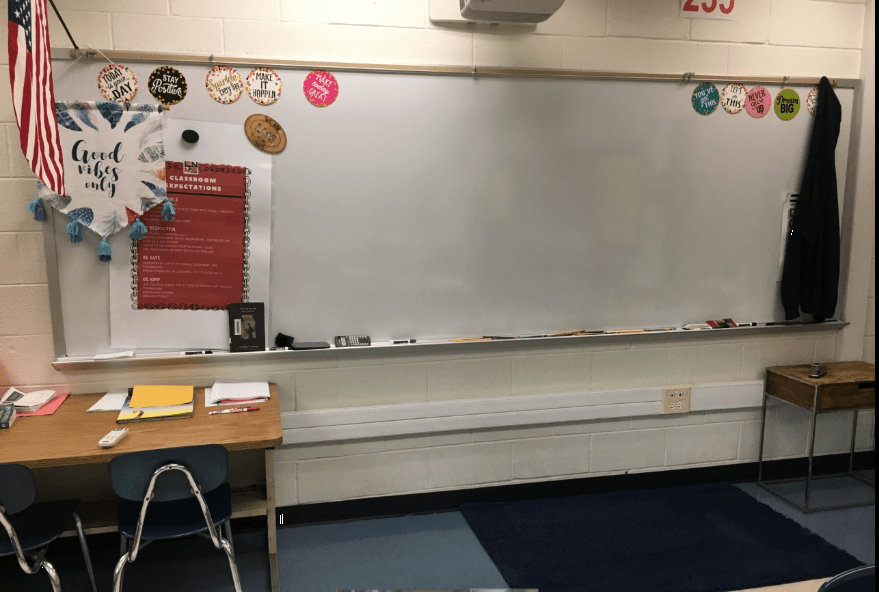
The start of the school year is always filled with community building and “getting to know you” activities.  They are critical to establishing a rapport among students and teachers and are a great way to ease into the new year.  Along with the fun and games, many classrooms also want to start with routines and procedures- including those very important classroom rules! While it is very easy to make a list of rules and expectations or purchase a ready-made poster with classroom rules and hang it on the wall before the students arrive on the first day, consider the impact of allowing students to create those rules together.

To think about the way we wanted our second grade classroom to function, my students and I began by reading a lot of books. img_2660

The titles shown address our differences as people, the desire to create a welcome environment, and some silly stories about the beginning of the school year and the chaos that could ensue if everyone just did whatever they want.  These stories invited a lot of conversation about what it means to be a part of a classroom community and how to craft our beliefs so that we can be safe, happy, and successful throughout our day.  Instead of creating an endless list of rules that begin with “No ______” we thought about what we believe and how to demonstrate those beliefs.

This is what we ultimately decided:

img_2708

This has become our class creed- and we review it every morning and refer to it if there is a defugalty during the day.  Because the students had a hand in creating the document, it is more meaningful to them and they are invested in making our community a nice place to live for the next 180 days.

From the Classroom – Celebrate Banned Books

Want to get your students fired up about books? Get them talking about banned books!

In honor of banned books week, I invited by students to take a closer look at some of the books that made it to this year’s list of the most challenged and banned books. This resulted in a vibrant and at times even heated discussion.

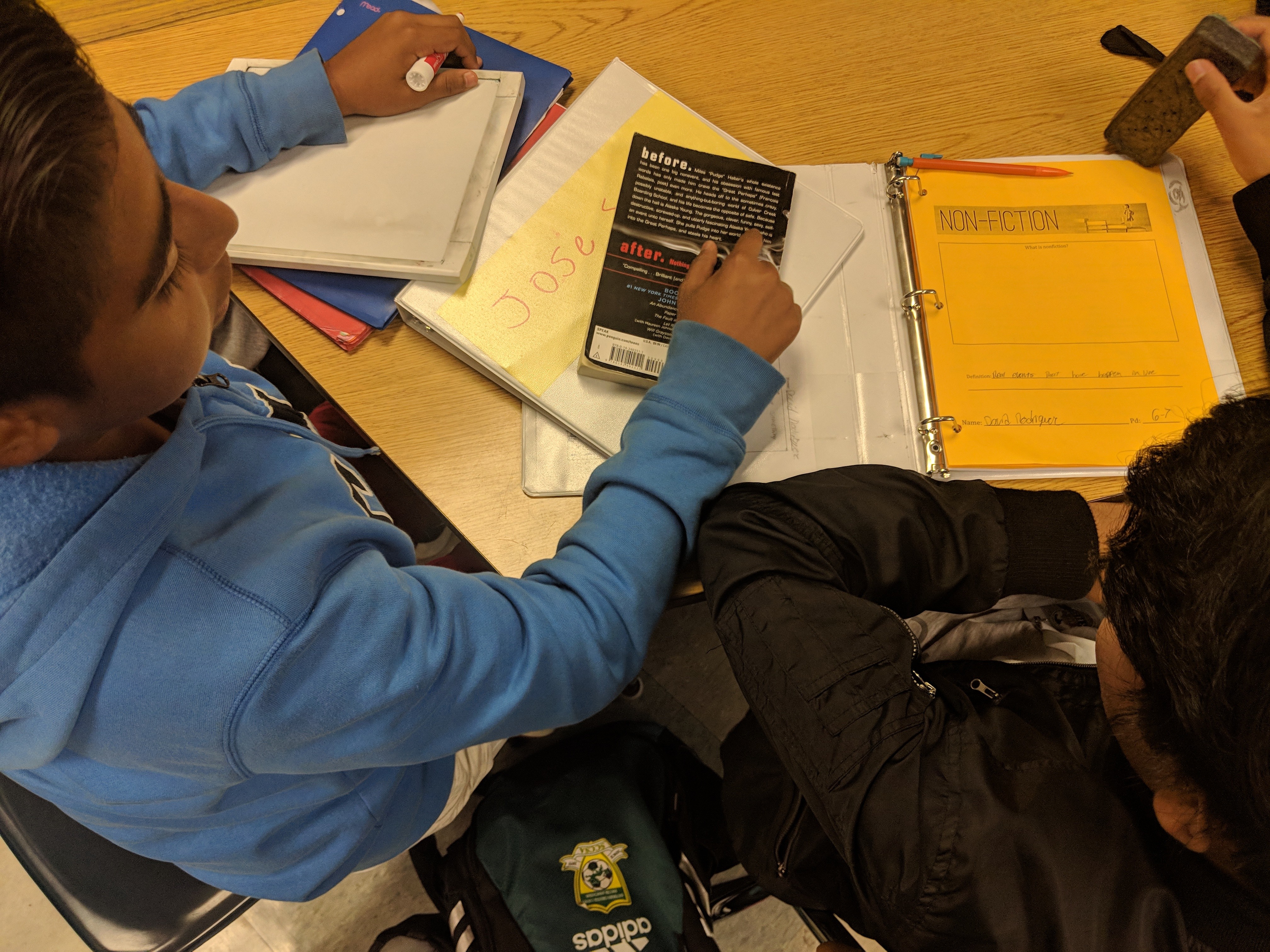
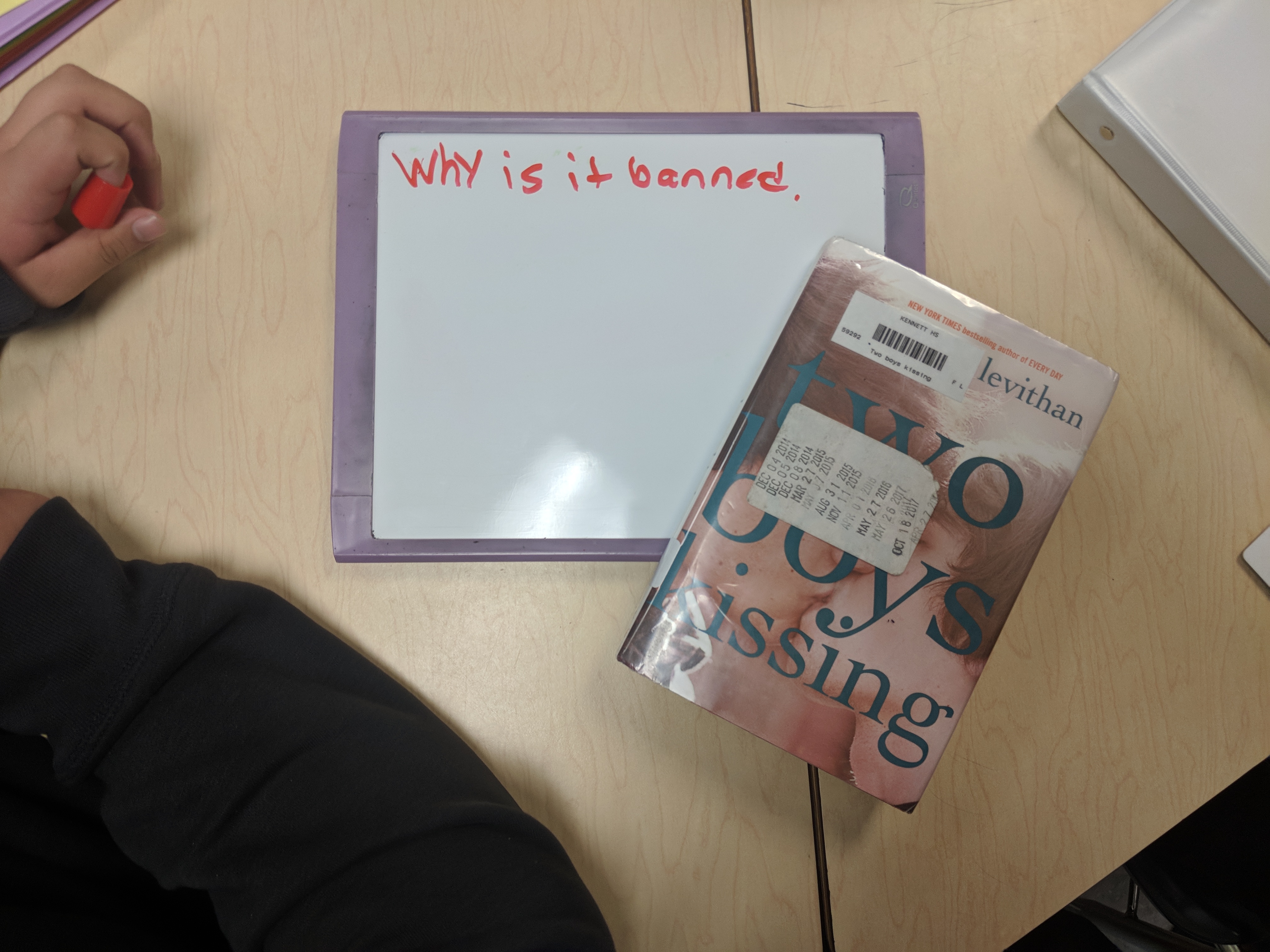
To start, I asked students to partner up and choose from a display of books that had either been challenged or banned in the last year. But before I released students to select their titles, we discussed the difference between these two terms together as a class. Once students realized the books on the back table were there because someone thought they were inappropriate for them to read, they were practically jumping out of their seats to make their selections.

On dry erase boards, they worked together in pairs to quickly use their book selection strategies to investigate the book and make a list of guesses about why it might be challenged. Guesses were surprisingly accurate and included reasons like bad language, racism, inappropriate pictures, and gay characters.

In an effort to provide some background on the issue, we read a recent article about the topic titled “Banned Books: Librarians Push Back Against Censorship“. As we read, I asked students to annotate the text according to what surprised, confused, challenged, or confirmed their thinking. We then discussed some of their key takeaways from the article: 1. parents are the ones challenging books, not teens 2. most challenges are because adults think real life issues like LGBTQ topics and racism are inappropriate for teens to read about 3. some books get banned without anyone even knowing about it. As we noted these takeaways the noise level in the room continued to increase because students couldn’t help but comment on how unfair or ridiculous they thought it was. One student even asked if we could hold a class-wide debate on the issue.

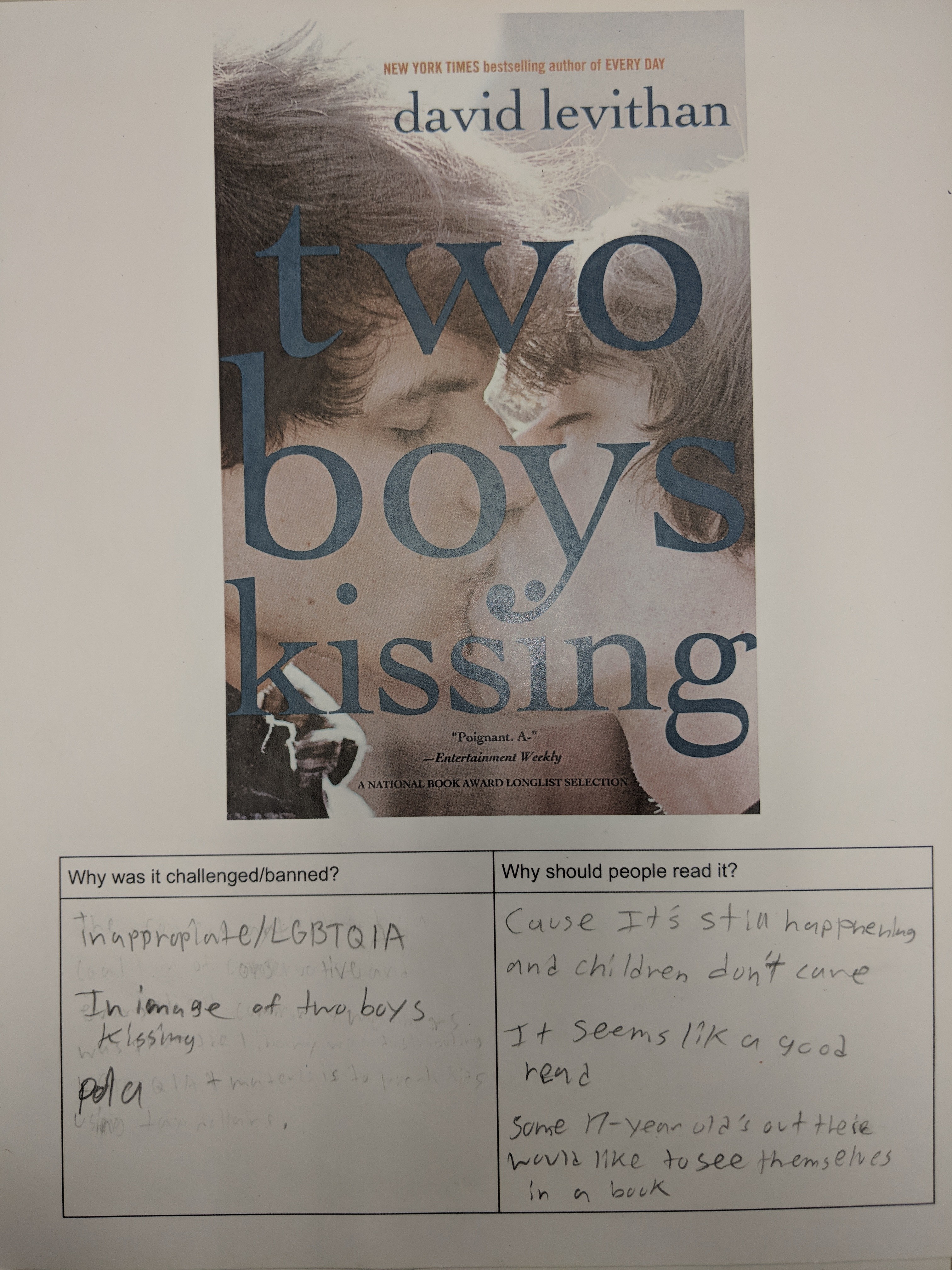
Finally, I capitalized on the incensed enthusiasm and asked students to join their librarians in pushing back against censorship. Students returned to the books they selected at the start of class and used a Marshall University website to research the actual reasons those books were challenged by adults as inappropriate for students to read. Then they came up with their own list of reasons why teenagers should read those books anyway. This week, their assignment is to put those reasons to read the banned book out there in the world in some way – create a social media post, a poster, a letter, etc. I am excited to see what they come up with.

How do you celebrate banned books week with your students?

September Snapshot: Bye Bye Teacher Desk

Lauren Heimlich Foley

Last year, I found myself traveling between three different rooms after nine years of having my own classroom. With increased enrollment and a school too small to handle one classroom per teacher, I braced myself for the challenge and welcomed the change.

What I experienced shocked me: I loved moving around the building. I got to see more people, tried out different flexible seating arrangements, and learned the importance of traveling light. Most days I only moved with a backpack that held my laptop, water bottles, snack, YA novels, and clipboard. Our district’s one-to-one laptop initiative and wireless projection boards helped make this nomadic teaching style work.

Even more shocking: I realized that I no longer used a teacher desk. I carved out space in my apartment for my professional books and left a container in my car with school supplies. In each classroom, I had closet space for necessary materials and a shelf for a class library. On my prep and after school, I did my work at a student desk, in the library, or in our traveling teacher office.

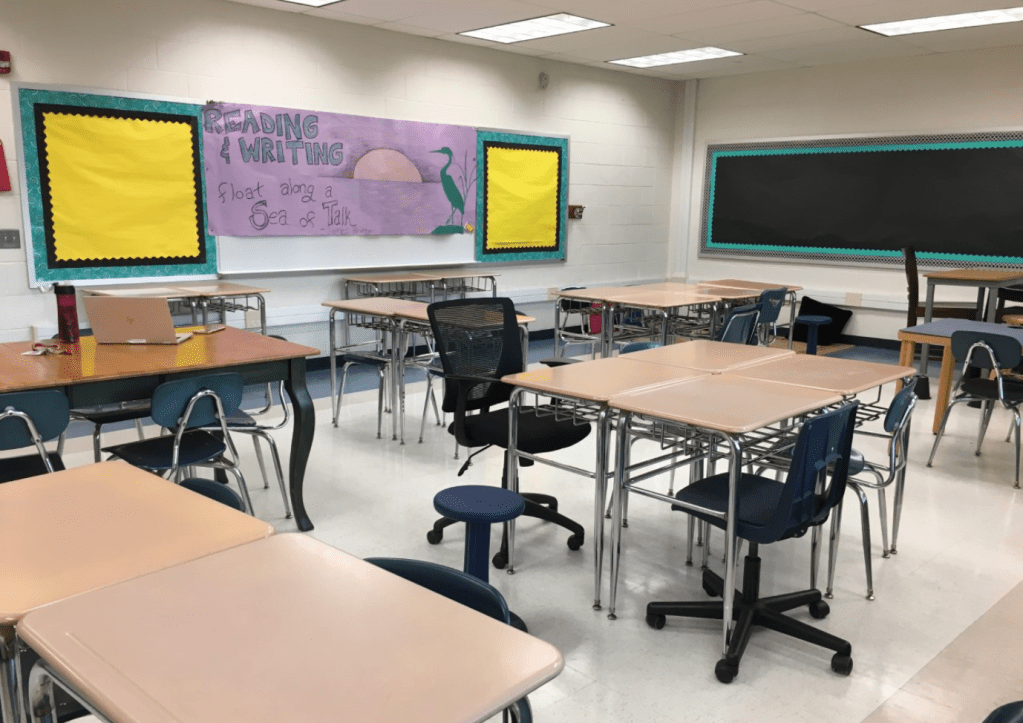
This year, I am sharing a classroom with another teacher. We worked together over the summer to set up our flexible seating, bringing in a small kitchen table, a donated library table, two rugs, a handful of pillows, a high-top table and stools, short stools, and wobbly stools. It is a menagerie of furniture. We love the room, and our students are enjoying the seating.

The layout would never have been possible if we kept the two teacher desks we found waiting for us. Although we immediately got rid of one, I suggested getting rid of the second. Once we realized that the flexible seating would not all fit if we kept even one teacher desk, we decided to have both removed.

Since starting the year, I have not missed the teacher desk once. Not only was it an eyesore in the past with papers and books piled high, but it took up so much space. I never sat at my desk during class, so I am not looking for it during instruction. Whole-class directions and mini-lessons are taught from any open seat in the room, and I do have a stool that I like to use for conferencing. At the end of the day, I sit in my favorite spot in our classroom: a desk that overlooks our courtyard. It has a great view of a tree, waterfall, and pond.

Getting rid of the two teacher desks in our classroom was the best decision of September! Our room is more student centered and feels larger. I enjoy facilitating the learning that happens there. Moreover, our classroom reflects the fact that we are all readers and writers within our workshop.

September Snapshot: Flexible Seating and Classroom Management

By Nicole Coppola

How can flexible seating be utilized to support classroom management? This September, I made some positive changes by incorporating flexible seating into my 6thgrade writing classroom.  The writing workshop model requires students to “come to the writing area” for instruction. Last year, students were dragging chairs to the instruction area from all over the room, creating chaotic transition times.  

Through a grant for flexible seating, from my district’s parent association, I purchased “Bolmen” bathroom step stools from IKEA, eight blue and eight white.  With the help of one of my district’s literacy coaches, I mapped out a routine and a seating chart for the transition to the instruction area. Designated students unstack stools and move them to the center of the instruction area, surrounded by benches and chairs.   The transitions have become calm and efficient routines. 

The IKEA stools also provide the students a choice to make their independent writing space more comfortable.  Because the stools are only about 10 inches tall, they are versatile.  Some students sit on the stools, lean against them, or use the stools as little desks while sitting on the carpet.  During partner activities, my directions are clear and simple, “The students on the blue stools share first. The students on the white stools listen.”  Student helpers stack stools at the end of each class.  Flexible seating has made a positive difference in my writing classroom. 

September Snapshot:Character Creature Creation

What would It look like if you combined a bear, pig, chicken, snake, and monkey? The possibilities are endless, as new species are developed in the minds of middle schoolers.

While diving into the characterization with short stories students take a hands-on approach crafting their own creature. My students completed this activity after we read and annotated the short story “Charles” by Shirley Jackson. Charles is quite the troublemaker causing chaos when he enters his kindergarten classroom. Needless to say, there are tons of ways to characterize Charles. Rather than having my students answer questions about Charles or write a paragraph describing Charles I get them thinking outside of the box and bring the makers space into the language arts classroom.

After reading the story I ask that the students come up with five-character traits to describe Charles. For my students who may have a difficult time coming up with character traits I provide them with a list of positive, negative, and neutral character traits to pull from. Once they have their five-character traits picked they then need to decide upon an animal that depicts that character trait. For example, if the character trait was conceited, I may choose a peacock, who are always displaying their feathers. Students continue this process until they have an animal for each character trait. Ideas bursting, laughter echoing, and risk-taking fill the air while working students spontaneously collaborate giving ideas about animal possibilities or explaining why that animal or character trait could possibly work.

Once the brainstorm is complete students begin designing their creatures assembling one body part at a time. Some students draw, others print pictures and cut them out, while a couple use online tools. The mode is up to them- the products are anything but monotonous. Once their creature is molded to their liking students provide it with a name.

The last part of this process is writing about the emergence of this creature. Students must write a response explaining how this character came about. They must also explain what each animal part represents and provide an example of how the character displayed that characteristic from the story.

Students infer, demonstrate an understanding of characterization, find text evidence, and hone their writing skills without even blinking an eye! This activity could be used for any novel or text.

When students are provided hands on learning opportunities ownership surfaces, creativity flows, and engagement prospers.

September Snapshot: Embracing Disruption

Homecoming week- a week of fun as recent alumni return home and current students sit in class, dreamy-eyed about a Friday pep rally to cheer on the greatest achievements of the school and our undefeated football team. The sugar plums dancing for a school dance on Saturday evening as fingers tap to the anticipated tunes that will fill the gymnasium with a liveliness only school dances can bring.

Though teachers look towards this potentially disruptive week with a sense of uncertainty and trepidation, I decided to approach this week with an aura of comradery with my students. Just like most of you in this boat, I understand the weaknesses that our students succumb to when the change in routine hits them. They are antsy, a tad rowdy, and less likely to fully pay attention. They look doe-eyed at you when you try to get them to focus on the deeper meanings in your lesson and you know instinctively, that when Monday comes around, you are rehashing Friday’s materials when they are better equip to handle learning.

So I embraced the spirit of homecoming week with a review football game on our hectic schedule. The class is split into two teams and are asked to create a “playbook” order. Each student receives a number and it is that order that they answer questions. When a team has the ball, they can choose to try to move 5, 10, or 20 yards. The questions they get are progressively harder based on the yardage they want to go. If the student gets the question right, I move their pawn piece across the projected football field (but if I catch a teammate trying to give them an answer, it is an illegal move and automatic loss of 5 yards).

The students have to try to make it across the football field into the goal line for 6 pts (there are no extra points for my game). If a team gets two questions wrong while trying to get their first down, it is a turnover on the down and the ball moves to the other team. If a teammate gets an answer wrong and the next question has not been given, the next player on the other team is allowed to stand up and shout the answer proudly. If it is correct, they can get an interception and the ball moves to the other team.

The kids have a blast playing a game on a Friday morning when they are still groggy and they love playing a game when the pep rally is getting closer (even if it seems achingly slow). And, in all honesty, I figured, why fight it? Why fight the inevitable loss of attention I will have from a number of students? This way, I know that my students are engaged and I can estimate their knowledge at this point in time. They feel like they are not doing anything and I feel like they are using their memory banks. Honestly, a win-win situation to me!