By Lynne R. Dorfman
When the end of the school day comes, we often see teachers dragging themselves to the parking lot with bookbags and laptops and papers galore. They are tired – they’ve worked hard from the moment they stepped into their classrooms until beyond the final bell. They love their profession – the students, their peers, the challenges. But what about the students? They burst through the doors, running and jumping and calling to friends. They still abound with energy. “It’s a question of age,” you say. “They are youthful – this is to be expected.” But is this the reason for their energy?
Are students putting as much effort into the learning day as their teachers? If we take a closer look into classrooms, we often see the teacher explaining, modeling, offering solutions, taking the lead, and providing resources. Students are capable of all these things and more. Instead of teachers pulling kids up the mountain, sometimes carrying them on their back, students can work together (sometimes, with a little guidance of gentle nudges from the teacher) and have conversations on many levels. These conversations can be about interesting areas of inquiry, books that serve as mentor texts, and making the classroom environment more efficient and user friendly – anything that will help move the entire learning community forward. Conversations focus on solving problems, and students, together with the teacher as facilitator, can arrive at a new level of learning.
Our goal of education is to produce students with the ability to evaluate, discuss, and apply what they know. If we expand from our traditional model, we can create classrooms where everyone is a teacher and a learner. Wisdom is at the heart of this framework, and knowledge is at the head. Our job is calling on our wisdom to apply what we know to be true and what we value as educators and learners.
Teaching is as much about watching as it is about instructing and assessing. Remember Ken and Yetta Goodman’s focus on “kidwatching” and all that it implied? In fact, a large part of our job is to watch, to listen closely, to notice and note! What kidwatching meant was asking ourselves a set of questions such as the following:
- What do I notice?
- What could the student(s) work on?
- Where do I go next?
- How can I get there?
Read more
 In the first chapter of Dear Martin by Nic Stone Justyce McAllister, an Ivy League bound, black teenager, is handcuffed and detained by the police when they mistakenly assume he is up to something as he attempts to keep his drunk and slightly belligerent ex-girlfriend from driving herself home. This incident is understandably jarring for the teen and he thinks to himself:
 Be a King: Dr. Martin Luther King Jr.’s Dream and You by Carole Boston Weatherford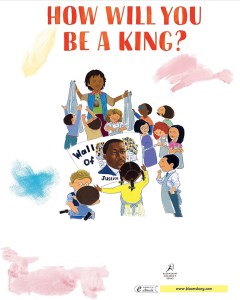








 write.share.connect