Skip to content

Can You Hear Me Now?

Using Audio Tools to Provide Feedback to Student Writers

by Jen Ward

I’ve pulled out back issues of the English Journal, dusted off my copies of Kelly Gallagher’s work. In the course of my research on using digital tools to provide students access to audio versions of writing conferences, I have reviewed what compositionists from Peter Elbow to Ralph Fletcher have said about the need for supportive, verbal feedback during the writing process. Lucy Calkins and Nancie Atwell, two gurus of conferring in the classroom, strongly advocate for face-to-face writing conferences with students over the more traditional written evaluative feedback. Verbal feedback is powerful. And although technology has certainly changed how we work with practicing writers in our classroom settings, there are a few things that remain constant. Read more

The Writing Conference in Nancie Atwell’s Room (Part 2)

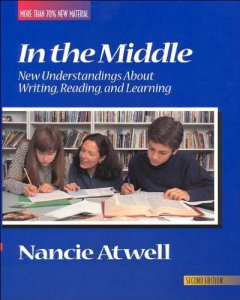
in the middleBy Donald LaBranche

This is a continuation of last week’s review of the two editions of Nancie Atwell’s In the Middle. Click here to read Part 1.

  • In the ’87 edition of In the Middle Atwell explains that there are multiple types of conferences for different purposes. She identified several, but for brevity’s sake, I’ll focus on two of these: the Status of the Class Conference, and the Conference for Content.

Read more

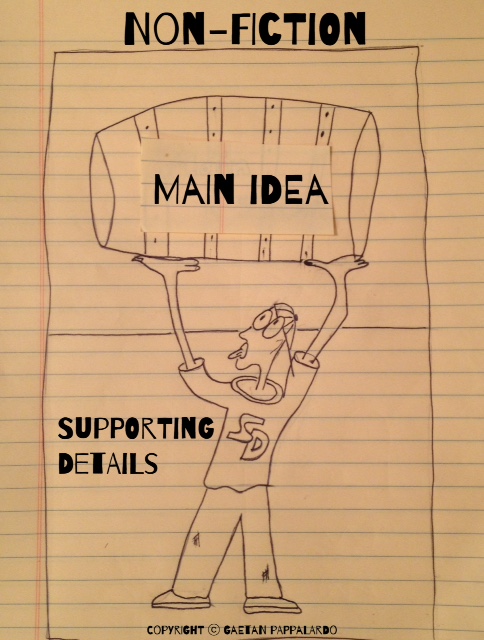
Visualizing Non-Fiction and Literary Elements

by Gaetan Pappalardo

image1

Read more

The Writing Conference in Nancie Atwell’s Room (Part 1)

By Donald LaBranche

A summary from two editions of In the Middle

  • I see no reason to spend your life writing poems unless your goal is to write great poems.  –Donald Hall, “Poetry and Ambition”, 1983
  • Here is what I remember: She dismisses her students to go to their seats to write with the benediction “Work hard. Make Literature.” The children—eighteen seventh and eighth graders—move with practiced and confident precision back to their places to pick up with their poems, stories, letters to the local editor, or memoirs about a summer adventure.  After a few minutes of waiting for her writers to find their rhythm, the teacher takes up her clipboard and small bench and starts to move around the classroom. It’s March so she doesn’t have to start each conference with an open ended question any more, the conversations between her and her student-writers are on-going and serious. They are built on a foundation of mutual trust and respect, an understanding of the craft of writing, of the needs and desires of each student as a writer in the moment, and a deep understanding of learning theory and adolescent development. She sits down next to a writer and they talk about the work: what stage it’s in, what’s working and what’s not, where it might go from here. Then she moves on to the next conversation.

Read more

Story as the Landscape of Knowing: Reflections on NCTE

NCTE 1This past weekend, several PAWLPers had the opportunity to attend the 2014 NCTE Annual Convention in Washington DC. Below are a handful of reflections from what was a truly amazing experience. Read more

A Lesson on Listening

By Andrea Bensusan

I recently rediscovered one of the great joys of teaching – the writing conference.  A grade level change to 4th – after 16 years in 6th – hurled me for the first time into the world of “teacher of everything.”  Increased specialization at my 5/6 building had me teaching only Social Studies, and now I found myself in a self-contained classroom.  It was a strange feeling being a veteran and a rookie at the same time.  Every day has brought challenges and joys, and the return to a role as teacher of writing has been one of those joys. Read more